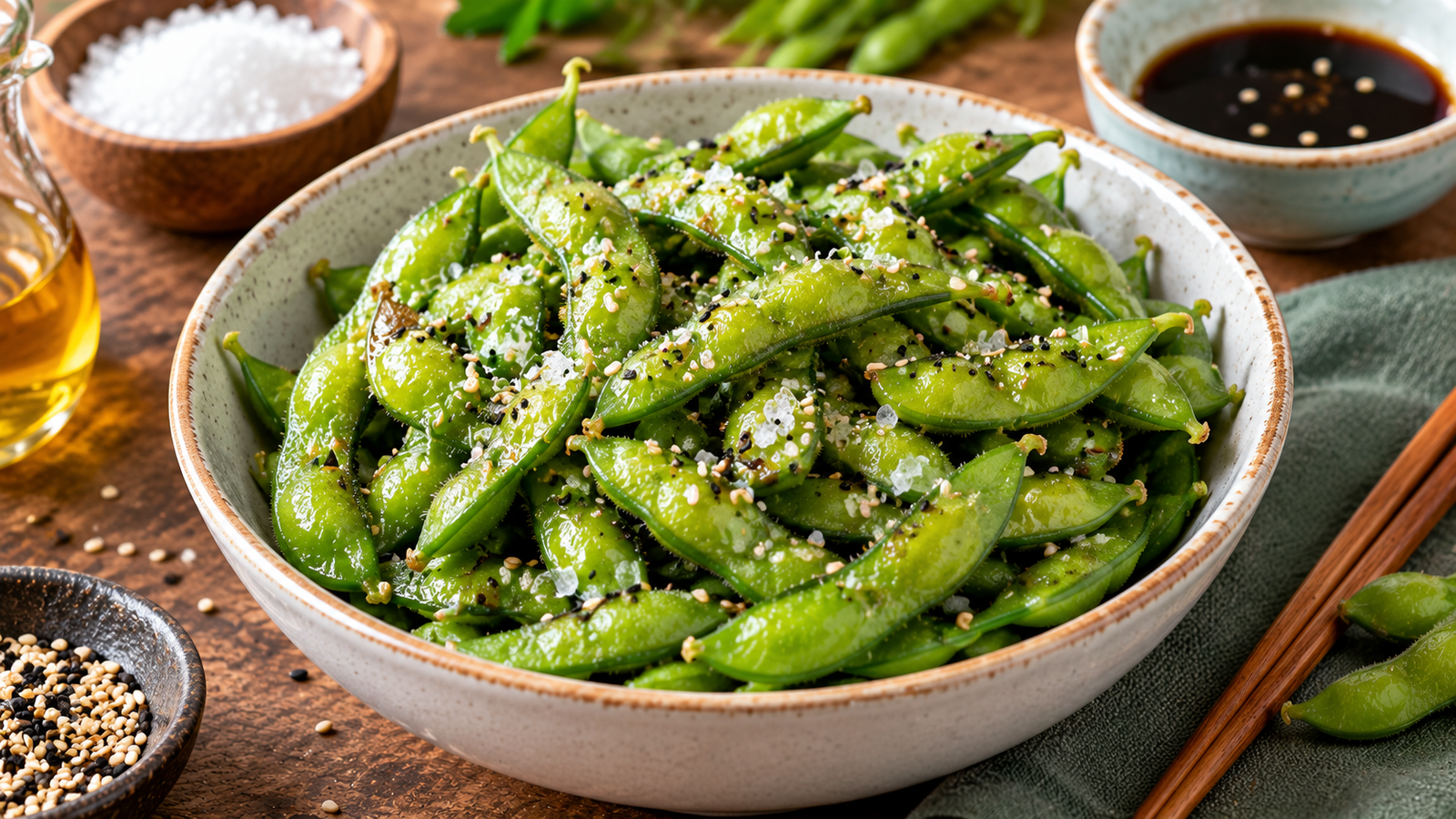
Salted Edamame Beans are a simple, satisfying snack made with tender young soybeans boiled until bright green and lightly seasoned with sea salt. With their naturally mild, slightly sweet flavour and firm texture, edamame makes a delicious appetiser that requires only a handful of ingredients and a few minutes of cooking.
Popular in Japanese cuisine, edamame is often served in its pods at sushi restaurants. The preparation is wonderfully straightforward: boil the frozen pods until tender, drain them well, and toss with salt. For extra flavour, add a little toasted sesame oil, a splash of soy sauce, or a sprinkle of sesame seeds.
Serve these beans warm as a starter, enjoy them chilled as a snack, or add the shelled beans to salads, rice bowls, and stir-fries. Whether you’re planning a Japanese-inspired meal or looking for a quick savoury bite, this easy recipe is a fresh and versatile choice.
Fill a large saucepan with enough water to cover the edamame.
Add the sea salt and bring the water to a rolling boil.
Cook the edamame.
Add the frozen edamame pods directly to the boiling water.
Cook for approximately 4–5 minutes, or follow the cooking time on the package, until the beans are tender but still bright green.
Check for tenderness.
Remove a pod carefully and check that the beans inside are tender.
If necessary, cook for another minute or two according to the package instructions.
Drain thoroughly.
Pour the edamame into a colander and allow the excess water to drain away.
Shake gently to remove any water trapped between the pods.
Season the beans.
Transfer the warm edamame to a serving bowl.
Sprinkle with a little extra sea salt, adjusting to taste.
If desired, add the toasted sesame oil or soy sauce and toss gently.
Garnish and serve.
Finish with toasted sesame seeds, citrus zest, or a pinch of chilli flakes.
Serve warm or allow the edamame to cool before refrigerating for a chilled snack.
How to eat edamame: Hold a pod and gently squeeze or slide the beans out into your mouth using your fingers or teeth. Eat the beans inside and discard the fibrous pods. The pods are generally not eaten.
Why You’ll Love This Recipe
Quick and easy: Frozen edamame can be prepared in around 10 minutes.
Minimal ingredients: Soybeans, salt, and water are all you need for the basic recipe.
Naturally satisfying: Edamame provides plant-based protein and dietary fibre.
Versatile flavour options: Keep it simple with sea salt or add sesame, citrus, garlic, or chilli.
Perfect for sharing: Serve it as a starter, snack, or part of an appetiser platter.
Easy to incorporate into meals: Remove the beans from their pods and add them to salads, noodle dishes, or rice bowls.
Culinary Context: What Is Edamame?
Edamame refers to young soybeans harvested before they fully mature. They are commonly sold frozen, either in their pods or already shelled, making them convenient to prepare at home.
In Japanese cuisine, boiled and salted edamame is a familiar appetiser. Its appeal lies in its simplicity: a little salt enhances the beans’ naturally sweet, nutty flavour without overwhelming it.
Boiling is an easy cooking method that produces tender beans while helping them retain their fresh green colour. The salt in the cooking water seasons the beans, while an optional finishing oil or sauce adds another layer of flavour.
Edamame is also a source of plant-based protein, fibre, and several vitamins and minerals. The amount of nutrition per serving varies depending on the product and portion size.
Tips for the Best Salted Edamame Beans
Follow the package instructions. Cooking times vary between products, so use the recommended time on the packet as your guide.
Use plenty of water. A large saucepan helps the frozen pods cook evenly and return to a boil more quickly.
Avoid overcooking. The beans should be tender but not mushy. Check them near the end of the recommended cooking time.
Season to taste. The cooking water provides an initial layer of seasoning, so add extra salt gradually after draining.
Drain thoroughly. Excess water can dilute the seasoning and make the pods slippery.
Add sesame oil sparingly. A small amount provides a fragrant, nutty finish without overpowering the beans.
Keep the pods intact. Cooking the beans in their pods helps make serving easy and creates the familiar appetiser presentation.
Serve promptly. Edamame is especially enjoyable while warm, when the salt and optional seasonings cling to the pods.
Storage and Reheating
Refrigeration: Allow cooked edamame to cool promptly and place it in an airtight container in the refrigerator within 2 hours of cooking. Use within 3–4 days.
Reheating: Warm the beans briefly in boiling water or steam until heated through. Drain well and add fresh salt or seasonings if needed. You can also enjoy previously cooked edamame cold.
Freezing: If you have cooked more than you need, edamame can generally be frozen in a suitable airtight freezer container. For the best quality, freeze promptly after cooling, label the container with the date, and use within about 2–3 months. Thaw in the refrigerator and reheat thoroughly before serving.
Make-ahead tip: Prepare the edamame in advance and refrigerate it. Add delicate garnishes, citrus zest, and any extra seasoning just before serving for the freshest flavour.
Salted edamame beans are the ultimate minimalist snack—bright, briny, and satisfyingly poppable. To turn them into part of a spread or build a meal around their clean, nutty flavor, here are some pairing ideas that play with texture, temperature, and taste:
🍣 Japanese-Inspired Companions
Miso Soup with Scallions & Tofu – Warm and savory, a classic pairing.
Onigiri (Rice Balls) – Filled with tuna mayo, umeboshi, or grilled salmon.
Yaki Udon or Soba Stir-Fry – Hearty noodles with vegetables and soy-based sauce.
Tamago (Japanese Omelet) – Sweet-savory and silky, a lovely contrast.
🥗 Light & Fresh Additions
Cucumber Sunomono Salad – Vinegared and refreshing, balances the salt.
Seaweed Salad with Sesame Dressing – Umami-rich and texturally unique.
Cold Soba Noodles with Ponzu Sauce – Citrusy and chilled, ideal for warm days.
Pickled Daikon or Carrots – Adds crunch and acidity.
🌿 Global Twists
Edamame Hummus with Rice Crackers – Blended with lemon, garlic, and tahini.
Quinoa Salad with Edamame, Corn & Cilantro – Colorful and protein-packed.
Spicy Edamame with Chili-Garlic Oil – A bar snack upgrade.
Here are some fun variations to experiment with for your Salted Edamame Beans recipe:
Variations
🌶️ Flavor Variations
Spicy Garlic Edamame
Sauté boiled pods in a hot pan with minced garlic, chili flakes, and sesame oil
Finish with a splash of soy sauce and a sprinkle of scallions
Citrus Miso Glaze
Toss with a quick glaze of white miso, orange juice, and honey
Garnish with orange zest and toasted sesame seeds
Furikake Crunch
After boiling, toss with sesame oil and furikake seasoning
Adds umami, crunch, and visual texture
Thai Peanut Drizzle
Mix peanut butter, soy sauce, lime juice, and a touch of sriracha
Drizzle over pods and top with crushed peanuts and cilantro
🧪 Technique Twists
Charred Edamame Skillet
After boiling, sear pods in a dry cast iron pan for smoky depth
Finish with flaky salt and a squeeze of lime
Cold Marinated Edamame
Chill and marinate in rice vinegar, sesame oil, and ginger
Ideal for bento boxes or summer platters
Edamame Popcorn Mix
Shell the beans and toss with popcorn, sea salt, and wasabi peas
A playful snack blend with color and crunch
🎨 Styling & Pairing Ideas
Trio Appetizer Plate
Serve alongside pickled daikon and cucumber sunomono
Use a long rectangular plate with color-blocked sections
Edamame Cone Cups
Spoon into mini paper cones or lettuce cups for handheld bites
Garnish with microgreens or edible flowers for contrast
Bento Box Accent
Nestle into a corner of a bento with tamagoyaki and rice balls
Add a drizzle of sauce and sesame seeds for pop
Final Thoughts
Salted Edamame Beans are proof that a simple recipe can deliver plenty of flavour with very little effort. A short boil, a sprinkle of sea salt, and a few optional seasonings are all it takes to prepare this versatile snack.
Serve the pods warm before a Japanese-inspired dinner, add shelled beans to salads and rice bowls, or experiment with garlic, sesame, ginger, and chilli for different flavour combinations.
For the best results, follow the package cooking instructions, drain the beans well, and season just before serving. This simple appetiser is an easy way to add colour, texture, and plant-based protein to your table.
Frequently Asked Questions
Can I cook edamame straight from frozen?
Yes. Frozen edamame can generally be added directly to boiling water without thawing first. Follow the package instructions for the recommended cooking time.
Do I eat the edamame pods?
No. The beans inside are the edible part. Gently squeeze the beans out of the pods and discard the pods after eating.
Can I use shelled edamame instead?
Yes. Shelled edamame works well, although it may cook more quickly than edamame in pods. Follow the package instructions and check for tenderness near the end of the cooking time.
Is edamame healthy?
Edamame provides plant-based protein, dietary fibre, and a range of vitamins and minerals. Its overall nutritional value depends on the portion size and any added salt, oils, or sauces.
Can I make edamame without salt?
Absolutely. Cook the beans in plain water and finish with lemon or lime juice, garlic, ginger, or sesame seeds. You can also use a small amount of reduced-sodium soy sauce if you prefer.
How can I make edamame more flavourful?
Try toasted sesame oil, garlic, chilli flakes, citrus zest, ginger, or a small splash of soy sauce. Add stronger seasonings gradually so they complement rather than overwhelm the beans.
Can I serve edamame cold?
Yes. Cook the edamame, drain it, cool it promptly, and refrigerate it in a covered container. Serve chilled with salt, citrus, or a light sesame dressing.