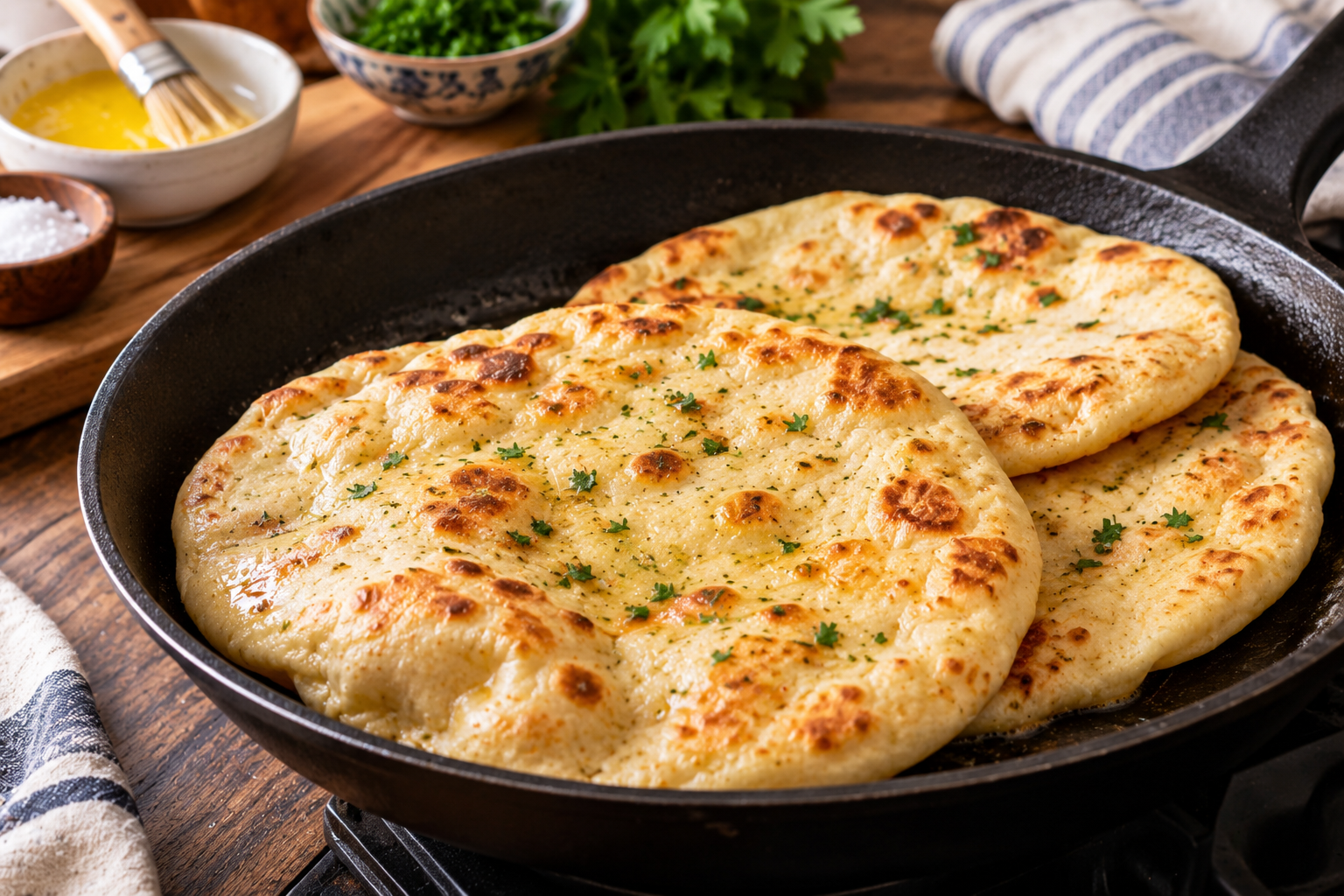
Easy Soft Flatbread is a simple homemade bread made with everyday ingredients and cooked in a hot frying pan. These soft, golden rounds have a tender, slightly chewy texture that makes them perfect for wrapping, dipping, and scooping up your favourite sauces. With no yeast required, you can prepare the dough without waiting for it to rise.
Warm milk and butter give the dough a gentle richness, while a short resting period helps make it easier to roll. Each flatbread cooks in just a few minutes, developing golden spots on the outside while remaining soft and flexible in the centre.
Serve these flatbreads with curries, soups, grilled meats, roasted vegetables, or a selection of dips. You can also brush them with garlic butter, add fresh herbs, or turn them into quick flatbread pizzas. Whether you’re preparing a family dinner or putting together a sharing platter, this recipe is a convenient addition to your homemade bread collection.
Heat gently, stirring until the butter has melted.
Do not allow the mixture to boil.
Set aside until warm rather than hot.
Combine the dry ingredients.
Add the plain flour and salt to a large mixing bowl.
Stir to distribute the salt evenly throughout the flour.
Make the dough.
Gradually pour the warm milk and butter mixture into the flour, stirring with a wooden spoon until a rough dough forms.
If the dough feels excessively sticky, add a little flour at a time.
If it seems too dry to come together, add a small splash of milk.
Knead briefly.
Transfer the dough to a lightly floured work surface.
Knead for 2–3 minutes until it becomes smoother and more cohesive.
Avoid adding too much extra flour, as this can make the flatbreads firm.
Rest the dough.
Shape the dough into a ball and cover it with a clean tea towel or wrap it in cling film.
Leave it to rest at room temperature for 30 minutes.
This allows the flour to hydrate and makes rolling easier.
Divide and roll.
Divide the dough into six equal portions and roll each portion into a ball.
On a lightly floured surface, roll each ball into a thin round approximately 20 cm in diameter.
Heat the frying pan.
Place a heavy-based frying pan or skillet over medium-high heat.
Allow it to heat thoroughly.
The pan should be hot enough to develop golden spots without burning the bread.
Cook the flatbreads.
Place one flatbread in the dry pan.
Cook for approximately 1–2 minutes, until bubbles appear and golden spots begin to form underneath.
Flip and cook the other side for another 1–2 minutes.
Adjust the heat as necessary and repeat with the remaining rounds.
Keep the bread soft.
Transfer each cooked flatbread to a clean tea towel and cover it while you cook the rest.
Stacking and covering the flatbreads helps retain their warmth and softness.
Add an optional finish.
Mix melted butter with minced garlic and chopped parsley, if desired.
Brush lightly over the warm flatbreads and serve immediately.
Serve warm with hummus, tzatziki, or baba ganoush. 😊
Why You’ll Love This Recipe
No yeast required: There is no need for yeast or a rising period.
Simple pantry ingredients: Flour, milk, butter, and salt create a useful homemade bread.
Soft and flexible: The dough produces flatbreads that are ideal for wraps and dipping.
Quick stovetop cooking: Each round cooks in only a few minutes without an oven.
Easy to customise: Add garlic, herbs, spices, or cheese to create different flavours.
Suitable for many meals: Serve with curries, soups, grilled vegetables, dips, or leftover roast meat.
Culinary Context: What Makes This Flatbread Different?
Flatbread is a broad category of bread made in thin, flat shapes. Many traditional varieties use simple doughs and are cooked on a hot surface, making them practical in kitchens where an oven is not necessary.
This recipe uses milk and butter to create a richer dough than a basic flour-and-water flatbread. It contains no yeast or baking powder, so it does not rise in the same way as conventional leavened bread. Instead, its softness comes from the hydrated dough, the resting period, and careful cooking.
The hot frying pan creates golden patches on the surface. Small air pockets may form as the dough cooks, while the steam trapped inside helps the bread remain tender. Covering the cooked flatbreads with a tea towel also helps prevent them from drying out.
Tips for the Best Easy Soft Flatbread
Measure the flour carefully. Too much flour can make the dough stiff and the cooked bread dry. Spoon flour into the measuring cup and level it rather than packing it down.
Use warm, not hot, milk. The milk should be comfortable to touch. Very hot milk can make handling the dough difficult.
Knead only until smooth. A few minutes is enough to bring the dough together. Excessive kneading is unnecessary for this recipe.
Allow the dough to rest. The 30-minute rest makes the dough more relaxed and easier to roll without springing back.
Roll evenly. Try to keep each flatbread at a similar thickness so the rounds cook at roughly the same rate.
Preheat the pan properly. A hot pan encourages golden spots and helps the bread cook quickly.
Adjust the heat as needed. If the outside darkens before the bread is cooked through, lower the heat slightly.
Avoid overcooking. Leaving the flatbreads in the pan for too long can dry them out and make them less flexible.
Keep cooked flatbreads covered. Stack them inside a clean tea towel while cooking the remaining rounds.
Brush with butter while warm. If you’re adding garlic butter or herbs, apply the mixture as soon as the bread comes out of the pan.
Storage and Reheating
Room-temperature storage: Allow leftover flatbreads to cool, then place them in an airtight container or sealed bag. If serving them later the same day, keep them covered in a cool, dry place.
Refrigeration: For longer storage, refrigerate the flatbreads in an airtight container for up to 3 days. They may become slightly firmer when chilled.
Freezing: Place baking paper between the cooled flatbreads and seal them in a freezer-safe bag or container. Freeze for up to 2 months for the best quality. Thaw in the refrigerator or reheat directly from frozen over low heat.
Reheating in a frying pan: Warm each flatbread in a dry skillet over medium-low heat for approximately 20–40 seconds per side, until soft and heated through. If needed, sprinkle the pan with a few drops of water and cover briefly to help restore moisture.
Microwave reheating: Wrap a flatbread in a slightly damp paper towel and microwave in short intervals until warm. Avoid overheating, as this can make the bread tough.
Make-ahead tip: Prepare the dough and let it rest before rolling. For the best texture, cook the flatbreads shortly before serving. Alternatively, cook them in advance and reheat gently when needed.
Easy soft flatbread is pillowy and versatile — perfect for scooping, wrapping, or serving alongside bold flavors. Here are dishes and side dishes that pair beautifully with it:
🥘 Savory Complements
Curries: Chicken tikka masala, butter chicken, or vegetable curry.
Stews: Moroccan lamb stew or chickpea tagine.
Grilled Meats: Kebab skewers, shawarma, or spiced lamb chops.
Roasted Vegetables: Eggplant, zucchini, or peppers with olive oil and herbs.
🧄 Dips & Spreads
Hummus: Classic chickpea spread with tahini.
Tzatziki: Cooling yogurt-cucumber dip.
Baba Ganoush: Smoky roasted eggplant spread.
Garlic Butter: Simple, aromatic drizzle.
🥗 Fresh Sides
Greek Salad: Tomato, cucumber, olives, and feta.
Tabbouleh: Bulgur, parsley, mint, and lemon.
Cucumber Salad: Crisp, refreshing balance.
Pickled Vegetables: Tangy crunch to cut richness.
🍹 Drinks
Mint Tea: Cooling herbal sip.
Lassi: Yogurt-based drink, sweet or salty.
Sparkling Water with Lemon: Palate-cleansing option.
Crisp White Wine: Elegant pairing.
✨ Serving Concepts
Mediterranean Mezze Board: Flatbread with hummus, baba ganoush, olives, and grilled veg.
Indian Feast Plate: Flatbread with butter chicken, cucumber salad, and lassi.
Middle Eastern Spread: Flatbread with shawarma, tabbouleh, and mint tea.
Modern Casual Dining: Flatbread pizzas topped with roasted veg and garlic butter.
Here are some fun variations to experiment with for your Easy Soft Flatbread recipe:
Variations
🍽️ Flavor Variations
Garlic Herb Flatbread
Add 1 tsp dried herbs (thyme, oregano, or za’atar) to the flour
Brush with garlic-infused butter after cooking
Cheesy Melt Flatbread
Sprinkle grated cheese (cheddar or mozzarella) on one half before cooking
Fold and press like a quesadilla for a gooey center
Spiced Indian Roti Style
Mix in ½ tsp ground cumin or coriander to the dough
Serve with chutney or curry for a fusion twist
Sweet Cinnamon Flatbread
Add 1 tbsp sugar and ½ tsp cinnamon to the dough
Brush with honey or maple syrup and top with toasted nuts
🎨 Styling & Serving Ideas
Flatbread Stack with Dips
Stack and slice into wedges
Serve with hummus, tzatziki, and beetroot dip in a color-blocked trio
Rolled Wraps
Use as a base for grilled veggies, falafel, or spiced chicken
Roll tightly and slice diagonally for a styled platter
Mini Flatbread Canapés
Cut into small rounds before cooking
Top with labneh, smoked salmon, or roasted cherry tomatoes
Flatbread Cones
Shape warm rounds into cones and fill with salad or spiced chickpeas
Secure with a chive tie or edible flower for flair
Final Thoughts
Easy Soft Flatbread is a practical homemade bread recipe that turns a few everyday ingredients into six tender, golden rounds. With no yeast and no oven required, it is a convenient choice for quick dinners, lunch wraps, curries, soups, and sharing platters.
The secret to good flatbread is a soft dough, a short resting period, an evenly heated pan, and careful cooking. Keep the finished rounds covered to maintain their softness, then serve plain or add garlic butter, herbs, or your favourite seasonings.
Once you’ve mastered the basic recipe, experiment with different fillings and flavours to make these flatbreads your own.
Frequently Asked Questions
Why is my flatbread tough?
Flatbread can become tough if too much flour is added, the dough is not given time to rest, or the rounds are overcooked. Measure the flour carefully, allow the full resting time, and remove each flatbread as soon as it is cooked.
Why isn’t my flatbread puffing up?
This recipe does not contain yeast or baking powder, so puffing is not guaranteed. A properly heated pan, evenly rolled dough, and suitable cooking time help create air pockets. Even without much puffing, the flatbreads should still be soft and flexible.
Can I make the dough ahead of time?
Yes. Prepare the dough, cover it well, and refrigerate it for up to 24 hours. Let it sit at room temperature briefly if it is too firm to roll easily. Cooked flatbreads can also be prepared ahead and reheated before serving.
Can I use a different type of flour?
Plain flour is recommended for this recipe. Bread flour may produce a slightly chewier texture, while wholemeal flour absorbs more liquid and can make the flatbreads denser. If substituting flour, adjust the milk gradually until the dough is soft and manageable.
Can I make these flatbreads without butter?
Yes. You can replace the butter with a similar amount of olive oil or another suitable cooking oil. The flavour and texture may differ slightly, but the dough should still be workable.
Can I make the recipe dairy-free?
Yes. Replace the milk with an unsweetened plant-based alternative and the butter with a dairy-free baking block or suitable oil. Choose an alternative with a neutral flavour for the closest result.
How do I keep flatbread soft after cooking?
Stack the cooked rounds and cover them with a clean tea towel. This helps retain moisture and keeps the bread warm and pliable until serving.
Can I use this flatbread for wraps?
Yes. Roll the dough evenly, cook the rounds until just done, and avoid over-browning them. Keeping the cooked flatbreads covered will help them remain flexible enough to wrap around fillings.