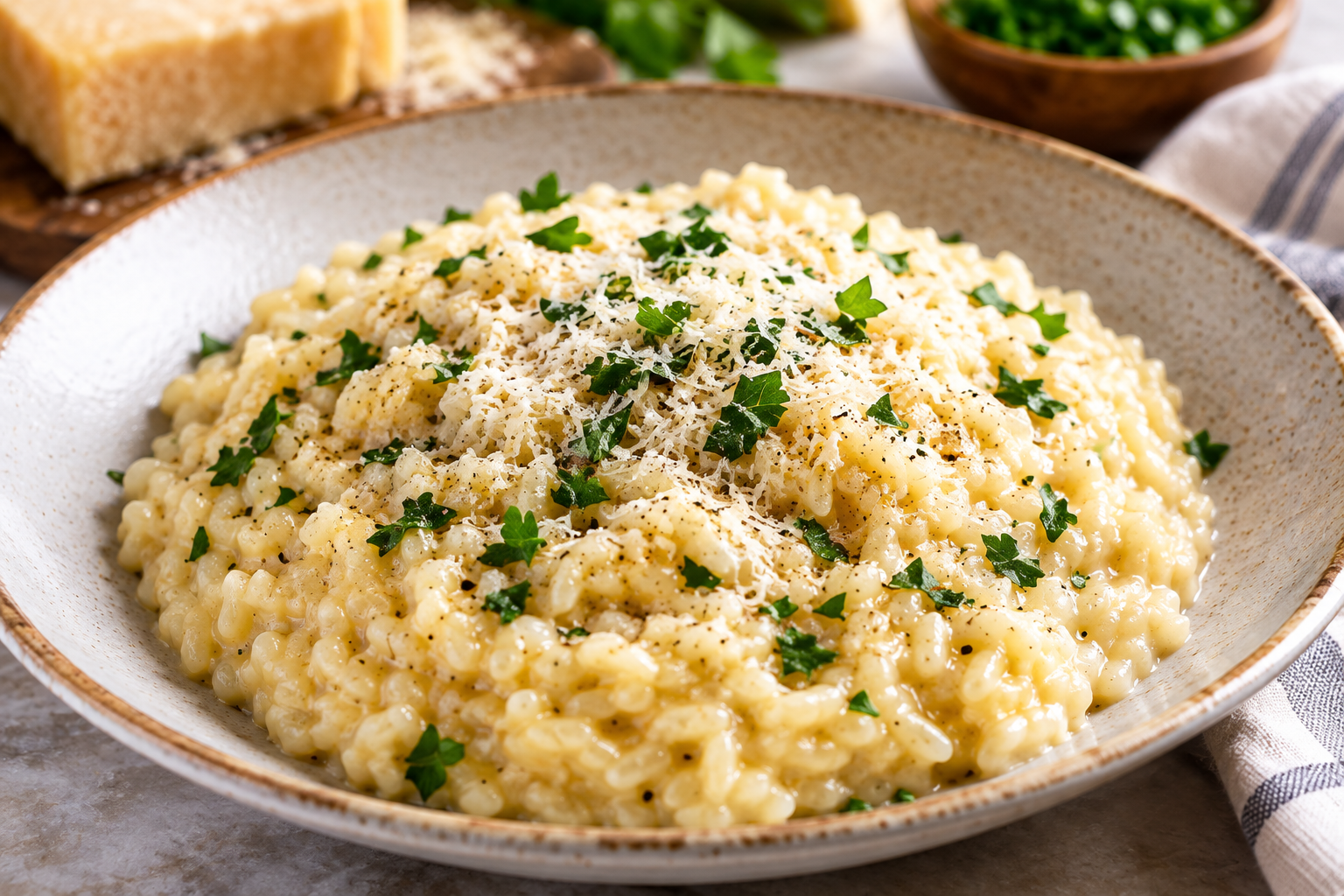
Parmesan risotto is a classic Italian dish that transforms simple ingredients into a creamy, comforting meal. Arborio rice is gently toasted with onion and garlic, then slowly cooked with warm broth until the grains become tender and release their natural starch, creating risotto’s signature velvety texture.
A splash of dry white wine adds brightness, while butter and freshly grated Parmesan bring richness and a delicious savoury flavour. Finished with fresh parsley or basil, this timeless dish is elegant enough for special occasions yet simple enough to prepare at home.
Serve this creamy Parmesan risotto as a satisfying vegetarian main course or pair it with roasted chicken, grilled fish or seasonal vegetables for a memorable meal.
Pour the chicken or vegetable broth into a saucepan and keep it warm over low heat.
Avoid allowing it to boil rapidly.
Sauté the onion and garlic:
Heat the olive oil and 2 tablespoons of butter in a large, heavy-based pan over medium heat.
Add the chopped onion and cook for 3–5 minutes until softened and translucent.
Stir in the garlic and cook for another 30 seconds until fragrant.
Toast the rice:
Add the Arborio rice to the pan and stir for 1–2 minutes, ensuring each grain is coated in the butter and oil.
The edges of the grains should look slightly translucent while the centres remain opaque.
Add the white wine:
Pour in the wine and stir gently until most of the liquid has been absorbed.
This adds a subtle acidity that balances the richness of the finished risotto.
Add the broth gradually:
Add one ladleful of warm broth at a time, stirring frequently.
Allow most of the liquid to be absorbed before adding the next ladleful.
Continue this process for approximately 20–25 minutes, or until the rice is creamy and tender but still has a slight bite in the centre.
Add the Parmesan:
Remove the pan from the heat.
Stir in the freshly grated Parmesan and the optional tablespoon of butter until melted and creamy.
Taste and season with salt and black pepper as needed, remembering that Parmesan and broth may already contain salt.
Adjust the consistency:
If the risotto is thicker than you prefer, stir in a small splash of warm broth.
The finished dish should be creamy and flow gently across the plate rather than hold a stiff mound.
Garnish and serve:
Sprinkle with freshly chopped parsley or basil and a little extra Parmesan, if desired.
Serve immediately while the risotto is warm and velvety.
Risotto requires patience—adding broth too quickly makes it soupy instead of creamy. 😊
This Parmesan Risotto recipe is a classic Italian comfort dish, creamy and rich with a nutty depth from the cheese.
🥘 Key Highlights
Arborio rice: Short-grain rice that releases starch, giving risotto its signature creaminess.
White wine: Adds acidity and complexity, balancing the richness.
Parmesan cheese: The star ingredient, providing savory umami flavor.
Broth: Must be kept warm to maintain cooking consistency.
Why You’ll Love This Parmesan Risotto
Creamy without needing cream: Arborio rice releases starch during cooking, creating a naturally smooth and luxurious texture.
Simple ingredients: Rice, broth, onion, garlic, butter and Parmesan combine to produce a deliciously satisfying dish.
Full of flavour: White wine adds brightness, while Parmesan provides a rich, savoury finish.
Easy to customise: Add mushrooms, peas, asparagus or cooked chicken to make the recipe your own.
Versatile serving options: Enjoy it as a vegetarian main course or as a side dish for roasted meats and vegetables.
Tips for the Best Parmesan Risotto
Use Arborio rice: This short-grain rice contains the starch needed for a creamy risotto. Other suitable varieties include Carnaroli and Vialone Nano.
Keep the broth warm: Adding warm broth helps maintain an even cooking temperature and allows the rice to cook consistently.
Toast the rice first: A brief toasting helps the grains maintain their structure as they absorb liquid.
Add liquid gradually: Adding broth in stages gives you better control over the texture. You may not need every drop, or you may need a little extra.
Stir frequently: Regular stirring helps release the rice’s starch and prevents the grains from sticking to the pan. Constant vigorous stirring is not necessary.
Choose freshly grated Parmesan: It melts more smoothly than many pre-grated varieties and gives the dish a fresher flavour.
Finish off the heat: Stirring in the cheese and butter after removing the pan from the heat helps create a smooth, creamy finish.
Serve immediately: Risotto thickens as it stands, so have your plates and accompaniments ready before the rice is finished.
Storage
Risotto is best served freshly made, when its texture is at its creamiest. However, leftovers can be stored safely.
Refrigeration: Transfer leftover risotto to a shallow container and refrigerate promptly, ideally within one hour because cooked rice needs careful handling.
Storage time: Keep refrigerated at 4°C or colder and eat within 24 hours for a cautious approach to cooked-rice storage.
Reheating: Reheat only the portion you need, adding a splash of broth or water to loosen the rice. Stir until steaming hot throughout, and avoid reheating the same portion more than once.
Freezing: Freezing is possible, but the rice may become softer and lose some of its original creamy texture when thawed and reheated.
Food safety: Do not leave cooked rice at room temperature for extended periods. Some bacteria associated with rice can produce toxins that reheating may not destroy.
Here are dishes and pairings that highlight its richness:
🥩 Savory & Hearty
Grilled Steak: Juicy, charred beef balanced by risotto’s creaminess.
Roast Chicken: Golden, tender chicken with risotto as a luxurious side.
Braised Short Ribs: Slow-cooked richness that melts into the risotto.
🐟 Fresh & Light
Seared Scallops: Sweet, delicate seafood that pairs beautifully with Parmesan.
Grilled Salmon: Flaky fish with lemon zest to brighten the dish.
Shrimp Skewers: Smoky, citrusy shrimp to contrast the creamy rice.
🥗 Fresh & Bright
Arugula Salad: Peppery greens with lemon vinaigrette to cut through richness.
Caprese Salad: Tomato, mozzarella, and basil for a refreshing balance.
Roasted Vegetables: Seasonal veggies caramelized to echo risotto’s depth.
🍷 Drinks & Atmosphere
Chardonnay: Buttery white wine that mirrors risotto’s creaminess.
Pinot Grigio: Crisp, refreshing option to lighten the dish.
Sparkling Water with Lemon: Keeps the palate fresh and lively.
Here are some fun variations to experiment with for your Parmesan Risotto recipe:
Variations
🧀 Cheese Variations
Triple Cheese Risotto: Blend Parmesan with pecorino and fontina for a richer, more complex flavor.
Blue Cheese Boldness: Stir in crumbled gorgonzola for tangy depth.
Goat Cheese Creaminess: Add soft goat cheese for a subtle, earthy twist.
🌱 Vegetable & Herb Twists
Mushroom Risotto: Sauté wild mushrooms and fold them in for umami richness.
Spring Green Risotto: Add peas, asparagus, and fresh mint for a bright seasonal lift.
Roasted Pumpkin Risotto: Stir in roasted pumpkin cubes and finish with sage butter.
🥩 Protein Additions
Seafood Risotto: Add prawns, scallops, or mussels for a luxurious touch.
Chicken Risotto: Fold in shredded roast chicken for a hearty meal.
Prosciutto Risotto: Top with crisped prosciutto slices for salty crunch.
🌍 Global Fusion
Truffle Risotto: Finish with truffle oil or shaved truffles for indulgence.
Saffron Risotto: Infuse broth with saffron threads for golden color and floral aroma.
Asian-Inspired Risotto: Use miso paste in the broth and garnish with sesame seeds.
South African Twist: Add peri-peri prawns or chakalaka relish for local flair.
🍽 Serving Ideas
Rustic Cast-Iron: Serve directly from the pan with a drizzle of olive oil.
Fine Dining Style: Plate in shallow bowls, garnish with micro herbs and Parmesan crisps.
Family Feast: Present in a large platter for communal sharing.
✨ Risotto is a canvas—you can keep it classic or transform it into something bold and unexpected.
Final Thoughts
Parmesan risotto is a wonderful reminder that simple ingredients and careful cooking can create something truly special. The tender rice, warm broth, butter and freshly grated Parmesan come together in a creamy dish that feels both comforting and elegant.
Serve it on its own with seasonal vegetables or alongside roasted chicken, grilled fish or steak for a more substantial meal. Once you master the gradual addition of broth and the final creamy finish, this classic Italian recipe becomes a versatile favourite for everyday dinners and special occasions alike.
Frequently Asked Questions
What is the secret to creamy Parmesan risotto?
The key is using a suitable short-grain rice, adding warm broth gradually and stirring frequently. The rice releases starch as it cooks, creating a creamy texture without needing cream.
Do I have to use white wine?
No. You can replace the wine with an equal amount of warm broth. A small squeeze of lemon juice added near the end can provide some of the brightness that wine contributes.
Can I use ordinary long-grain rice?
Long-grain rice is not ideal because it does not release starch in the same way as Arborio rice. For the most authentic creamy texture, use Arborio, Carnaroli or another risotto rice.
Why is my risotto too thick?
Rice continues to absorb liquid as it stands. Stir in a little warm broth just before serving until the risotto reaches a soft, flowing consistency.
Why is my risotto still hard?
It may need more cooking time or additional broth. Continue adding warm liquid in small amounts and taste the rice regularly until it is tender with a slight bite.
Can I make Parmesan risotto without cream?
Yes. Traditional risotto relies on the starch released by the rice, along with butter and Parmesan, for its creamy texture. Cream is not necessary.
Is Parmesan risotto vegetarian?
It can be, provided you use vegetable broth and a vegetarian-friendly hard cheese. Traditional Parmesan is made using animal rennet, so check the cheese label if you need a strictly vegetarian version.
Essential cookies enable basic functions and are necessary for the proper function of the website.
Name
Description
Duration
Cookie Preferences
This cookie is used to store the user's cookie consent preferences.
30 days
These cookies are needed for adding comments on this website.
Name
Description
Duration
comment_author
Used to track the user across multiple sessions.
Session
comment_author_email
Used to track the user across multiple sessions.
Session
comment_author_url
Used to track the user across multiple sessions.
Session
Google's current Sign in with Google client library. It renders the Google sign-in button, or the One Tap prompt, so visitors can log in to your site with their Google account. It replaces the older Google Sign-In platform library.
Set on your own domain by the Sign in with Google client library. Records whether the visitor has dismissed the One Tap sign-in prompt and for how long it should stay hidden, plus the time the library last loaded and a browsing session id used for the same purpose. Sites that pass a custom state_cookie_name will see that name instead.
180 days
g_csrf_token
Set on your own domain by the Sign in with Google client library and submitted together with the sign-in credential, so your site can confirm the sign-in came from its own page and not from a forged cross-site request.
5 minutes
Statistics cookies collect information anonymously. This information helps us understand how visitors use our website.
Google Analytics is a powerful tool that tracks and analyzes website traffic for informed marketing decisions.
Contains information related to marketing campaigns of the user. These are shared with Google AdWords / Google Ads when the Google Ads and Google Analytics accounts are linked together.
90 days
__utma
ID used to identify users and sessions
2 years after last activity
__utmt
Used to monitor number of Google Analytics server requests
10 minutes
__utmb
Used to distinguish new sessions and visits. This cookie is set when the GA.js javascript library is loaded and there is no existing __utmb cookie. The cookie is updated every time data is sent to the Google Analytics server.
30 minutes after last activity
__utmc
Used only with old Urchin versions of Google Analytics and not with GA.js. Was used to distinguish between new sessions and visits at the end of a session.
End of session (browser)
__utmz
Contains information about the traffic source or campaign that directed user to the website. The cookie is set when the GA.js javascript is loaded and updated when data is sent to the Google Anaytics server
6 months after last activity
__utmv
Contains custom information set by the web developer via the _setCustomVar method in Google Analytics. This cookie is updated every time new data is sent to the Google Analytics server.
2 years after last activity
__utmx
Used to determine whether a user is included in an A / B or Multivariate test.
18 months
_ga
ID used to identify users
2 years
_gali
Used by Google Analytics to determine which links on a page are being clicked
30 seconds
_ga_
ID used to identify users
2 years
_gid
ID used to identify users for 24 hours after last activity
24 hours
_gat
Used to monitor number of Google Analytics server requests when using Google Tag Manager
1 minute
Marketing cookies are used to follow visitors to websites. The intention is to show ads that are relevant and engaging to the individual user.
Google Ads is an online advertising platform that enables businesses to create targeted ads displayed on Google search results and partner sites.
Targeting cookie. Used to create a user profile and display relevant and personalised Google Ads to the user.
2 years
__Secure-1PSIDCC
Targeting cookie. Used to create a user profile and display relevant and personalised Google Ads to the user.
2 years
__Secure-3PAPISID
Profiles the interests of website visitors to serve relevant and personalised ads through retargeting.
2 years
AEC
AEC cookies ensure that requests within a browsing session are made by the user, and not by other sites. These cookies prevent malicious sites from acting on behalf of a user without that user's knowledge.
6 months
ADS_VISITOR_ID
Cookie required to use the options and on-site web services
2 months
__Secure-3PSIDCC
Targeting cookie. Used to create a user profile and display relevant and personalised Google Ads to the user.
2 years
__Secure-3PSIDTS
Targeting cookie. Used to create a user profile and display relevant and personalised Google Ads to the user.
2 years
__Secure-1PSIDTS
Targeting cookie. Used to create a user profile and display relevant and personalised Google Ads to the user.
2 years
__Secure-1PAPISID
Targeting cookie. Used to create a user profile and display relevant and personalised Google Ads to the user.
2 years
__Secure-3PSID
Targeting cookie. Used to profile the interests of website visitors and display relevant and personalised Google ads.
2 years
Conversion
Google uses cookies for advertising, including serving and rendering ads, personalizing ads (depending on your ad settings at g.co/adsettings), limiting the number of times an ad is shown to a user, muting ads you have chosen to stop seeing, and measuring the effectiveness of ads.
90 days
_gcl_aw
Google uses cookies for advertising, including serving and rendering ads, personalizing ads (depending on your ad settings at g.co/adsettings), limiting the number of times an ad is shown to a user, muting ads you have chosen to stop seeing, and measuring the effectiveness of ads.
90 Days
_gcl_gs
Google uses cookies for advertising, including serving and rendering ads, personalizing ads (depending on your ad settings at g.co/adsettings), limiting the number of times an ad is shown to a user, muting ads you have chosen to stop seeing, and measuring the effectiveness of ads.
90 Days
_gcl_gb
Google uses cookies for advertising, including serving and rendering ads, personalizing ads (depending on your ad settings at g.co/adsettings), limiting the number of times an ad is shown to a user, muting ads you have chosen to stop seeing, and measuring the effectiveness of ads.
90 Days
_gac_gb_
Google uses cookies for advertising, including serving and rendering ads, personalizing ads (depending on your ad settings at g.co/adsettings), limiting the number of times an ad is shown to a user, muting ads you have chosen to stop seeing, and measuring the effectiveness of ads.
90 Days
FPGCLGB
Google uses cookies for advertising, including serving and rendering ads, personalizing ads (depending on your ad settings at g.co/adsettings), limiting the number of times an ad is shown to a user, muting ads you have chosen to stop seeing, and measuring the effectiveness of ads.
90 Days
FPGCLAW
Google uses cookies for advertising, including serving and rendering ads, personalizing ads (depending on your ad settings at g.co/adsettings), limiting the number of times an ad is shown to a user, muting ads you have chosen to stop seeing, and measuring the effectiveness of ads.
90 Days
You can find more information in our Cookie Policy and .