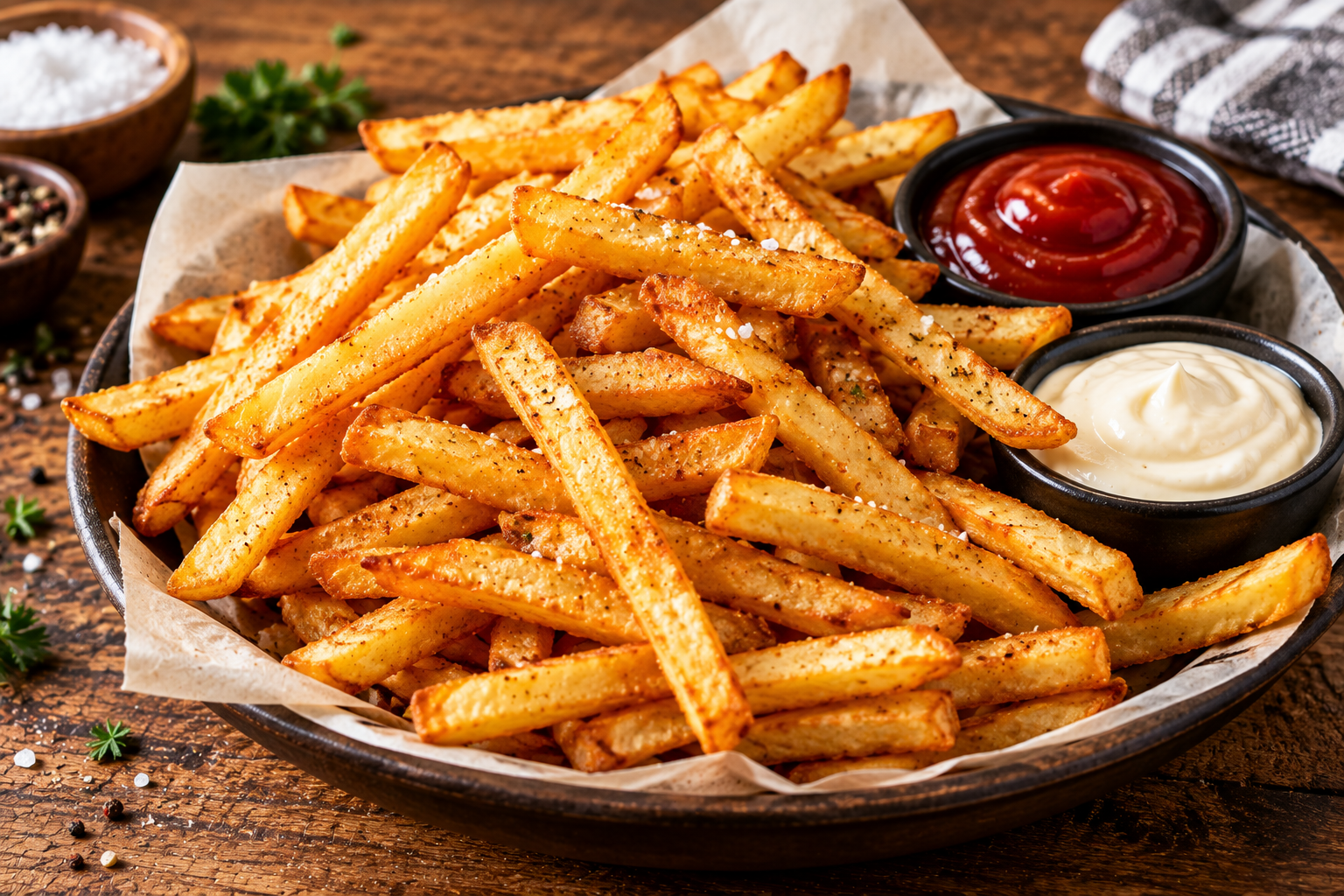
Classic French fries are a favourite side dish, loved for their crispy golden exterior and soft, fluffy centre. Made with starchy potatoes and a simple seasoning of salt, they pair perfectly with burgers, fried fish, grilled chicken, and a variety of dipping sauces.
The secret to homemade Classic French Fries is double frying. The first fry cooks the potatoes until tender, while the second fry creates a crisp, golden coating. Soaking the cut potatoes in cold water before frying also helps remove excess surface starch.
This easy recipe guides you through making delicious, restaurant-style Classic French Fries at home. Serve them straight from the fryer with ketchup, mayonnaise, or your favourite sauce for a satisfying snack or side dish.
Optional: Black pepper, paprika, garlic powder, or your favorite seasoning
Method:
Prepare the potatoes
Peel the potatoes, if desired, and cut them into evenly sized strips about 1 cm thick.
Place the strips in a bowl of cold water and soak for 30 minutes to remove excess surface starch.
Drain and dry
Drain the potatoes thoroughly and pat them completely dry with a clean kitchen towel.
Removing excess moisture helps the potatoes fry more evenly and reduces oil splattering.
Heat the oil
Pour the vegetable oil into a suitable, heavy-based pot or deep fryer, ensuring it is not more than halfway full.
Heat the oil to 160°C (320°F). Use a kitchen thermometer to check the temperature.
Fry the potatoes for the first time
Working in small batches, carefully lower the dried potato strips into the oil.
Fry for 4–5 minutes, or until softened but not browned.
Remove with a slotted spoon and drain on a wire rack or paper towels.
Allow the oil to return to the correct temperature between batches.
Increase the temperature
Carefully heat the oil to 190°C (375°F).
Make sure the cooking area is clear and keep water away from the hot oil.
Fry until golden and crispy
Return the potatoes to the oil in small batches.
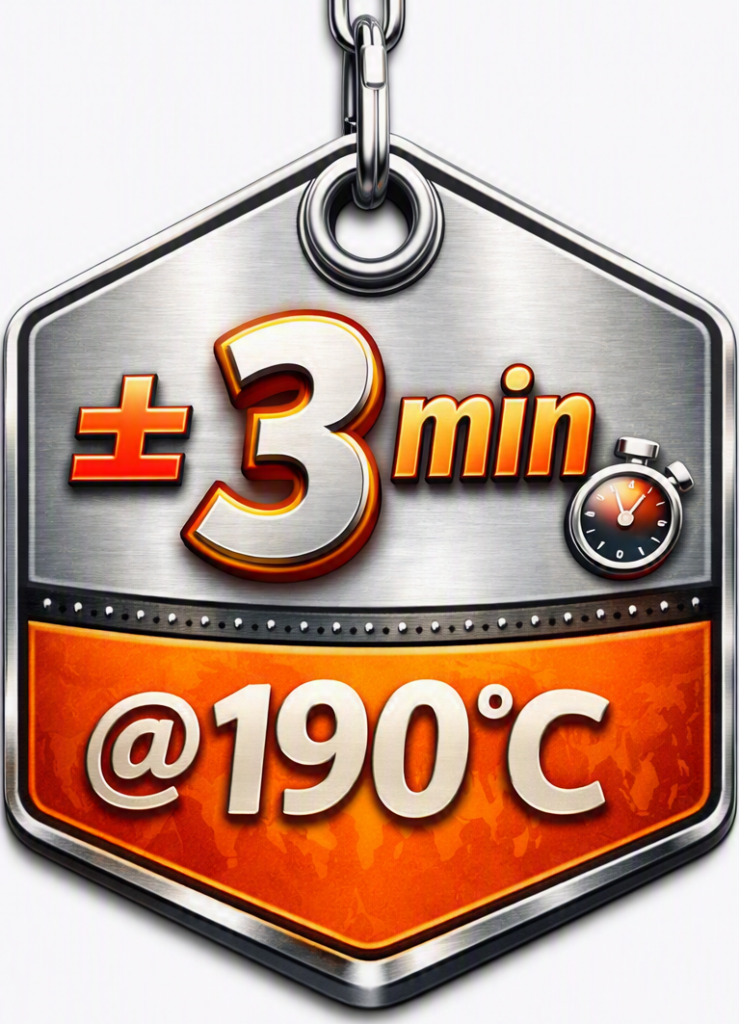
Fry for 2–3 minutes, or until golden brown and crisp.
Cooking time may vary depending on the thickness of the fries.
Season and serve
Remove the fries with a slotted spoon and drain briefly.
Season immediately with salt and any optional spices.
Serve hot with ketchup, mayonnaise, or your preferred dipping sauce.
Crispy, golden, and perfectly seasoned—Classic French Fries are the ultimate comfort food! 😊
This classic French Fries recipe is a timeless comfort food—crispy outside, fluffy inside, and endlessly customizable.
🌟 Key Highlights
Russet potatoes: High starch content makes them ideal for crisp fries.
Double frying: First fry cooks the potato through, second fry crisps the exterior.
Oil temperature: Precise heat control ensures golden, crunchy results.
Seasoning: Salt is essential, but paprika, garlic powder, or pepper add flair.
Why You’ll Love This Recipe
Crispy outside, fluffy inside: Double frying creates a satisfying contrast in texture.
Simple ingredients: You only need potatoes, oil, salt, and optional seasonings.
Easy to customise: Choose classic salted fries or experiment with garlic, paprika, and herbs.
Perfect for sharing: Serve them as a snack, a party favourite, or a side dish for family meals.
Better control at home: Adjust the seasoning and cut the potatoes to suit your preferences.
Tips for the Best Classic French Fries
Choose starchy potatoes: Russet potatoes or similar floury varieties are ideal for a fluffy centre.
Cut evenly: Uniform strips cook at a similar rate and help prevent some fries from burning while others remain undercooked.
Soak before frying: Thirty minutes in cold water helps remove excess starch from the surface.
Dry thoroughly: Wet potatoes can cause dangerous oil splattering and may not crisp as well.
Avoid overcrowding: Fry in small batches to help maintain the oil temperature.
Use a thermometer: Keeping the oil close to the recommended temperatures helps produce consistent results.
Season immediately: Salt sticks best while the fries are still hot.
Serve promptly: French fries are at their crispiest just after cooking.
Storage
Classic French Fries are best enjoyed immediately after cooking, when their exterior is crisp, and their centres are fluffy.
Refrigeration: Allow leftover fries to cool, then refrigerate in an airtight container within two hours of cooking. Eat within 3–4 days.
Reheating: Spread the fries in a single layer and reheat in an oven or air fryer at approximately 200°C (400°F) until hot and crisp. Avoid overcrowding.
Freezing: Cooked fries can be frozen, but their texture may change. For better results, freeze them in a single layer before transferring them to a freezer-safe container.
Food safety: Do not leave cooked fries at room temperature for more than two hours, or one hour when temperatures exceed 32°C.
This Classic French Fries dish is a global favorite—simple, versatile, and endlessly adaptable.
Classic French Fries are comfort food, and pairing them with the right side dishes can elevate your meal! Here are some great options:
Blooming Onion – A crispy battered onion that adds crunch and flavor.
Cheese Dip – Warm, gooey cheese enhances the fries’ crunchiness.
Tater Tots – A fun twist that complements the crispy fries.
Fried Shrimp – Light, crunchy batter with juicy seafood makes a great match.
What kind of meal are you planning—casual snack or full-on feast?
Here are some fun variations to experiment with for your Classic French Fries recipe:
Variations
Poutine: Top your fries with cheese curds and hot gravy for a Canadian classic.
Loaded Fries: Smother them with melted cheese, crispy bacon bits, and sour cream.
Spicy Sriracha Fries: Toss them in a mix of Sriracha and mayo for a fiery kick.
Garlic Parmesan Fries: Coat them with minced garlic, grated Parmesan, and fresh parsley.
Sweet Potato Fries: Swap regular potatoes for sweet potatoes and season with cinnamon and paprika.
Kimchi Fries: Add chopped kimchi, green onions, and a drizzle of spicy mayo for a Korean-inspired twist.
French Fry Waffle Burger: Use crispy fries as a waffle-like bun for a unique burger experience.
Cheesy Stuffed Fries: Wrap fries around cheddar cheese sticks and fry them for a gooey surprise.
Nacho Fries: Layer fries with nacho cheese, jalapeños, and black beans for a Tex-Mex treat.
Which variation sounds the most tempting to you? 🍟😋
Final Thoughts
Classic French fries are a simple, satisfying dish that can turn an everyday meal into something special. With starchy potatoes, properly heated oil, and the double-frying method, you can make fries that are golden and crisp on the outside and tender inside.
Serve them fresh with your favourite dipping sauce or alongside burgers, fish, or chicken. Once you have mastered this basic recipe, you can experiment with different cuts and seasonings to create your own favourite version.
Frequently Asked Questions
Why are my homemade Classic French Fries not crispy?
Excess moisture, overcrowded frying batches, or oil that is too cool can result in soft fries. Dry the potatoes thoroughly, fry in small batches, and follow the two recommended oil temperatures.
Do I need to peel the potatoes?
No. You can leave the skins on for a more rustic finish. Scrub the potatoes thoroughly before cutting them.
Why should I fry the potatoes twice?
The first fry softens and cooks the potatoes. The second fry, at a higher temperature, creates the golden, crispy exterior.
Can I prepare the potatoes ahead of time?
Yes. You can cut and soak the potatoes ahead of time, keeping them covered with cold water in the refrigerator. Drain and dry them thoroughly before frying.
Which oil is best for Classic French Fries?
Use a neutral-flavoured oil suitable for deep frying, such as vegetable or canola oil. Choose an oil with a high smoke point.
Can I make Classic French Fries in an air fryer?
Yes. Toss the cut, dried potatoes with a little oil and cook in a single layer at approximately 190–200°C (375–400°F), shaking the basket periodically. Cooking time varies with the thickness and the air fryer model. The texture will differ from traditional double-fried fries.
Essential cookies enable basic functions and are necessary for the proper function of the website.
Name
Description
Duration
Cookie Preferences
This cookie is used to store the user's cookie consent preferences.
30 days
These cookies are needed for adding comments on this website.
Name
Description
Duration
comment_author
Used to track the user across multiple sessions.
Session
comment_author_email
Used to track the user across multiple sessions.
Session
comment_author_url
Used to track the user across multiple sessions.
Session
Google's current Sign in with Google client library. It renders the Google sign-in button, or the One Tap prompt, so visitors can log in to your site with their Google account. It replaces the older Google Sign-In platform library.
Set on your own domain by the Sign in with Google client library. Records whether the visitor has dismissed the One Tap sign-in prompt and for how long it should stay hidden, plus the time the library last loaded and a browsing session id used for the same purpose. Sites that pass a custom state_cookie_name will see that name instead.
180 days
g_csrf_token
Set on your own domain by the Sign in with Google client library and submitted together with the sign-in credential, so your site can confirm the sign-in came from its own page and not from a forged cross-site request.
5 minutes
Statistics cookies collect information anonymously. This information helps us understand how visitors use our website.
Google Analytics is a powerful tool that tracks and analyzes website traffic for informed marketing decisions.
Contains information related to marketing campaigns of the user. These are shared with Google AdWords / Google Ads when the Google Ads and Google Analytics accounts are linked together.
90 days
__utma
ID used to identify users and sessions
2 years after last activity
__utmt
Used to monitor number of Google Analytics server requests
10 minutes
__utmb
Used to distinguish new sessions and visits. This cookie is set when the GA.js javascript library is loaded and there is no existing __utmb cookie. The cookie is updated every time data is sent to the Google Analytics server.
30 minutes after last activity
__utmc
Used only with old Urchin versions of Google Analytics and not with GA.js. Was used to distinguish between new sessions and visits at the end of a session.
End of session (browser)
__utmz
Contains information about the traffic source or campaign that directed user to the website. The cookie is set when the GA.js javascript is loaded and updated when data is sent to the Google Anaytics server
6 months after last activity
__utmv
Contains custom information set by the web developer via the _setCustomVar method in Google Analytics. This cookie is updated every time new data is sent to the Google Analytics server.
2 years after last activity
__utmx
Used to determine whether a user is included in an A / B or Multivariate test.
18 months
_ga
ID used to identify users
2 years
_gali
Used by Google Analytics to determine which links on a page are being clicked
30 seconds
_ga_
ID used to identify users
2 years
_gid
ID used to identify users for 24 hours after last activity
24 hours
_gat
Used to monitor number of Google Analytics server requests when using Google Tag Manager
1 minute
Marketing cookies are used to follow visitors to websites. The intention is to show ads that are relevant and engaging to the individual user.
Google Ads is an online advertising platform that enables businesses to create targeted ads displayed on Google search results and partner sites.
Targeting cookie. Used to create a user profile and display relevant and personalised Google Ads to the user.
2 years
__Secure-1PSIDCC
Targeting cookie. Used to create a user profile and display relevant and personalised Google Ads to the user.
2 years
__Secure-3PAPISID
Profiles the interests of website visitors to serve relevant and personalised ads through retargeting.
2 years
AEC
AEC cookies ensure that requests within a browsing session are made by the user, and not by other sites. These cookies prevent malicious sites from acting on behalf of a user without that user's knowledge.
6 months
ADS_VISITOR_ID
Cookie required to use the options and on-site web services
2 months
__Secure-3PSIDCC
Targeting cookie. Used to create a user profile and display relevant and personalised Google Ads to the user.
2 years
__Secure-3PSIDTS
Targeting cookie. Used to create a user profile and display relevant and personalised Google Ads to the user.
2 years
__Secure-1PSIDTS
Targeting cookie. Used to create a user profile and display relevant and personalised Google Ads to the user.
2 years
__Secure-1PAPISID
Targeting cookie. Used to create a user profile and display relevant and personalised Google Ads to the user.
2 years
__Secure-3PSID
Targeting cookie. Used to profile the interests of website visitors and display relevant and personalised Google ads.
2 years
Conversion
Google uses cookies for advertising, including serving and rendering ads, personalizing ads (depending on your ad settings at g.co/adsettings), limiting the number of times an ad is shown to a user, muting ads you have chosen to stop seeing, and measuring the effectiveness of ads.
90 days
_gcl_aw
Google uses cookies for advertising, including serving and rendering ads, personalizing ads (depending on your ad settings at g.co/adsettings), limiting the number of times an ad is shown to a user, muting ads you have chosen to stop seeing, and measuring the effectiveness of ads.
90 Days
_gcl_gs
Google uses cookies for advertising, including serving and rendering ads, personalizing ads (depending on your ad settings at g.co/adsettings), limiting the number of times an ad is shown to a user, muting ads you have chosen to stop seeing, and measuring the effectiveness of ads.
90 Days
_gcl_gb
Google uses cookies for advertising, including serving and rendering ads, personalizing ads (depending on your ad settings at g.co/adsettings), limiting the number of times an ad is shown to a user, muting ads you have chosen to stop seeing, and measuring the effectiveness of ads.
90 Days
_gac_gb_
Google uses cookies for advertising, including serving and rendering ads, personalizing ads (depending on your ad settings at g.co/adsettings), limiting the number of times an ad is shown to a user, muting ads you have chosen to stop seeing, and measuring the effectiveness of ads.
90 Days
FPGCLGB
Google uses cookies for advertising, including serving and rendering ads, personalizing ads (depending on your ad settings at g.co/adsettings), limiting the number of times an ad is shown to a user, muting ads you have chosen to stop seeing, and measuring the effectiveness of ads.
90 Days
FPGCLAW
Google uses cookies for advertising, including serving and rendering ads, personalizing ads (depending on your ad settings at g.co/adsettings), limiting the number of times an ad is shown to a user, muting ads you have chosen to stop seeing, and measuring the effectiveness of ads.
90 Days
You can find more information in our Cookie Policy and .