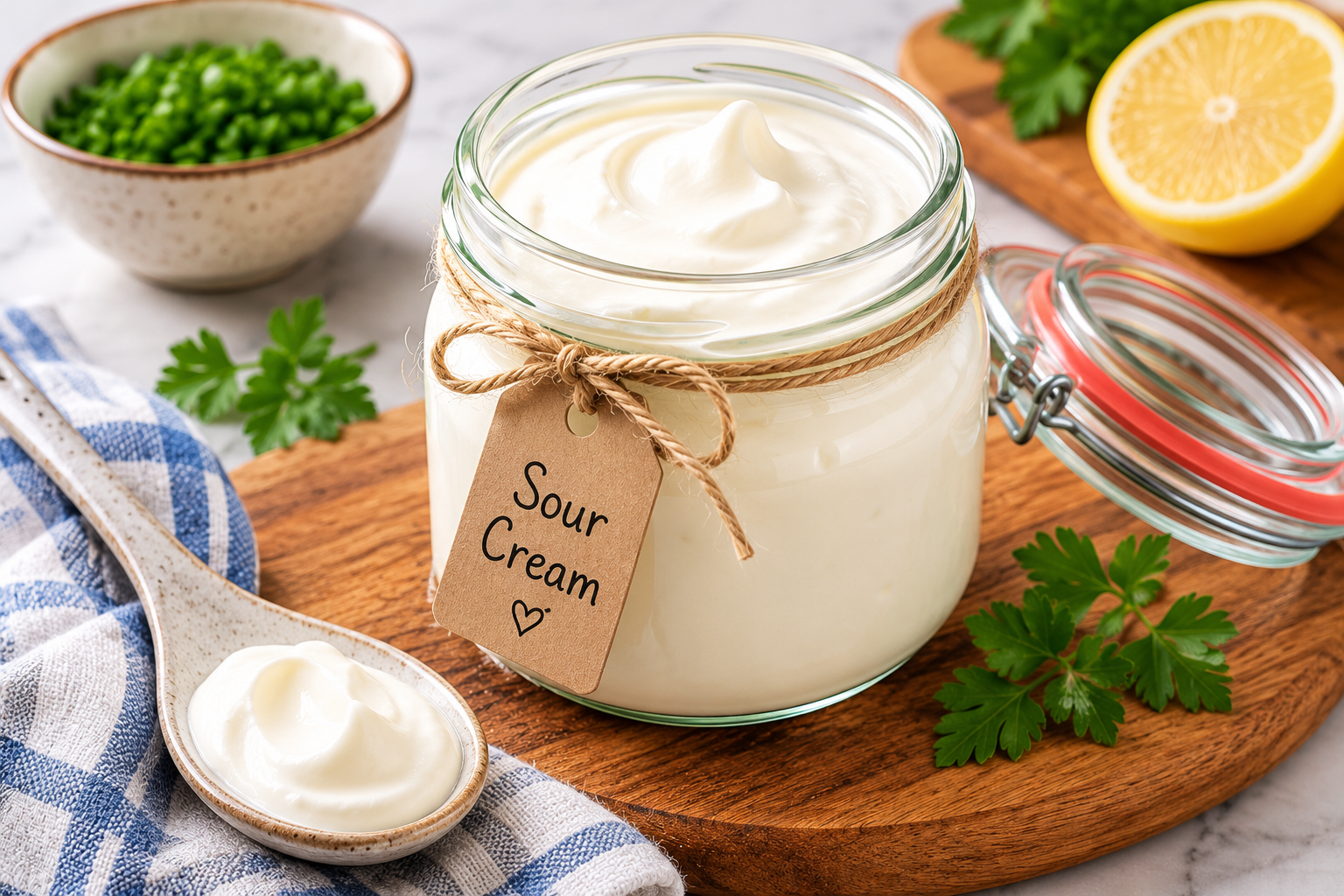
Homemade sour cream is a creamy, tangy kitchen staple that adds a refreshing touch to everything from loaded baked potatoes to tacos and dips. With its smooth texture and gentle acidity, it balances rich, savoury dishes and brings extra flavour to everyday meals.
This simple recipe combines heavy cream with lemon juice or white vinegar to create a thick, creamy condiment. For a more traditional cultured flavour, you can add a little plain yoghurt containing live cultures and allow the mixture to ferment under suitable conditions.
Use homemade sour cream as a topping, stir it into dressings, or mix it with fresh herbs and garlic to make a quick dip. Once you have it ready in the fridge, there are plenty of delicious ways to enjoy it.
Sour Cream
Recipe
Ingredients:
1 cup heavy cream
2 tsp lemon juice or white vinegar
¼ cup whole milk (optional, for lighter texture)
Pinch of salt
2 tablespoons plain yoghurt with live cultures (optional, for a cultured version)
Method:
Combine the ingredients:
Pour the heavy cream into a clean bowl or jar.
Stir in the lemon juice or white vinegar until evenly combined.
Add the optional milk if you prefer a thinner consistency.
Choose your method:
For a quick, acid-based version, stir the mixture well and refrigerate it until chilled and slightly thickened.
For a cultured version, stir in the plain yoghurt containing live cultures and follow the fermentation and food-safety guidance below.
Culture the mixture if using yoghurt:
Cover the jar with a clean lid that is not tightly sealed, and keep the mixture at a controlled, food-safe temperature according to the yoghurt culture or starter instructions.
Do not leave ordinary cream and lemon juice or vinegar sitting at room temperature for 24 hours without a validated method.
Check the consistency:
Once the cultured mixture has thickened as directed by the starter instructions, stir gently.
It should have a smooth, creamy texture and a pleasantly tangy aroma.
Discard it if you notice mould, unusual discolouration or an unpleasant smell.
Season and chill:
Add a pinch of salt if desired.
Transfer the finished sour cream to the refrigerator and chill before serving.
Refrigerate promptly and keep it cold.
Serve:
✨ Tip : For extra tang and creaminess, add 2 tbsp plain yogurt when mixing—it helps culture the cream naturally.
Tangy, creamy, and perfect for dips, baked potatoes, or tacos.🥛
Why You’ll Love This Recipe
Simple ingredients: Heavy cream and a few kitchen staples form the base of this versatile condiment.Creamy and tangy: Its gentle acidity balances rich foods and spicy flavours.Easy to customise: Add herbs, garlic, spices or citrus to create a flavourful dip or sauce.Versatile in the kitchen: Use it as a topping, dressing ingredient or baking addition.Made to suit your taste: Adjust the thickness and seasonings depending on how you plan to serve it.
Tips for the Best Homemade Sour Cream
Use fresh cream: Fresh, good-quality cream provides the best flavour and texture.Choose the right method: Lemon juice or vinegar provides acidity but does not, by itself, create traditionally cultured sour cream. Use a suitable live-culture starter and its instructions if you want a cultured version.Avoid uncontrolled fermentation: Do not leave dairy mixtures at room temperature for a full day unless you are following a validated, food-safe culturing method with appropriate temperature control.Adjust the thickness: Add milk sparingly if you prefer a looser consistency. Too much liquid can make the finished mixture thin.Chill before serving: Refrigeration improves the texture of the acid-based version and keeps the finished condiment cold.Add herbs just before serving: Fresh chives, dill and parsley bring a lovely flavour to sour cream dips.Keep it refrigerated: Homemade versions do not necessarily have the same shelf life as commercially produced sour cream. Use promptly and discard anything that appears or smells spoiled.
Storage
Refrigeration: Store homemade sour cream in a clean, airtight container in the refrigerator at 4°C or colder. Because homemade versions vary in preparation and acidity, use them promptly and follow any validated starter instructions for the cultured version. Do not assume they have the same shelf life as commercial sour cream.Serving: Use a clean spoon each time and return the container to the refrigerator promptly after serving.Freezing: Freezing is not recommended if you want to preserve the original smooth texture, as the mixture may separate or become grainy after thawing.Food safety: Discard sour cream if you notice mould, unusual colour, an unpleasant smell, or other signs of spoilage. Do not taste it to determine whether it is safe.
This sour cream is essentially a culinary cornerstone of creaminess —easy to make, endlessly adaptable, and always elevating dishes.
Here are dishes and side pairings that complement it beautifully:
🌮 Mexican & Tex-Mex
Spicy Tacos Loaded Nachos : Drizzle over chips, cheese, and salsa.Quesadillas : Creamy dip alongside melted cheese.Burrito Bowls : Add richness to rice, beans, and salsa.
🥔 Comfort Foods
Loaded Baked Potatoes Mashed Potatoes : Stir in for extra creaminess.Potato Pancakes (Latkes) : Classic Eastern European pairing.Pierogi : Dumplings served with sour cream dollops.
🐟 & 🥩 Proteins
Fried Shrimp Grilled Salmon : Sour cream-herb sauce as garnish.Beef Stroganoff : Essential creamy element in the sauce.Chicken Paprikash : Traditional Hungarian dish enriched with sour cream.
🥗 Fresh & Light
Cucumber Salad : Creamy dressing base.Coleslaw with Sour Cream Dressing : Tangy twist on a classic.Beet Salad : Earthy-sweet balance with creaminess.Fruit Salad : Sweetened sour cream drizzle.
Here are some fun variations to experiment with for your Sour Cream recipe:
Variations
🌿 Flavor Twists
Garlic herb sour cream : Mix in roasted garlic, parsley, and chives.Citrus sour cream : Add lemon or lime zest for brightness.Spiced sour cream : Stir in paprika, cumin, or chili powder.Smoky sour cream : Add smoked paprika or chipotle for depth.
🍯 Sweet-Savory Experiments
Honey sour cream : Blend in honey for a sweet dip.Maple sour cream : Add maple syrup for caramel notes.Nutty sour cream : Stir in toasted sesame or walnut oil.Cheesy sour cream : Mix in grated Parmesan or cheddar.
🌍 Fusion Ideas
Mexican-style sour cream : Add lime juice and cilantro, perfect for tacos.Greek-inspired sour cream : Mix with cucumber and dill for a tzatziki-style dip.Indian-style sour cream : Season with turmeric, coriander, and cumin.South African vibe sour cream : Infuse with chutney or peri-peri spice.
🍽 Serving Ideas
Final Thoughts
Homemade sour cream is a useful kitchen staple that brings creamy texture and tangy flavour to everyday meals. Whether you spoon it over baked potatoes, serve it with crispy shrimp or use it to cool down spicy tacos, it is an easy way to add a little extra flavour to your cooking.
Choose the preparation method that suits your needs, keep the finished mixture properly refrigerated, and customise it with herbs, citrus or spices whenever you want something a little different.
Frequently Asked Questions
Can I make sour cream with lemon juice?
Yes. Lemon juice adds acidity and tang to heavy cream. The result is a simple sour-cream-style condiment, although it is not the same as traditionally cultured sour cream.
Can I use white vinegar instead of lemon juice?
Yes. White vinegar can be used in the same quantity. It provides acidity without the citrus flavour of lemon juice.
Why is my homemade sour cream thin?
The cream may not have thickened sufficiently, or the mixture may contain too much added milk. Chill the acid-based version and stir gently. For a cultured version, follow the starter’s instructions and allow the culture to develop under controlled conditions.
Can I use milk instead of heavy cream?
Heavy cream is recommended because its higher fat content produces a richer result. Milk alone will create a much thinner mixture and will not give the same creamy texture.
Can I use homemade sour cream in cooking?
Yes. It works well in dips, dressings, toppings and many recipes. When adding it to hot sauces or soups, lower the heat and stir it in gradually to reduce the risk of curdling.
How long does homemade sour cream last?
The safe storage time depends on the ingredients and preparation method. Keep it refrigerated at 4°C or colder, use it promptly, and follow the instructions for any live-culture starter used. Homemade sour cream should not automatically be given the same shelf life as a commercially produced product.
Is yoghurt necessary?
No. Yoghurt containing live cultures is optional for a cultured version, but it is not essential for an acid-based sour cream substitute made with lemon juice or vinegar.
Tags
Select Tag
2% milk
afternoon tea treats
airy crumb sourdough slice
All-Purpose Flour
Almonds
American cheese
American Cuisine
American diner classic
andouille
andouille sausage
antioxidant-rich
antipasto platter
Appetisers
Appetizer
appetizer platter serve
Apple
Apple Cider Vinegar
Apple Pie Recipe
Apricot Jam
apricots
Arborio Rice
aromatic rice with toasted coconut
artichoke hearts
artisan bread preparation
Artisan Cuisine
artisan laminated dough
artisan loaf
artisanal gift jar
artisanal label
Asian Cuisine
Asian-Inspired Cuisine
Asparagus
authentic Thai comfort food serve
autumn tones
autumn vibes
Avocado
avocado crema
avocados
baby bok choy
Bacon
bacon bits
bacon fat
Bacon Soup
bacon-studded interior
Baked
baked potato topping
bakery-style dessert
Baking
Baking Essentials
Baking Powder
Baking Soda
Balsamic Vinegar
Banana
barbecue comfort food spread
barbecue party spread
Basics & Essentials
Basil
basil garnish sprinkle
bay leaf
Bay Leaves
BBQ Sauce
Bean Soup
Bean Soup with Bacon Cubes
Beans
Beef Bolognese
Beef Drippings
beef roast
beef sausages
Beef Stock
Beer
Bell Pepper
bell peppers
berry
beurrage
biscuits
bite-sized format
bite-sized rolls
Black Beans
Black Pepper
black sesame
Blue Cheese
Blue Cheese Dressing
blueberries
boiled eggs
bok choy
bold flavors
bowl presentation
braised oxtail stew bowl
Bread
bread flour
Bread Making
Breadcrumbs
Breakfast
breakfast plate serve
breakfast spread
bright green contrast
bright green pods
bright lighting
bright pepper garnish
brioche bun with lettuce tomato pickles
brioche buns
British Cuisine
broccolini
broth
Brown Sugar
brunch board
brunch table
brunch table setting
brunch table styling
brush-on glaze for grilled meats
brushed sheen
brushed tops
Brussel Sprout
Brussels sprouts
bubbling active starter
bubbling cheese topping
bubbling sauce topping
bubbly texture
Buffalo Cauliflower Bites
Buffalo Sauce
buffalo sauce in dipping bowl
burger buns
burger sauce
burger topping spread
Burgers
burrito with salsa dip
Butter
butter block
butter envelope
butter glaze shine
Buttermilk
Cabbage
Cajun Seasoning
Cajun-Inspired Seasoning
Cake
Cake Flour
Candied Fruit Skewers
Candied Grape
Candied Strawberries
canola oil
Caramelized
caramelized wing glaze
cardamom
Carrot
Carrot Muffins
Carrots
carved roast platter
cashews
cast iron pan plating
cast-iron roasting pan serve
Castor Sugar
casual appetizer tray
casual baking prep setup
casual brunch setup
casual comfort food platter
casual comfort food serve
casual comfort food side
casual comfort food spread
casual comfort food tray
casual condiment tray
casual dining
casual elegance
casual family dinner setting
casual family-style loaf spread
casual party dip platter
casual party-style sandwich serve
casual party-style seafood serve
casual plating
casual serving
catfish
catfish fillets
Cauliflower
Cayenne Pepper
Celery
celery seeds
ceramic serving bowl
charred asparagus with red pepper flakes
charred cob serve
charred edges
Cheddar Cheese
Cheese
cheese board pairing
cheese garnish
cheese shavings
cheesy topping option
Cheez Whiz
Cherry Tomatoes
chewy interior
Chicken
chicken breasts
Chicken Broth
chicken sausages
Chicken Stock
chicken thighs
Chicken Wings
Chili
Chili Flakes
chili peppers
Chili Powder
chilies
chilled dough
chilled noodle salad with herbs
chilled option
chilled salad
chilled salad platter
chips and veggie platter
chips with salsa dip
Chives
Chocolate
chopstick-friendly
chorizo
chunky avocado dip with tortilla chips
chunky dressing jar
ciabatta bread
Cilantro
Cinnamon
Cinnamon Apple Pie
Citrus
citrus accent
citrus and pineapple garnish
citrus garnish
citrus glaze
Classic accompaniment
classic baking technique showcase
classic burger stack
classic comfort
classic comfort food loaf
classic hot dog tray
classic Philly cheesesteak hoagie
classic technique
clear glass jar
close-up of bacon bits
Cloves
Cocoa Powder
coconut flakes
Coconut Milk
coconut topping
cod
Cold Dish
cold water
colorful Asian slaw bowl
colorful garnish spread
colorful Greek orzo salad bowl
colorful greens with pomegranate garnish
colorful mix
colorful salsa topping
colorful summer slaw bowl
colorful taco platter
colorful Thai basil fried rice platter
colorful Thai papaya salad platter
colorful tomato and corn mix
colorful vegetable mix
colorful vegetables
colorful veggie wrap platter
Comfort Food
comfort food setting
communal barbecue spread
Component
Condiment
cooking
cooking oil
CookingBasics
CookingForBeginners
CookingTips
cooling rack shot
Coriander
Corn
corn flour
Corn Fritters
corn kernels
corn on the cob
Corn Starch
Corn Syrup
corn tortillas
Cornmeal
Cornstarch
cozy comfort food ingredient tray
cozy comfort food platter
cozy comfort food serve
cozy comfort food side dish
cozy comfort food slices
cozy comfort food spread
cozy dinner table
cozy family dinner table
cozy family-style risotto spread
cozy lighting
cozy table setting
cozy vegetarian comfort food serve
cracked pepper garnish
Cream
Cream Cheese
Cream Cheese Frosting
creamy asparagus risotto bowl
creamy avocado ranch dip bowl
creamy blue cheese dip bowl
creamy Cajun potato salad bowl
creamy cheesy polenta bowl
creamy coconut rice platter
creamy coleslaw bowl
creamy custard dessert
creamy Parmesan risotto bowl
creamy peanut sauce noodles
creamy potato leek soup bowl
creamy sauce coating
creamy spinach filling
creamy spinach in rustic skillet
creamy texture
creamy topping swirl
creamy truffle mac and cheese bowl
Creamy Tuna Salad
CreativeCooking
Creole Seasoning
Creole Spice
Creole Spice Blend
crisp and airy pudding tray
crisp edges
crisp texture
crispy bacon topping
crispy baked potato skins
crispy brussels sprouts bowl
crispy buffalo cauliflower platter
crispy carnitas taco platter
Crispy Corn Fritters
crispy fried chicken sandwich platter
crispy fried fish with lemon garnish
crispy golden catfish fillets
crispy golden french fries bowl
crispy golden shrimp platter
crispy seafood po’boy sandwich
crispy sweet potato fries platter
crispy Swiss rösti pancake
crispy taco shells stack
crispy texture
crispy tortilla chips platter
crispy-edged smash burger stack
cross-section reveal
crumbly texture
crunchy nut topping
crunchy street food serve
cubed cheese
Cucumber
cucumbers
Cumin
Cumin Seeds
Curry
Custard slices
deep indigo hue
Dessert
dessert platter
détrempe
diced tomatoes
Dijon Mustard
Dill
Dill Pickle
diner-style burger plate
diner-style sandwich plate
Dinner
Dip
dipping sauce bowl
dipping sauce bowls
dipping sauce pairing
dipping sauce with buffalo wings
dipping-ready
DIY Kitchen Basics
dough preparation
Dressing
dry mango powder
Dutch oven baked
Dutch oven baked sourdough
Easy Apple Pie
Easy Dessert Ideas
Easy Lunch Recipes
easy pastry recipe
Easy Side Dishes
EasyRecipes
Edamame
edamame pods
Egg
egg white
Egg Whites
Egg Yolk
egg yolks
eggs
elegant appetizer tray
elegant apricot jam infused curry
elegant brunch table
elegant cilantro garnish serve
elegant comfort food serve
elegant dinner plating
elegant dinner spread
elegant healthy food serve
elegant herb-garnished polenta
elegant lime and chili garnish
elegant parsley garnish presentation
elegant party vegetable platter
elegant party-style potato spread
elegant party-style salad spread
elegant pastry block with butter
elegant plating
elegant rice dish with lime wedges
elegant sesame garnish serve
elegant side dish serve
elegant side platter
elegant simplicity
elegant spicy noodle presentation
elegant vegetable side
family barbecue setting
family dinner table setting
family-style barbecue tray
family-style serving dish
family-style serving tray
Fast Food
fast food classic serve
Fermentation
fermentation timeline
festive family table
festive holiday spread
festive party snack
festive party-style British comfort food
festive party-style Cajun spread
festive party-style gumbo spread
festive party-style jambalaya spread
festive roasted vegetable dish
festive tray
Festive vegetable dish
Feta
feta and olive garnish
Feta Cheese
feta crumble topping
fiesta platter arrangement
fiesta-style taco tray
figs
filling-ready
filtered water
fish and chips style serve
fish pairing
Fish Sauce
flaky layers
flaky texture
Flavor Enhancer
FlavorBoosters
flax eggs
float test demo
floral notes
Flour
flour tortillas
fluffy coconut ginger rice bowl
fluffy grains
fluffy potato interior
fluffy rice texture
fluffy texture
Food
FoodLovers
fork swirl detail
fork-fluffed interior
fork-fluffed texture
fragrant aroma
fragrant rice with coriander garnish
French bread
French Cuisine
fresh asparagus garnish
fresh avocado corn salad bowl
fresh basil garnish
fresh cabbage and salsa garnish
fresh cabbage crunch
fresh chive garnish
fresh cilantro garnish
fresh coriander
fresh coriander topping
fresh dairy spread
fresh dairy substitute bowl
fresh fruit
fresh garnish
fresh ginger
fresh greens and hummus spread
fresh guacamole dip bowl
fresh herb accent
fresh herb garnish
fresh herb topping
fresh herbs
fresh mint garnish
fresh pomegranate salad bowl
fresh vegetable salad with peanuts
freshly baked aroma
fried catfish with lemon wedges
Fried Dish
fries with ketchup dipping sauce
frozen edamame
Fruit Desserts
game-day snack spread
garam masala
Garlic
garlic aioli
garlic butter
garlic oil
Garlic Powder
garnish contrast
garnish with coriander
garnish-ready sesame sprinkle
garnished top
Gelatin
Ginger
ginger miso dressing drizzle
ginger-garlic paste
glass jar fermentation
glaze
glazed roast finish
glossy balsamic onion garnish
glossy butter-coated peas
glossy chili pepper sauce bottle
glossy egg wash finish
glossy finish
glossy glazed finish
glossy marinade coating
glossy soy glaze bowl
glossy spinach with nutmeg garnish
glossy wing coating
golden baked ham rolls
golden baked quiche slice
golden baked tortilla triangles
golden beer-battered fish fillets
golden blistered surface
golden breadcrumb topping baked dish
golden brown
golden brown rolls tray
golden caramelized onions in pan
golden charred shrimp filling
golden cornmeal-crusted fish
golden crisp exterior
golden crispy onion rings platter
golden crunchy chicken fillet in bun
golden crust
golden crust artisan bread
golden crust pizza slice
golden curry sauce bowl
golden finish
golden fried rösti wedges
golden fried shrimp po’boy
golden fried tortilla shells
golden fries with paprika dusting
golden garlic slices
golden glazed loaf slices
golden grilled panini platter
golden honey butter glaze
golden hue
golden hue highlight
golden pancetta bits
golden pastry
golden polenta with melted cheese
golden puff pastry layers
golden puffed Yorkshire puddings
golden rice with sausage
golden rice with sausage and shrimp
golden risotto with cheese topping
golden risotto with Parmesan topping
golden roasted brussels sprouts platter
golden roasted sweet potatoes
golden roasted turkey platter
golden roux-based gumbo
golden sear
golden toasted buns
golden toasted burrito halves
golden toasted sesame seeds bowl
golden tops
golden yolk breakfast plate
gourmet comfort food spread
Gourmet Cuisine
gourmet truffle-infused mac and cheese
Granny Smith Apples
Granulated Sugar
Grapes
Greek yogurt
Green Beans
green cabbage
green chili
green color palette
green onions
green papaya
Green Peas
Green Pepper
grill marks
grilled asparagus platter
grilled BBQ wings platter
grilled corn platter
Grilled Dish
grilled sausage tray
Ground Beef
ground cinnamon
Ground Meat
guacamole
gumbo with sausage and shrimp
hake
halved avocados
Ham
hand-held format
hand-torn texture
Hawaiian Pineapple Carrot Muffins
health
healthy Asian comfort food bowl
Healthy Option
hearty breakfast side
hearty comfort food flavor base
hearty comfort food platter
hearty comfort food sauce platter
hearty oxtail with vegetables
Hearty Soup Recipes
hearty Southern comfort food platter
hearty Southern comfort food stew
Heavy Cream
herb accent
herb crusted beef slices
herb flecks
herb garnish
herb garnish option
herb garnish sprinkle
herb sprig decoration
herbaceous aroma
Herbs
hoagie rolls
holiday centerpiece spread
holiday table
HomeCooking
Homemade Apple Pie
homemade bread prep
Homemade Candy
homemade custard slices
Homemade Desserts
homemade fermentation bread
homemade fermentation process
Homemade Fritters
homemade kitchen essentials spread
Homemade Seasoning
Homemade Soup
Homemade Spice Mix
homestyle soup pot
Honey
Honey Mustard
hot dog buns
Hot Sauce
hummus
Ice
ice cream pairing
Icing Sugar
Ingredient Substitute
IngredientSubstitutions
instant yeast
isotto
Italian Cuisine
Italian Seasoning
Italian-Inspired Recipes
Jalapeños
jasmine rice
Kalamata olives
Ketchup
ketchup and mustard drizzle
KitchenConversions
Kiwi
kosher salt
laminated layers
layered base
layered flaky puff pastry sheet
layered ingredients
layered tortilla filling
Leeks
lemon accent
lemon drizzle garnish
Lemon Juice
lemon wedge garnish
lemon wedges
Lemon Zest
lemon zest sprinkle
Lemon-Lime
lentils
Lettuce
light and bright
Light Meal
Lime
lime garnish
Lime Juice
lime wedge garnish
LindiesHiddenDelight
linen napkin backdrop
Lunch
Macaroni
Main Dish
maple syrup
masa harina
Masala
mashed potatoes
Mayonnaise
MealPlanning
Meat
meat dish
Meat Stock
Meatballs
Mediterranean-Inspired
melted butter
melted butter finish
melted cheese sandwich stack
melted cheese topping
melted provolone topping
Mexican Cuisine
Milk
milk wash
minimal styling
minimalist plating
Mint
minted peas in rustic bowl
Miso Paste
mixed greens
Mixed Vegetables
Molasses
mortar and pestle prep
Mozzarella Cheese
Muffin
mushroom sauce
mushrooms
Mustard
natural pectin
natural sweetener
natural yeast culture
naturally leavened
navy beans
neutral linen backdrop
neutral oil
New Orleans classic dish
New Orleans classic rice dish
New Orleans street food classic
New Orleans-inspired rice dish
New Orleans-inspired seafood dish
no additives
no refined sugar
No-Cook Recipes
Noodle Dish
Nutmeg
nutrition
Oats
Oil
okra
Olive Oil
Olives
Onion
Onion Powder
onion rings
onion slices
onions
optional spice
Orange
Orange Juice
oranges
Oregano
orzo pasta
outdoor setting
oven-baked spicy bites
overhead plating
overhead shot
Oxtail
oyster sauce
oysters
palm sugar
pancetta
paneer
panko
panko breadcrumbs
Paprika
paprika garnish topping
parchment base
parchment liners
parchment setup
parchment-lined tray
parmesan
Parmesan Cheese
Parmesan-topped asparagus spears
parmesan-topped creamed spinach bowl
Parsley
parsley garnish
parsley garnish sprinkle
party appetizer tray
Party Desserts
Party Food
party platter
party snack platter
party-style baked cornbread
party-style cheesy pasta serve
party-style condiment tray
party-style fry spread
party-style ham rolls platter
party-style Mexican spread
party-style noodle dish with garnishes
party-style panini spread
party-style pizza tray
party-style salad platter
party-style sandwich spread
party-style snack tray
party-style taco spread
party-style taco tray
party-style wrap rolls
Pasta Dish
pasta water
Pastry
Peanut Butter
peanuts
Peas
Pecan Nuts
pecans
Pecorino Romano
Pepper
Peppercorns
pepperoni
peppers
pesto
pickles
picnic barbecue spread
Picnic Food
picnic table setting
picnic table spread
picnic-ready
pico de gallo
pine nuts
Pineapple
pineapple chunks
Pineapple Juice
Pineapple Muffins
Pizza
pizza sauce
plain flour
plated fillet
plated symmetry
po’boy with lettuce tomato pickles
Polenta
Pomegranate Seeds
pork sausages
Pork Shoulder
Potato
Potato Dish
potatoes
potluck platter
PrintAndShareRecipes
protein centerpiece
provolone cheese
Puff Pastry
puff pastry dessert
Puff Pastry Pie
queso fresco
Quiche
Quick & Easy
Quick Meal
Quick Meals
Quick Side Dish
Quinoa
ramen
Ranch Dressing
ranch seasoning
Raspberries
Recipe
RecipeIdeas
recipes
RecipeVariations
red bell pepper
red bell peppers
red cabbage
red chili
red chili powder
red chilies
Red Onion
Red Pepper Flakes
Red Wine
red wine jus drizzle
Red Wine Vinegar
relish
retro charm
ribeye
ribeye steak
Rice
rice accompaniment
rice bowl
Rice Dish
rice flour
rice noodles
Rice Vinegar
rich green color
rigatoni
ripe produce
Risotto
Roast
roasted peanuts
roasted red pepper
roasted sausage dish
roasted vegetables
Rosemary
rosewater
rösti with chive garnish
russet potatoes
rustic Asian comfort food bowl
rustic Asian vegetable side dish
rustic Asian-inspired comfort food platter
rustic Asian-inspired side dish
rustic baked beans casserole
rustic baked sweet potato platter
rustic bowl
rustic bread basket
rustic bread side
rustic British side dish platter
rustic burrito platter
rustic Cajun rice skillet
rustic carving board
rustic comfort food pasta platter
rustic comfort food platter
rustic comfort food serve
rustic condiment bowl
rustic condiment jar
rustic deli-style serve
rustic dipping sauce spread
rustic elegance
rustic family table
rustic folds
rustic French pastry preparation
rustic fry basket with dip
rustic gumbo bowl with rice
rustic homemade pizza platter
rustic hot sauce jar
rustic Italian comfort food serve
rustic Italian side dish
rustic jambalaya pot with rice
rustic jar presentation
rustic jar styling
rustic kitchen essentials spread
rustic kitchen setting
rustic lentil loaf platter
rustic Mexican appetizer platter
rustic Mexican street food serve
rustic muffin tin
rustic onion topping bowl
rustic oven-baked fries
rustic party dip platter
rustic party salad platter
rustic party snack spread
rustic party snack tray
rustic party-style slaw platter
rustic party-style Thai salad
rustic pastry crust
rustic plating
rustic potato side dish
rustic round
rustic salad drizzle
rustic salad platter with feta and nuts
rustic sausage platter
rustic savory bread snack
rustic seafood basket
rustic seafood platter
rustic shrimp taco platter
rustic skillet
rustic skillet cornbread
rustic skillet serve
rustic slice
rustic slow-cooked meat dish
rustic snack basket
rustic sourdough loaf
rustic sourdough starter jar
rustic South African condiment
rustic Southern comfort food platter
rustic starter
rustic street food serve
rustic style
rustic styling
rustic summer barbecue spread
rustic summer salad spread
rustic summer table
rustic texture
rustic toast styling
rustic tortilla wrap halves
rustic vegetable side dish
rustic wooden board
rye flour
Salad
salad bowl
Salad Dish
salmon fillets
salsa
salsa-filled cavity
Salt
salt water
Sandwich
sandwich companion portion
Sauce
sautéed onions
savory preserve styling
savory simplicity
Savory Snack
savory-sweet
scoopable serving
scored top
Sea Salt
Seafood
seasonal preserve
Seasoning
Sesame Oil
sesame seed garnish salad
sesame seeds
sesame seeds in glass jar
sharp cheddar cheese
shiny glaze drizzle over vegetables
shredded cheese
shrimp
Side Dish
side dish elegance
side dish styling
SideDishIdeas
simple elegance
simple homemade buttermilk jar
simple homestyle dish
simple plating
skillet finish
skillet presentation
skillet serve
skillet-charred edges
skillet-to-table serve
Slow-Cooked Stew
small bowl serving
smoked paprika
smoked sausage
smoky bacon garnish
smoky finish
Snack
Snack Recipes
snackable format
snake beans
soba
soft pliability
soft white finish
softened butter
Soup
Sour Cream
sour cream in jar
sourdough bread
sourdough starter
SouthAfricanCuisine
Southern Cuisine
Southern-style cornbread platter
Soy Sauce
Spagetti
spaghetti
Spaghetti Bolognese
Spaghetti Recipes
Spice
spicy comfort food drizzle
spicy condiment tray
spicy fried rice with chili garnish
spicy kick
Spinach
split open presentation
spoon drizzle detail
spoon drizzle of garlic butter
Spray & Cook
spring onions
spring table setting
sriracha
stacked arrangement
stacked biscuits
stacked display
stacked rounds
starchy potatoes
starter with flour and water
steam plume
steam rising
steam-sauté hybrid
steamed bok choy platter
steamed elegance
step-by-step visual
step-by-step visuals
Stew
stone fruit
strawberries
Strawberry
Street Food
street food basket with tartar sauce
street food style
Sugar
Sugar Bean Soup
sugar-dusted tops
summer barbecue side dish
summer board
summer snack spread
sunny side up eggs on toast
sweet and tangy
sweet and tart
sweet corn
Sweet Corn Recipes
sweet peas
Sweet Potato
sweet potatoes
sweet potatoes with creamy toppings
Swiss Cuisine
taco bar setup
taco garnish drizzle
Tacos
tamari
tamarind paste
tangy dressing
tart apples
tartar sauce
tender-crisp texture
Thai basil
Thai Cuisine
thick-cut bacon
Thyme
TikTokRecipes
tilapia
toast topping
toasted coconut flakes
toasted sesame seeds
toasted topping
tofu pairing
Tomato
Tomato and Onion Mix
Tomato Cream Soup
Tomato Paste
Tomato Sauce
Tomatoes
topping bar
Tortillas
Traditional Cuisine
traditional family-style oxtail platter
traditional Swiss potato dish
trio pairing
Tropical Baking
tropical flair
tropical fruit
Truffle Oil
Tuna
Tuna Salad
turkey
Turmeric
turmeric powder
twirled pasta nest
unsalted butter
Vanilla
Vanilla Custard
vanilla extract
vegan
Vegan Option
Vegetable
vegetable broth
Vegetable Dish
Vegetable Oil
Vegetable Stock
vegetarian
vegetarian comfort food serve
Vegetarian Dish
Vegetarian Option
Vegetarian Recipes
vegetarian stir-fry sauce
vegetarian-friendly
Versatile Dish
vibrant Cajun Creole presentation
vibrant colors
vibrant contrast
vibrant Creole rice presentation
vibrant fiesta table
vibrant green bok choy with sauce drizzle
vibrant green guacamole with lime garnish
vibrant green hue
vibrant greens
vibrant herbs
vibrant Mexican street food presentation
vibrant onion curry sauce with banana
vibrant red hue
vibrant rice with basil leaves
vibrant shredded papaya salad bowl
vibrant shredded vegetable salad
vibrant spicy peanut noodle bowl
vibrant yellow hue
Vinegar
Walnuts
warm bowl
warm buttery rolls with ham filling
warm comfort food serve
warm family dinner bread
warm lighting
warm milk
warm milk mixture
warm sauce finish
warm serving
warm side
warm side platter
warm spices
warm steam
warm steam effect
warm tones
warm water
WatchAndCook
Water
wedge slices
white bread
white fish fillets
white rice
white sesame
White Vinegar
White Wine
whole milk
whole wheat flour
wholesome burrito bowl setup
wholesome green pea dish
wholesome Mexican snack spread
wholesome plant-based dinner tray
wholesome vegetarian side dish
wholesome vegetarian wrap tray
wire rack cooling
wok-fried texture
wooden spoon detail
Worcestershire sauce
Wraps
Yeast
yellow cornmeal
yogurt swirl
Yorkshire puddings with roast beef and gravy
YouTubeCooking
Yukon Gold potatoes
zigzag drizzle
Zucchini