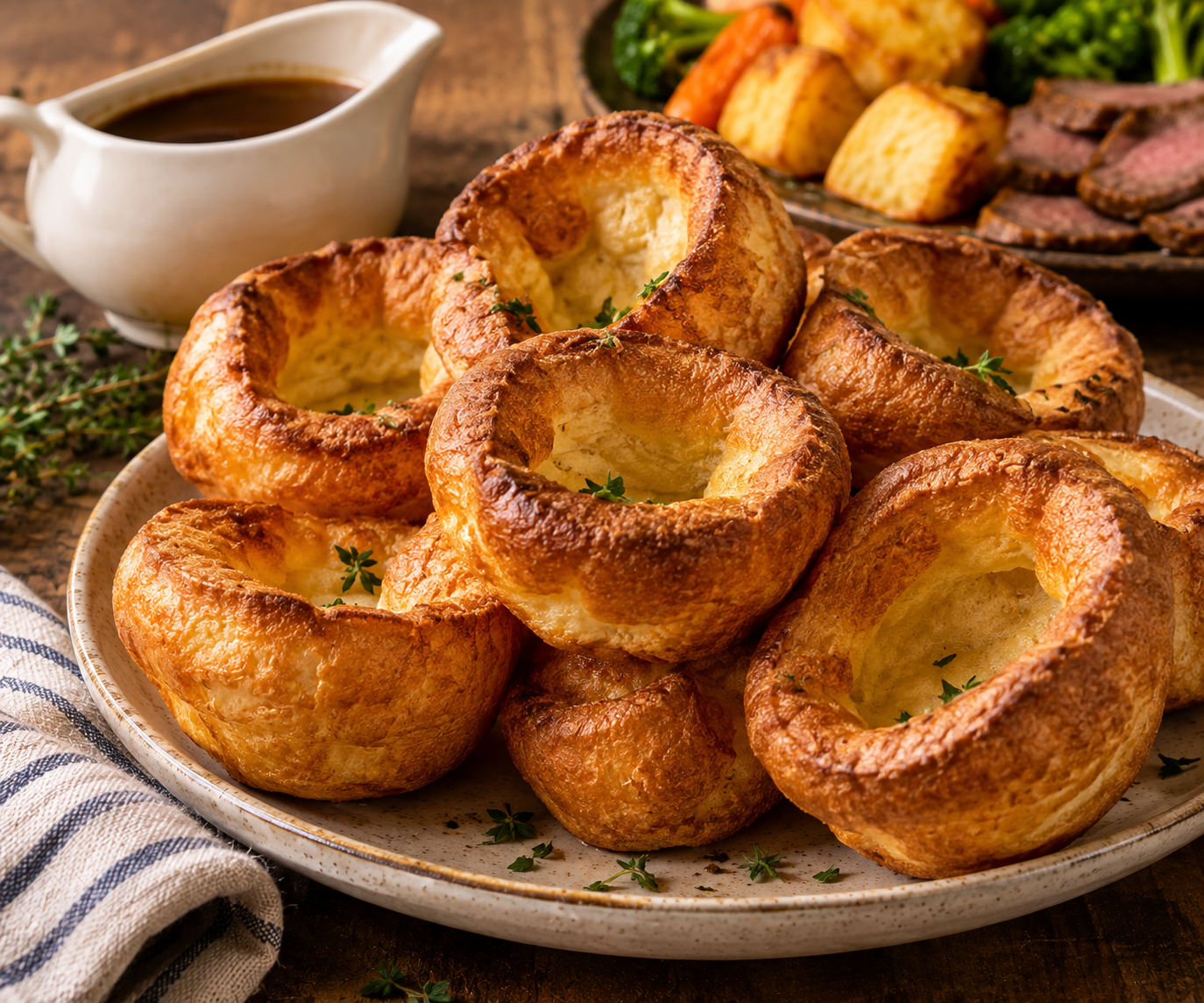
Yorkshire pudding is a traditional British favourite, known for its golden, crispy exterior and soft, airy centre. Made with a simple batter of flour, eggs and milk, these delightful puddings rise beautifully in the oven when poured into sizzling hot fat.
Traditionally served alongside roast beef and rich gravy, Yorkshire puddings are a staple of the classic Sunday roast. Their hollow centres are perfect for holding gravy, while their crisp edges add wonderful texture to the plate.
With just a handful of everyday ingredients, you can make homemade Yorkshire puddings that look impressive and taste delicious. The secret is to let the batter rest, heat the oil thoroughly and resist opening the oven door while they bake.
½ cup beef drippings or vegetable oil, divided among the muffin tin cups as needed
Method:
Prepare the batter:
In a large mixing bowl, whisk together the flour and salt.
In a separate bowl, beat the eggs with the milk until combined.
Gradually whisk the wet ingredients into the flour until you have a smooth, lump-free batter.
Rest the batter:
Leave the batter to rest at room temperature for at least 30 minutes.
This allows the flour to hydrate and helps produce a better texture.
If resting it for longer, cover and refrigerate the batter, then bring it back towards room temperature before baking.
Preheat the oven and tin:
Preheat the oven to 220°C (425°F).
Place a 12-hole muffin tin or Yorkshire pudding tray in the oven to heat.
The tin needs to be thoroughly hot before the batter is added.
Heat the fat:
Carefully remove the hot tin from the oven.
Divide the beef drippings or vegetable oil between the cups, using just enough to cover the bottom of each one.
Return the tin to the oven for about 5 minutes, until the fat is very hot.
Take care when handling the hot tin.
Fill the tin:
Carefully remove the tin and quickly pour the batter into the hot fat, filling each cup approximately halfway to two-thirds full.
The fat should sizzle as the batter goes in.
Return the tin to the oven immediately.
Bake until risen:
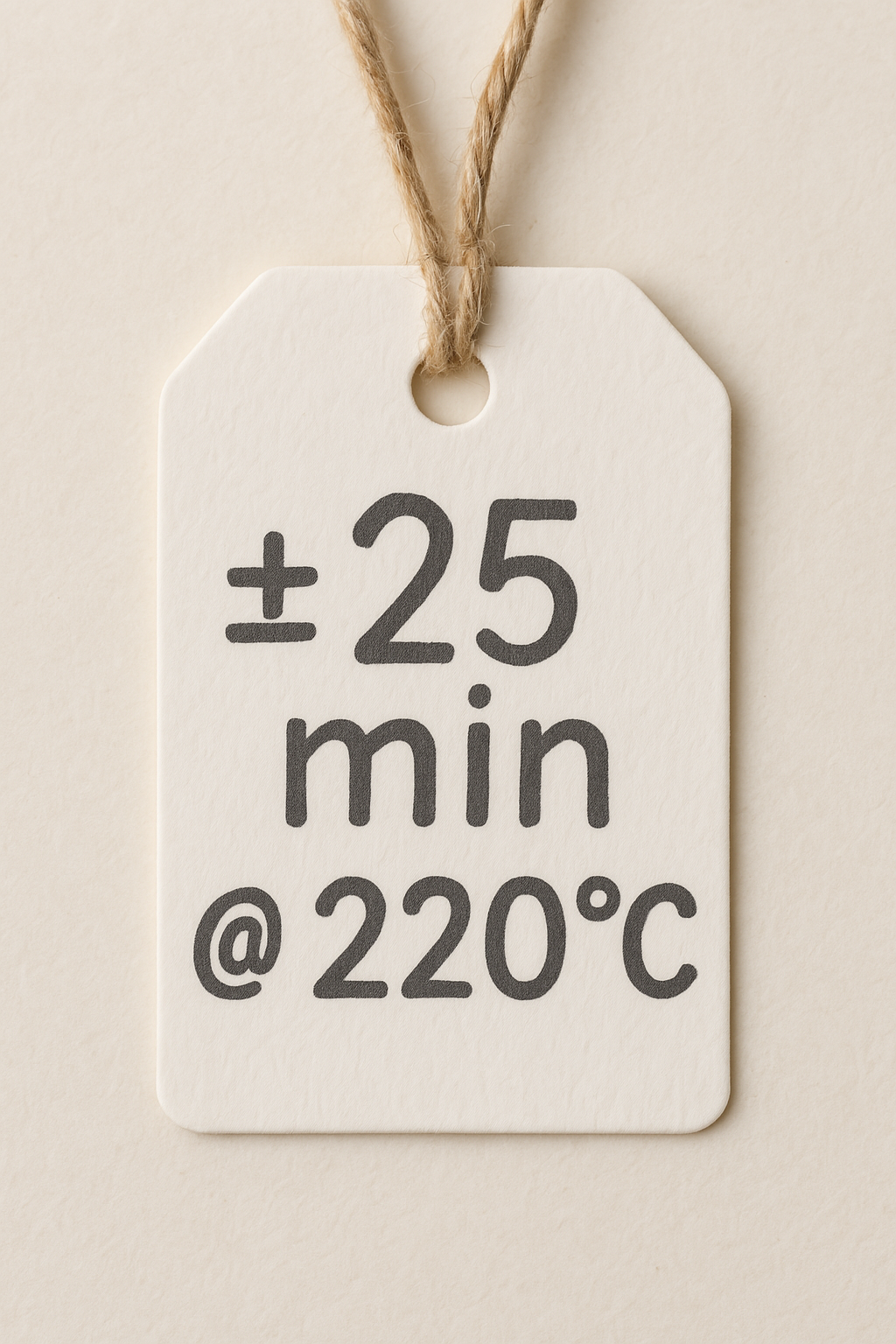
Bake for 20–25 minutes, or until the puddings are well risen, crisp and golden brown.
Avoid opening the oven door during baking, as the sudden drop in temperature can cause the puddings to collapse.
Serve immediately:
Remove the Yorkshire puddings from the oven and serve while hot and crisp.
They are especially delicious with roast beef, vegetables and plenty of gravy.
It’s typically served as part of a Sunday roast, making it a staple side dish—especially alongside beef and rich gravy. 😊
A traditional British dish that’s both simple and iconic. It’s essentially a baked batter made from flour, eggs, and milk, cooked in sizzling hot fat to achieve a crisp exterior and airy interior.
🌟 Culinary Context
Origins: Dates back to 18th-century England, originally served as a cheap filler before the main roast.
Texture: Crisp on the outside, soft and hollow inside—perfect for soaking up gravy.
Cooking technique: Success depends on resting the batter and pouring it into very hot fat.
Traditional pairing: A staple of the Sunday roast, especially with beef and rich gravy.
Why You’ll Love This Recipe
Simple ingredients: Flour, eggs and milk create an impressive result without complicated preparation.
Crispy and airy: The hot fat and high oven temperature help the puddings rise and develop crisp edges.
Perfect for Sunday roasts: They are a classic accompaniment to roast beef and gravy.
Versatile serving options: Fill them with savoury ingredients or serve them alongside your favourite roast dinner.
Make-ahead friendly: The batter can be prepared in advance, making meal preparation easier.
Tips for the Best Yorkshire Puddings
Rest the batter: Give the batter at least 30 minutes to rest for a smoother consistency.
Heat the fat properly: Hot fat is essential for a good rise. The batter should sizzle when it hits the tin.
Use a hot oven: Keep the oven at 220°C throughout baking so the puddings can rise properly.
Avoid opening the oven door: Wait until the puddings are well risen and golden before checking them.
Do not overfill the cups: Filling each cup halfway to two-thirds full leaves room for the batter to expand.
Use a metal tin: A metal muffin tin or Yorkshire pudding tray heats quickly and helps create crisp edges.
Serve straight away: Yorkshire puddings are at their best fresh from the oven, when the outside is crisp and the centre is light.
Storage
Yorkshire puddings are best eaten fresh, but leftovers can be stored for later.
Refrigeration: Once cooled, place them in an airtight container and refrigerate for up to 2 days.
Freezing: Freeze completely cooled puddings in a freezer-safe container or bag for up to 3 months for the best quality.
Reheating: Place refrigerated or frozen puddings in a preheated oven at 200°C until hot and crisp. Frozen puddings can generally be reheated straight from the freezer; allow extra time as needed.
Avoid microwaving if possible, as it tends to make the puddings soft rather than crisp.
This dish is more than just a side—it’s a cultural symbol of British comfort food.
If you’re looking for side dishes or accompaniments to elevate the meal, here are some fantastic options:
Roast Beef with Gravy – The traditional pairing, ensuring those puddings soak up all the delicious flavors.
Creamy Horseradish Sauce – Adds a bit of heat and tang, perfectly complementing the richness.
Honey Glazed Carrots – A touch of sweetness balances out the savory elements.
Roasted Brussels Sprouts with Bacon – A little crunch and smokiness add depth to the meal.
Mashed Potatoes – Creamy, buttery potatoes enhance every bite.
Caramelized Onions – A sweet, golden topping for extra flavor.
Peas & Mint – Fresh and vibrant, a lovely contrast.
Sautéed Mushrooms in Garlic Butter – Earthy and rich, perfect with roast meats.
Red Wine Jus – A sophisticated sauce for drizzling.
Sticky Toffee Pudding – If you need a sweet ending after a hearty meal.
Are you planning a full Sunday roast, or just in the mood for some golden goodness?
Here are some fun variations to experiment with for your Yorkshire Pudding recipe:
Variations
Cheese & Chive Yorkshire Pudding – Add shredded cheese and fresh chives to the batter for a savory twist.
Rich Yorkshire Puddings – Try a version with suet for extra richness.
Sweet Yorkshire Pudding – Turn it into a dessert by adding a bit of sugar and cinnamon, then drizzle with maple syrup.
Gluten-Free Yorkshire Pudding – If you’re looking for a gluten-free option, there are great recipes.
Yorkshire Pudding Bundles – Fill them with roast beef, caramelized onions, or even a creamy mushroom filling for a delicious twist.
Yorkshire Pudding Pizza – Use the pudding as a base and top it with cheese, tomato sauce, and your favorite toppings.
Which one sounds the most exciting to try? 😊
Final Thoughts
Yorkshire puddings are a timeless British classic that turn a few simple ingredients into something wonderfully impressive. With crisp golden edges, light centres and plenty of space for gravy, they are the perfect addition to a traditional roast dinner.
For the best results, rest the batter, make sure the fat is sizzling hot and keep the oven door closed until the puddings are well risen. Serve them straight from the oven and enjoy a homemade favourite that brings warmth and tradition to the table.
Frequently Asked Questions
Why didn’t my Yorkshire puddings rise?
The most common reasons are fat that was not hot enough, an oven temperature that was too low, or opening the oven door too early. Make sure the tin and fat are thoroughly heated before adding the batter, and keep the oven door closed while the puddings bake.
Does Yorkshire pudding batter need to rest?
Resting for at least 30 minutes is recommended. It gives the flour time to absorb the liquid and helps create a smooth batter. Although resting alone does not guarantee a good rise, it is a useful step for consistent results.
Can I make Yorkshire pudding batter ahead of time?
Yes. Prepare the batter, cover it and refrigerate it for several hours or overnight. Before baking, whisk it gently and let it lose some of its chill while you heat the oven and tin. Always add the batter to very hot fat.
Can I use vegetable oil instead of beef drippings?
Yes. Vegetable oil works well and is a suitable option for those who prefer not to use beef drippings. Beef drippings provide a traditional savoury flavour, while neutral vegetable oil allows the flavour of the pudding to shine.
Why did my Yorkshire puddings collapse?
Yorkshire puddings may sink if they are removed from the oven before the structure has set or if the oven door is opened too early. Bake them until they are well risen, golden and crisp before taking them out.
Can Yorkshire puddings be made in advance?
Yes. Bake them ahead, allow them to cool and store them in an airtight container. Reheat in a hot oven just before serving to restore their crisp exterior.
Are Yorkshire puddings sweet or savoury?
Traditional Yorkshire puddings are savoury and are usually served with roast meat and gravy. However, they can also be used as a base for creative fillings or served with sweet toppings if you prefer a different approach.
Essential cookies enable basic functions and are necessary for the proper function of the website.
Name
Description
Duration
Cookie Preferences
This cookie is used to store the user's cookie consent preferences.
30 days
These cookies are needed for adding comments on this website.
Name
Description
Duration
comment_author
Used to track the user across multiple sessions.
Session
comment_author_email
Used to track the user across multiple sessions.
Session
comment_author_url
Used to track the user across multiple sessions.
Session
Google's current Sign in with Google client library. It renders the Google sign-in button, or the One Tap prompt, so visitors can log in to your site with their Google account. It replaces the older Google Sign-In platform library.
Set on your own domain by the Sign in with Google client library. Records whether the visitor has dismissed the One Tap sign-in prompt and for how long it should stay hidden, plus the time the library last loaded and a browsing session id used for the same purpose. Sites that pass a custom state_cookie_name will see that name instead.
180 days
g_csrf_token
Set on your own domain by the Sign in with Google client library and submitted together with the sign-in credential, so your site can confirm the sign-in came from its own page and not from a forged cross-site request.
5 minutes
Statistics cookies collect information anonymously. This information helps us understand how visitors use our website.
Google Analytics is a powerful tool that tracks and analyzes website traffic for informed marketing decisions.
Contains information related to marketing campaigns of the user. These are shared with Google AdWords / Google Ads when the Google Ads and Google Analytics accounts are linked together.
90 days
__utma
ID used to identify users and sessions
2 years after last activity
__utmt
Used to monitor number of Google Analytics server requests
10 minutes
__utmb
Used to distinguish new sessions and visits. This cookie is set when the GA.js javascript library is loaded and there is no existing __utmb cookie. The cookie is updated every time data is sent to the Google Analytics server.
30 minutes after last activity
__utmc
Used only with old Urchin versions of Google Analytics and not with GA.js. Was used to distinguish between new sessions and visits at the end of a session.
End of session (browser)
__utmz
Contains information about the traffic source or campaign that directed user to the website. The cookie is set when the GA.js javascript is loaded and updated when data is sent to the Google Anaytics server
6 months after last activity
__utmv
Contains custom information set by the web developer via the _setCustomVar method in Google Analytics. This cookie is updated every time new data is sent to the Google Analytics server.
2 years after last activity
__utmx
Used to determine whether a user is included in an A / B or Multivariate test.
18 months
_ga
ID used to identify users
2 years
_gali
Used by Google Analytics to determine which links on a page are being clicked
30 seconds
_ga_
ID used to identify users
2 years
_gid
ID used to identify users for 24 hours after last activity
24 hours
_gat
Used to monitor number of Google Analytics server requests when using Google Tag Manager
1 minute
Marketing cookies are used to follow visitors to websites. The intention is to show ads that are relevant and engaging to the individual user.
Google Ads is an online advertising platform that enables businesses to create targeted ads displayed on Google search results and partner sites.
Targeting cookie. Used to create a user profile and display relevant and personalised Google Ads to the user.
2 years
__Secure-1PSIDCC
Targeting cookie. Used to create a user profile and display relevant and personalised Google Ads to the user.
2 years
__Secure-3PAPISID
Profiles the interests of website visitors to serve relevant and personalised ads through retargeting.
2 years
AEC
AEC cookies ensure that requests within a browsing session are made by the user, and not by other sites. These cookies prevent malicious sites from acting on behalf of a user without that user's knowledge.
6 months
ADS_VISITOR_ID
Cookie required to use the options and on-site web services
2 months
__Secure-3PSIDCC
Targeting cookie. Used to create a user profile and display relevant and personalised Google Ads to the user.
2 years
__Secure-3PSIDTS
Targeting cookie. Used to create a user profile and display relevant and personalised Google Ads to the user.
2 years
__Secure-1PSIDTS
Targeting cookie. Used to create a user profile and display relevant and personalised Google Ads to the user.
2 years
__Secure-1PAPISID
Targeting cookie. Used to create a user profile and display relevant and personalised Google Ads to the user.
2 years
__Secure-3PSID
Targeting cookie. Used to profile the interests of website visitors and display relevant and personalised Google ads.
2 years
Conversion
Google uses cookies for advertising, including serving and rendering ads, personalizing ads (depending on your ad settings at g.co/adsettings), limiting the number of times an ad is shown to a user, muting ads you have chosen to stop seeing, and measuring the effectiveness of ads.
90 days
_gcl_aw
Google uses cookies for advertising, including serving and rendering ads, personalizing ads (depending on your ad settings at g.co/adsettings), limiting the number of times an ad is shown to a user, muting ads you have chosen to stop seeing, and measuring the effectiveness of ads.
90 Days
_gcl_gs
Google uses cookies for advertising, including serving and rendering ads, personalizing ads (depending on your ad settings at g.co/adsettings), limiting the number of times an ad is shown to a user, muting ads you have chosen to stop seeing, and measuring the effectiveness of ads.
90 Days
_gcl_gb
Google uses cookies for advertising, including serving and rendering ads, personalizing ads (depending on your ad settings at g.co/adsettings), limiting the number of times an ad is shown to a user, muting ads you have chosen to stop seeing, and measuring the effectiveness of ads.
90 Days
_gac_gb_
Google uses cookies for advertising, including serving and rendering ads, personalizing ads (depending on your ad settings at g.co/adsettings), limiting the number of times an ad is shown to a user, muting ads you have chosen to stop seeing, and measuring the effectiveness of ads.
90 Days
FPGCLGB
Google uses cookies for advertising, including serving and rendering ads, personalizing ads (depending on your ad settings at g.co/adsettings), limiting the number of times an ad is shown to a user, muting ads you have chosen to stop seeing, and measuring the effectiveness of ads.
90 Days
FPGCLAW
Google uses cookies for advertising, including serving and rendering ads, personalizing ads (depending on your ad settings at g.co/adsettings), limiting the number of times an ad is shown to a user, muting ads you have chosen to stop seeing, and measuring the effectiveness of ads.
90 Days
You can find more information in our Cookie Policy and .