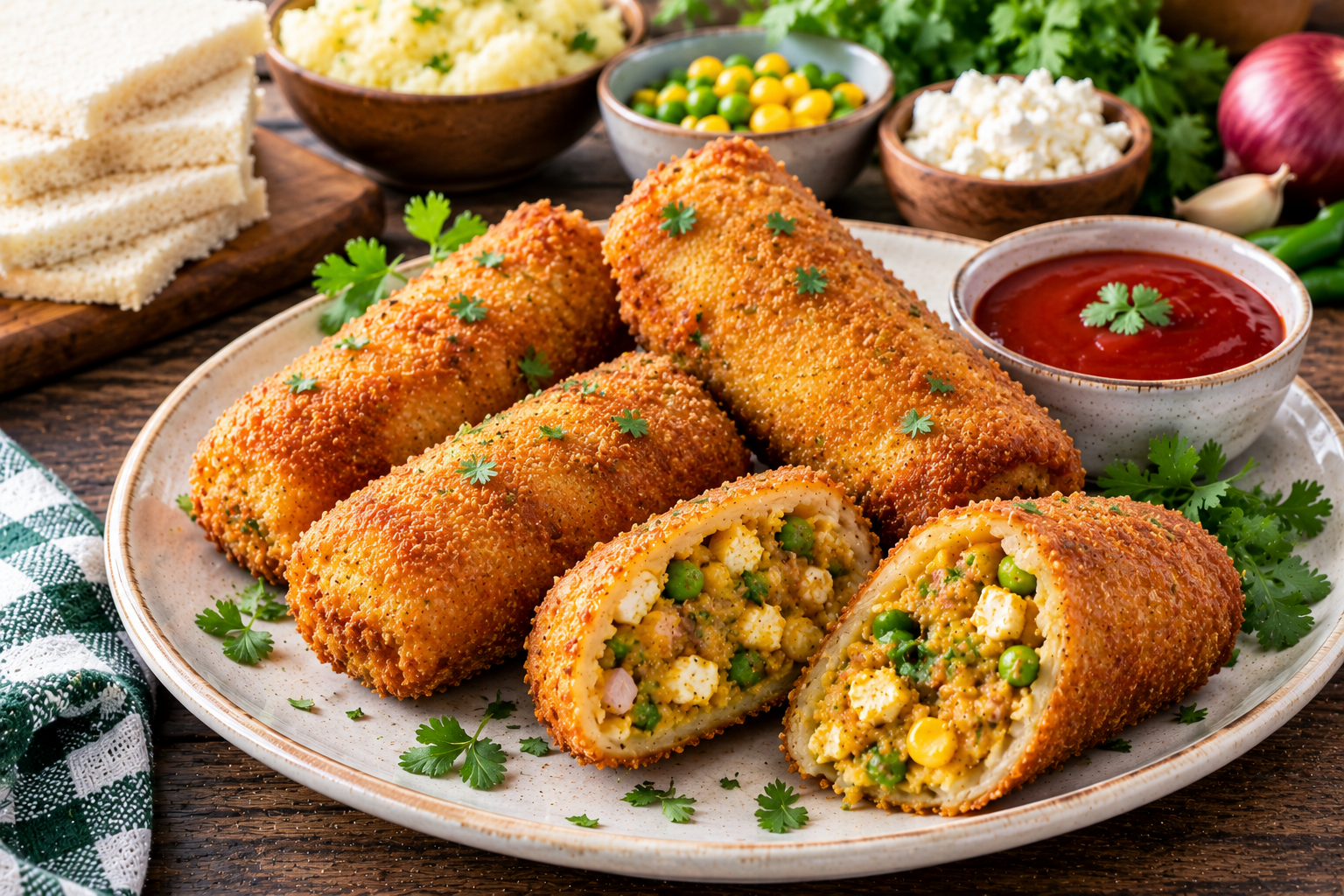
Stuffed Bread Rolls are a delicious savoury snack made with soft bread wrapped around a flavourful filling of mashed potatoes, sweetcorn, green peas and crumbled paneer. Seasoned with turmeric, garam masala, chilli and tangy amchur, these rolls are full of warming Indian-inspired flavours and fresh coriander.
The outside becomes beautifully golden and crispy when fried, while the inside stays soft, hearty and satisfying. They are a wonderful way to turn simple ingredients into a snack that feels special without requiring complicated preparation.
Serve these homemade bread rolls with mint-coriander chutney, tamarind chutney or a cooling yoghurt dip. They’re perfect for tea-time, parties, family gatherings, or a light lunch. You can also bake them for an alternative to deep-frying.
Boil the potatoes until tender when pierced with a fork.
Drain thoroughly, allow them to cool slightly, then peel and mash until mostly smooth.
Set aside.
Sauté the onion.
Heat 3 teaspoons of oil in a frying pan over medium heat.
Add the chopped onion and cook for 3–4 minutes, stirring occasionally, until softened and translucent.
Add the aromatics and vegetables.
Stir in the ginger-garlic paste and green chilli, if using.
Cook for about 1 minute.
Add the peas and sweetcorn, then cook for another 2–3 minutes until heated through and tender.
Season the filling.
Add the mashed potatoes, turmeric, red chilli powder, garam masala, amchur and salt.
Mix thoroughly, breaking up any large lumps of potato.
Cook for 2–3 minutes so the flavours combine.
Finish the filling.
Remove the pan from the heat.
Fold in the crumbled paneer and fresh coriander.
Taste and adjust the seasoning if necessary.
Transfer the mixture to a plate and allow it to cool completely before shaping the rolls.
Prepare the bread.
Pour a little water into a shallow bowl.
Briefly dip one bread slice into the water, then gently press it between your palms to remove excess moisture.
The bread should be damp and pliable, not soggy.
Repeat with each slice as you assemble the rolls.
Fill and shape the rolls.
Place a spoonful of filling in the centre of each bread slice.
Bring the edges together around the filling and shape into a firm cylinder or oval.
Pinch the seams closed, using a tiny amount of water if needed.
Make sure there are no gaps where the filling can escape.
Heat the oil.
Pour enough oil into a deep, heavy-based pan to submerge the rolls.
Heat to approximately 170–180°C.
If you do not have a thermometer, test with a small piece of bread: it should sizzle and turn golden gradually rather than darkening immediately.
Fry until golden.
Carefully lower a few rolls into the hot oil, taking care not to overcrowd the pan.
Fry for approximately 3–5 minutes, turning as needed, until crisp and evenly golden brown.
Adjust the heat to prevent the bread from browning too quickly.
Drain and serve.
Remove the rolls with a slotted spoon and drain on a wire rack or paper towel.
Allow them to cool slightly before serving, as the filling will be very hot.
Serve with your favourite chutney or dip.
Baking Alternative
For a less oily version, preheat the oven to 200°C. Lightly brush or spray the shaped rolls with oil and place them on a lined baking tray. Bake for approximately 15–20 minutes, turning halfway, until golden and crisp. The texture will be different from deep-fried rolls and may be slightly less crunchy.
Why You’ll Love These Stuffed Bread Rolls
Crispy outside, soft inside: The bread develops a golden crust while the potato filling stays tender.
Full of flavour: Garam masala, chilli, turmeric and amchur create a balanced, savoury filling.
Budget-friendly: Everyday ingredients become a satisfying homemade snack.
Easy to customise: Adjust the spices, vegetables and cheese to suit your preferences.
Great for sharing: The individual rolls are ideal for parties, tea-time and casual entertaining.
Flexible cooking methods: Deep-fry for a traditional crispy finish or bake for an alternative.
Tips for the Best Stuffed Bread Rolls
Use well-drained potatoes. Excess moisture can make the filling loose and difficult to shape. Allow the potatoes to steam dry briefly after boiling.
Cool the filling completely. Warm filling can soften the bread too much and make the rolls harder to seal.
Moisten the bread lightly. Dip it briefly and squeeze gently. Bread that is too wet may tear or absorb excessive oil during frying.
Avoid overfilling. A modest spoonful of filling makes the rolls easier to close and helps prevent them from bursting.
Seal every edge. Pinch the seams firmly and check for small openings before cooking.
Keep the oil at the right temperature. Oil that is too cool can make the rolls greasy, while oil that is too hot can brown the bread before the filling is properly heated.
Fry in small batches. Adding too many rolls at once lowers the oil temperature and can lead to uneven browning.
Adjust the seasoning. Taste the filling before shaping the rolls. Add more chilli for heat or a little extra amchur for tanginess.
Choose your bread carefully. Fresh, soft sandwich bread is easiest to shape. If the bread is very fresh and delicate, handle it gently when moistening.
Serve shortly after cooking. The rolls are at their crispiest when freshly made. If preparing for guests, keep cooked rolls warm in a low oven for a short time.
Storage and Reheating
Refrigeration: Allow the cooked rolls to cool briefly, then refrigerate them in a covered container within 2 hours of cooking. Keep at 4°C or colder and use within 3–4 days.
Freezing: For best results, freeze the cooked rolls in a single layer until firm, then transfer them to a freezer-safe container. Use within 2–3 months for best quality. Thaw in the refrigerator before reheating.
Oven reheating: Place refrigerated rolls on a baking tray and warm at 180°C for approximately 8–12 minutes, or until heated through and crisp.
Air-fryer reheating: Reheat at 180°C for approximately 4–7 minutes, checking that the centre is hot.
Microwave reheating: A microwave will warm the filling quickly, but the bread will become softer rather than crisp. Use the oven or air fryer afterwards if you want to restore some crunch.
Food safety: Do not leave cooked rolls at room temperature for more than 2 hours, or more than 1 hour in very hot conditions. Reheat leftovers until steaming hot throughout, and avoid repeatedly cooling and reheating the same batch.
What to Serve with Stuffed Bread Rolls
Cooling Dips and Chutneys
Mint-Coriander Chutney: Fresh herbs, lemon or lime and a little chilli provide a bright, refreshing contrast.
Tamarind Chutney: Sweet, tangy tamarind complements the warm spices and crispy bread.
Cucumber Raita: Yoghurt, cucumber and cumin help balance the chilli.
Garlic Yoghurt Dip: Mix plain yoghurt with garlic, lemon juice and a pinch of salt.
Kachumber Salad: Chopped cucumber, tomato, onion, and lemon juice add freshness.
Crisp Green Salad: Lettuce, cucumber, and a light dressing balance the richness of the fried rolls.
Pickled Onions: Their tangy flavour cuts through the savoury filling.
Cabbage Slaw: A crunchy, lightly dressed slaw offers a refreshing contrast.
Hearty Pairings
Spiced Lentil Soup: A bowl of mild dal turns the rolls into a more substantial meal.
Tomato Soup: A lightly spiced tomato soup pairs well with the potato filling.
Roasted Vegetables: Serve with carrots, peppers, or cauliflower for extra colour and texture.
Vegetable Curry: A small serving of vegetable curry makes a satisfying vegetarian meal.
Drinks
Masala Chai: A classic choice for afternoon tea.
Sweet Lime Soda: A refreshing drink alongside spicy snacks.
Mango Lassi: A creamy yoghurt drink that works particularly well with warm spices.
Fresh Lemonade: Its citrus flavour helps balance the richness of the rolls.
Here are some fun variations to experiment with for your Stuffed Bread Rolls recipe:
Variations
🧀 Cheese-Lovers’ Dream
Filling Additions:
Swap paneer for shredded mozzarella or cheddar
Add a spoonful of cream cheese or ricotta for gooeyness
Flavor Boosters:
Sprinkle Italian seasoning or chili flakes
Serve with marinara or garlic dip
🌽 Mexican Fiesta Rolls
Filling Additions:
Replace potatoes with refried beans or mashed sweet potato
Add black beans, jalapeños, and a dash of cumin
Presentation:
Top baked rolls with sour cream, salsa, and chopped cilantro
🥬 Spinach & Feta Medley
Filling Additions:
Sauté spinach with garlic and mix with crumbled feta
Add chopped olives or sun-dried tomatoes for depth
Style Tip:
Brush with olive oil and sprinkle sesame seeds before baking
🍄 Umami Bomb
Filling Additions:
Add finely chopped mushrooms sautéed with soy sauce
Mix in caramelized onions and a pinch of thyme
Serving Idea:
Pair with a creamy mushroom dip or miso aioli
🥔 Desi Street-Style Chaat Rolls
Filling Additions:
Keep the original filling but add crushed sev or papdi inside
Sprinkle chaat masala before sealing
Garnish:
Drizzle with tamarind chutney and yogurt after baking
🧁 Sweet Surprise Rolls
Bread Base:
Use milk bread or brioche slices
Filling:
Mix mashed banana, chopped nuts, cinnamon, and a touch of honey
Or try grated coconut with jaggery and cardamom
Finish:
Bake and dust with powdered sugar or drizzle with chocolate
Final Thoughts
Stuffed Bread Rolls are a comforting, flavour-packed snack that transforms simple bread and vegetables into something wonderfully crispy and satisfying. The combination of seasoned potatoes, peas, sweetcorn and paneer makes every bite savoury, colourful and full of texture.
Whether you deep-fry them for a traditional golden crust or bake them for a different finish, these rolls are easy to adapt to your favourite flavours. Serve them with chutney, yoghurt dip or a fresh salad for a delicious snack to share with family and friends.
Frequently Asked Questions
Can I prepare Stuffed Bread Rolls ahead of time?
Yes. Prepare the filling in advance and refrigerate it in a covered container. When ready to cook, shape the rolls using the bread and fry or bake them shortly before serving for the best texture.
Why are my bread rolls breaking apart?
This usually happens when the bread is too wet, the filling is too loose or the seams are not sealed properly. Squeeze out excess water, cool the filling completely and pinch the edges firmly closed.
Can I make these rolls without paneer?
Yes. You can omit the paneer or replace it with grated cheese, crumbled firm tofu or a small amount of cooked, finely chopped vegetables. The filling will still work because the mashed potato helps hold it together.
Can I use wholewheat bread?
Yes. Wholewheat sandwich bread can be used, although it may be less pliable than soft white bread. Moisten it carefully and handle it gently to prevent tearing.
Can I bake the rolls instead of frying them?
Yes. Brush or spray them lightly with oil and bake at 200°C for approximately 15–20 minutes, turning halfway. They may not be as uniformly crisp as deep-fried rolls, but they are a useful alternative.
How can I make the filling less spicy?
Omit the green chilli and reduce or leave out the red chilli powder. Keep the garam masala and amchur for flavour, adjusting them to your taste.
Can I use frozen peas and sweetcorn?
Absolutely. Thaw them first or add them directly to the pan and cook until heated through. Drain off excess moisture before mixing them into the potato filling.
What is amchur powder?
Amchur is dried green mango powder commonly used in Indian cooking. It adds a tangy, fruity sharpness to savoury dishes. If you cannot find it, a small squeeze of lemon juice can provide a similar brightness, although the flavour will be slightly different.