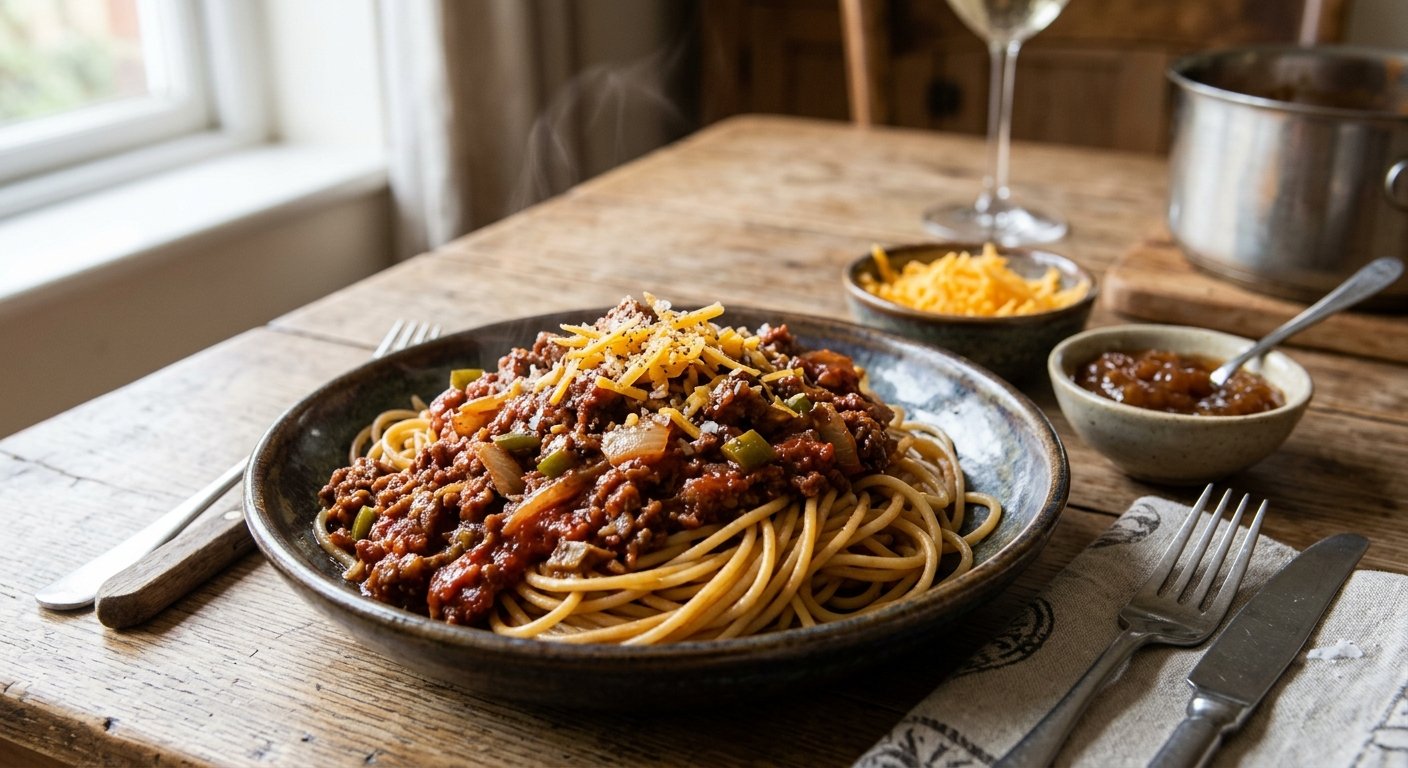
Spaghetti Bolognese is a comforting family favourite that brings together tender pasta and a rich, savoury meat sauce. This version combines ground beef with sautéed onion and green pepper, creating a delicious base for a tomato sauce with plenty of flavour.
Tomato purée, a basil and oregano tomato mixture, red wine and balsamic vinegar add depth and a gentle tang, while a little brown sugar balances the acidity. The sauce is simmered until the ingredients come together, creating a hearty topping for freshly cooked spaghetti.
Finished with grated cheddar cheese and a spoonful of chutney, this homemade Spaghetti Bolognese offers a distinctive twist on a classic comfort meal. It is ideal for family dinners, relaxed weekends or whenever you are craving a satisfying pasta dish.
1 can tomato and onion mix with basil and oregano flavor
1 cup red wine
1 green pepper, chopped
3 tbsp balsamic vinegar
2 tbsp olive oil, or as needed
Salt and black pepper, to taste
400–500 g spaghetti or pasta of your choice
1 cup cheese, grated
Chutney, for serving
Method:
Prepare the vegetables:
Heat the olive oil in a large, heavy-based saucepan over medium heat.
Add the sliced onion and cook for 5–7 minutes, stirring occasionally, until softened and lightly golden.
Add the green pepper:
Stir in the chopped green pepper and cook for another 2–3 minutes until it begins to soften.
Brown the beef:
Add the ground beef, breaking it up with a wooden spoon.
Cook until browned throughout, stirring regularly.
Drain excess fat if necessary.
Build the sauce:
Stir in the tomato purée, tomato and onion mixture, brown sugar and balsamic vinegar.
Mix well to combine.
Add the red wine:
Pour in the red wine and stir.
Bring the sauce to a gentle simmer, then reduce the heat and cook uncovered for approximately 20–25 minutes, stirring occasionally, until thickened and flavourful.
Ensure the beef is thoroughly cooked.
Cook the spaghetti:
While the sauce simmers, bring a large pot of salted water to the boil.
Add the spaghetti and cook according to the packet instructions until al dente.
Drain well.
Season the sauce:
Taste the Bolognese and adjust with salt and black pepper as needed.
If the sauce is too thick, add a small splash of water.
If it is too thin, simmer for a few more minutes.
Serve:
Divide the cooked spaghetti between serving bowls and spoon the hot Bolognese sauce over the top.
Finish with grated cheddar cheese and serve with chutney on the side.
Enjoy making and savoring this classic Spaghetti Bolognese! 🍝🧀🥂
Why You’ll Love This Recipe
Rich and savoury: Ground beef, tomato, red wine and balsamic vinegar create a deeply flavoured sauce.
Simple ingredients: Everyday pantry staples come together to make a satisfying homemade meal.
A little sweetness: Brown sugar balances the acidity of the tomatoes and balsamic vinegar.
Family-friendly: A generous pot of meat sauce makes this recipe ideal for sharing.
Easy to customise: Add mushrooms, extra vegetables or a little chilli to suit your taste.
Great for leftovers: The sauce can be prepared ahead and reheated for another easy meal.
A Little About Spaghetti Bolognese
Spaghetti Bolognese is inspired by ragù alla Bolognese, a traditional Italian meat sauce associated with Bologna. Traditional Bolognese ragù is generally slow-cooked and commonly served with broader pasta shapes such as tagliatelle.
Spaghetti Bolognese has become a popular international favourite, with many home cooks creating their own versions using tomatoes, herbs, vegetables and different seasonings. This recipe adds red wine, balsamic vinegar and a South African-style chutney accompaniment for a distinctive homemade variation.
Tips for the Best Spaghetti Bolognese
Brown the beef properly: Allow the meat to brown before adding the tomatoes. This develops a richer, savoury flavour.
Cook the onion slowly: Give the onion enough time to soften and become lightly golden without burning.
Choose a good red wine: Use a dry red wine that you would enjoy drinking. It adds depth to the sauce.
Simmer gently: A gentle simmer allows the flavours to develop and helps the sauce thicken without sticking.
Balance the acidity: The brown sugar helps balance the tomatoes and balsamic vinegar. Taste before adding extra sugar.
Cook pasta separately: Prepare the spaghetti just before serving so it retains its texture.
Reserve pasta water: Keep a little of the starchy cooking water to loosen the sauce if needed.
Use freshly grated cheese: Grating cheddar from a block gives a lovely fresh flavour and melts beautifully over the warm sauce.
Uses for This Spaghetti Bolognese
The hearty meat sauce is useful for more than just serving over spaghetti. Here are a few other ways to enjoy it:
Baked pasta: Mix the sauce with cooked pasta, top with cheese and bake until bubbling.
Lasagne filling: Use the Bolognese as a meat layer in homemade lasagne.
Stuffed vegetables: Spoon the mixture into hollowed-out peppers, top with cheese and bake until tender.
Loaded baked potatoes: Spoon hot Bolognese over baked potatoes and finish with grated cheese.
Pasta lunch bowls: Divide leftover sauce and pasta into portions for convenient lunches.
Toasted sandwiches: Use a little thickened sauce as a filling for a toasted sandwich, adding cheese if desired.
Storage and Reheating
Refrigeration: Allow the Bolognese sauce to cool slightly and transfer it to an airtight container. Refrigerate within two hours and use within 3–4 days.
Freezing: Freeze the cooled sauce in airtight, freezer-safe containers for up to 3 months for best quality. Thaw overnight in the refrigerator before reheating.
Reheating: Warm the sauce in a saucepan over medium-low heat, stirring regularly until steaming hot throughout. Add a splash of water if it has thickened too much.
Pasta storage: Store leftover spaghetti separately from the sauce where possible to help preserve its texture.
Make-ahead preparation: The sauce can be made a day ahead and refrigerated. Its flavours often develop further after resting overnight.
What to Serve with Spaghetti Bolognese
Spaghetti Bolognese pairs beautifully with fresh salads, roasted vegetables and warm bread. Try serving it with:
Garlic bread: A crisp, buttery side that is perfect for enjoying the extra sauce.
Caesar salad: Crisp lettuce and a creamy dressing provide a refreshing contrast.
Crusty Ciabatta: Serve slices of homemade bread alongside the pasta.
Roasted Vegetables: A colourful vegetable side that complements the rich meat sauce.
Caprese salad: Fresh tomatoes, mozzarella and basil make a lovely light accompaniment.
Sautéed green beans: Cook with a little garlic and olive oil for a simple vegetable side.
Bruschetta: Toasted bread topped with fresh tomatoes and basil makes a delicious starter.
Here are some fun variations to experiment with for your Spaghetti Bolognese recipe:
Variations
Mushroom Bolognese: Add sliced or finely chopped mushrooms with the green pepper for extra savoury flavour.
Beef and Pork Bolognese: Replace some of the ground beef with ground pork for a richer, slightly sweeter sauce.
Spicy Bolognese: Add chilli flakes or a little cayenne pepper for gentle heat.
Creamy Bolognese: Stir in a splash of cream towards the end of cooking for a softer, richer sauce.
Mediterranean Bolognese: Add chopped olives and sun-dried tomatoes for a tangy twist.
Extra Vegetable Bolognese: Add grated carrot, diced celery or courgettes to increase the vegetable content.
Slow-Cooked Bolognese: Simmer the sauce gently for 1–2 hours, adding a little water or stock if needed, for a deeper flavour.
White Wine Variation: Replace the red wine with dry white wine for a lighter flavour.
Cheesy Bolognese Bake: Transfer the prepared pasta and sauce to an ovenproof dish, cover with grated cheese and bake at 180°C until golden and bubbling.
Final Thoughts
This homemade Spaghetti Bolognese is a comforting, flavour-packed meal that brings together browned beef, tomatoes, red wine and balsamic vinegar in a rich sauce. The addition of green pepper and a touch of brown sugar creates a lovely balance, while grated cheese and chutney provide a delicious finishing touch.
Serve it over freshly cooked spaghetti with warm garlic bread or a crisp salad for a satisfying family dinner. Whether you follow the recipe as written or experiment with your favourite additions, this is a hearty pasta dish worth making again.
Frequently Asked Questions
Can I make Spaghetti Bolognese without red wine?
Yes. Replace the red wine with beef stock or water. The sauce will still be delicious, although it will have a slightly different depth of flavour.
Can I use another type of pasta?
Absolutely. Although spaghetti is the classic choice for this version, penne, fusilli, tagliatelle and macaroni all work well with the meat sauce.
How do I make the Bolognese sauce thicker?
Simmer the sauce uncovered over low heat for a few extra minutes, stirring occasionally. This allows excess liquid to evaporate and concentrates the flavour.
Can I prepare the sauce ahead of time?
Yes. Prepare the sauce, allow it to cool promptly and refrigerate it in an airtight container. Reheat thoroughly before serving with freshly cooked pasta.
Why add balsamic vinegar to Bolognese?
Balsamic vinegar adds a gentle tang and sweetness that complements the tomatoes and rich beef. It also helps balance the overall flavour of the sauce.
Can I make this recipe vegetarian?
Yes. Replace the ground beef with finely chopped mushrooms, lentils or a plant-based mince alternative. Cook the filling with the vegetables and sauce ingredients until tender and well combined.
What cheese works best with Spaghetti Bolognese?
Grated cheddar is used in this recipe, but Parmesan or Grana Padano also works beautifully. You can use a combination for extra flavour.
Essential cookies enable basic functions and are necessary for the proper function of the website.
Name
Description
Duration
Cookie Preferences
This cookie is used to store the user's cookie consent preferences.
30 days
These cookies are needed for adding comments on this website.
Name
Description
Duration
comment_author
Used to track the user across multiple sessions.
Session
comment_author_email
Used to track the user across multiple sessions.
Session
comment_author_url
Used to track the user across multiple sessions.
Session
Google's current Sign in with Google client library. It renders the Google sign-in button, or the One Tap prompt, so visitors can log in to your site with their Google account. It replaces the older Google Sign-In platform library.
Set on your own domain by the Sign in with Google client library. Records whether the visitor has dismissed the One Tap sign-in prompt and for how long it should stay hidden, plus the time the library last loaded and a browsing session id used for the same purpose. Sites that pass a custom state_cookie_name will see that name instead.
180 days
g_csrf_token
Set on your own domain by the Sign in with Google client library and submitted together with the sign-in credential, so your site can confirm the sign-in came from its own page and not from a forged cross-site request.
5 minutes
Statistics cookies collect information anonymously. This information helps us understand how visitors use our website.
Google Analytics is a powerful tool that tracks and analyzes website traffic for informed marketing decisions.
Contains information related to marketing campaigns of the user. These are shared with Google AdWords / Google Ads when the Google Ads and Google Analytics accounts are linked together.
90 days
__utma
ID used to identify users and sessions
2 years after last activity
__utmt
Used to monitor number of Google Analytics server requests
10 minutes
__utmb
Used to distinguish new sessions and visits. This cookie is set when the GA.js javascript library is loaded and there is no existing __utmb cookie. The cookie is updated every time data is sent to the Google Analytics server.
30 minutes after last activity
__utmc
Used only with old Urchin versions of Google Analytics and not with GA.js. Was used to distinguish between new sessions and visits at the end of a session.
End of session (browser)
__utmz
Contains information about the traffic source or campaign that directed user to the website. The cookie is set when the GA.js javascript is loaded and updated when data is sent to the Google Anaytics server
6 months after last activity
__utmv
Contains custom information set by the web developer via the _setCustomVar method in Google Analytics. This cookie is updated every time new data is sent to the Google Analytics server.
2 years after last activity
__utmx
Used to determine whether a user is included in an A / B or Multivariate test.
18 months
_ga
ID used to identify users
2 years
_gali
Used by Google Analytics to determine which links on a page are being clicked
30 seconds
_ga_
ID used to identify users
2 years
_gid
ID used to identify users for 24 hours after last activity
24 hours
_gat
Used to monitor number of Google Analytics server requests when using Google Tag Manager
1 minute
Marketing cookies are used to follow visitors to websites. The intention is to show ads that are relevant and engaging to the individual user.
Google Ads is an online advertising platform that enables businesses to create targeted ads displayed on Google search results and partner sites.
Targeting cookie. Used to create a user profile and display relevant and personalised Google Ads to the user.
2 years
__Secure-1PSIDCC
Targeting cookie. Used to create a user profile and display relevant and personalised Google Ads to the user.
2 years
__Secure-3PAPISID
Profiles the interests of website visitors to serve relevant and personalised ads through retargeting.
2 years
AEC
AEC cookies ensure that requests within a browsing session are made by the user, and not by other sites. These cookies prevent malicious sites from acting on behalf of a user without that user's knowledge.
6 months
ADS_VISITOR_ID
Cookie required to use the options and on-site web services
2 months
__Secure-3PSIDCC
Targeting cookie. Used to create a user profile and display relevant and personalised Google Ads to the user.
2 years
__Secure-3PSIDTS
Targeting cookie. Used to create a user profile and display relevant and personalised Google Ads to the user.
2 years
__Secure-1PSIDTS
Targeting cookie. Used to create a user profile and display relevant and personalised Google Ads to the user.
2 years
__Secure-1PAPISID
Targeting cookie. Used to create a user profile and display relevant and personalised Google Ads to the user.
2 years
__Secure-3PSID
Targeting cookie. Used to profile the interests of website visitors and display relevant and personalised Google ads.
2 years
Conversion
Google uses cookies for advertising, including serving and rendering ads, personalizing ads (depending on your ad settings at g.co/adsettings), limiting the number of times an ad is shown to a user, muting ads you have chosen to stop seeing, and measuring the effectiveness of ads.
90 days
_gcl_aw
Google uses cookies for advertising, including serving and rendering ads, personalizing ads (depending on your ad settings at g.co/adsettings), limiting the number of times an ad is shown to a user, muting ads you have chosen to stop seeing, and measuring the effectiveness of ads.
90 Days
_gcl_gs
Google uses cookies for advertising, including serving and rendering ads, personalizing ads (depending on your ad settings at g.co/adsettings), limiting the number of times an ad is shown to a user, muting ads you have chosen to stop seeing, and measuring the effectiveness of ads.
90 Days
_gcl_gb
Google uses cookies for advertising, including serving and rendering ads, personalizing ads (depending on your ad settings at g.co/adsettings), limiting the number of times an ad is shown to a user, muting ads you have chosen to stop seeing, and measuring the effectiveness of ads.
90 Days
_gac_gb_
Google uses cookies for advertising, including serving and rendering ads, personalizing ads (depending on your ad settings at g.co/adsettings), limiting the number of times an ad is shown to a user, muting ads you have chosen to stop seeing, and measuring the effectiveness of ads.
90 Days
FPGCLGB
Google uses cookies for advertising, including serving and rendering ads, personalizing ads (depending on your ad settings at g.co/adsettings), limiting the number of times an ad is shown to a user, muting ads you have chosen to stop seeing, and measuring the effectiveness of ads.
90 Days
FPGCLAW
Google uses cookies for advertising, including serving and rendering ads, personalizing ads (depending on your ad settings at g.co/adsettings), limiting the number of times an ad is shown to a user, muting ads you have chosen to stop seeing, and measuring the effectiveness of ads.
90 Days
You can find more information in our Cookie Policy and .