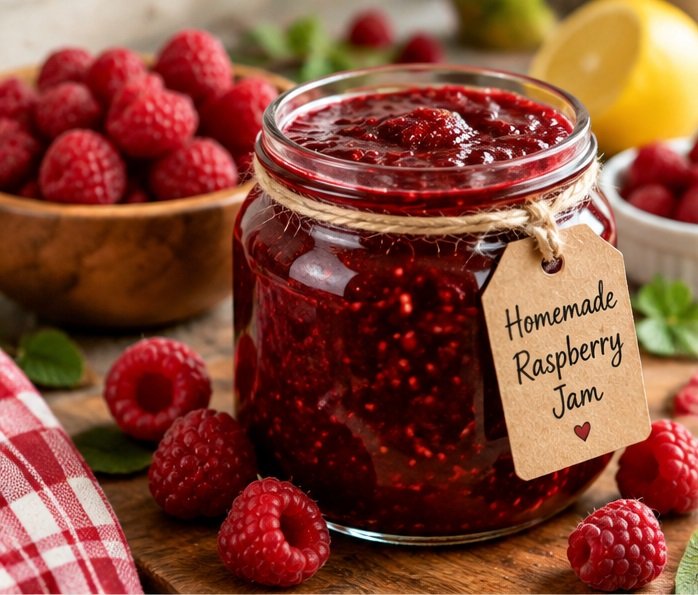
Bold, tangy and beautifully coloured, homemade raspberry jam captures the bright flavour of ripe raspberries in every spoonful. Made with fresh or frozen raspberries, granulated sugar and lemon juice, this simple recipe creates a vibrant ruby-red preserve with a delicious balance of sweetness and tartness.
As the raspberries simmer, they soften into a rich, glossy jam. You can leave the seeds and fruit pieces in for a rustic texture or strain the mixture for a smoother finish. A little lemon zest adds extra freshness, while a small amount of rosewater brings a delicate floral note.
Spread raspberry jam on warm toast, layer it into cakes, spoon it over cheesecake or swirl it through yoghurt. This small-batch recipe is easy to enjoy in sweet and savoury dishes. It is intended for refrigerator or freezer storage unless you follow a tested recipe and canning process for shelf-stable preserves.
Optional: ½ tsp rosewater for a delicate floral flavour
Method:
Prepare the raspberries:
If using fresh raspberries, rinse them gently only if needed and allow them to drain well. Remove any damaged berries or debris.
Frozen raspberries can be added directly to the saucepan or thawed first.
Mash the fruit:
Place the raspberries in a heavy-bottomed saucepan and gently mash them with a fork or potato masher.
Leave some berries whole if you prefer a rustic texture.
Add the sugar and lemon juice:
Stir in the granulated sugar and lemon juice.
Mix well to combine the ingredients.
Dissolve the sugar:
Heat the mixture over medium heat, stirring regularly until the sugar dissolves and the raspberries release their juices.
Bring to a boil:
Increase the heat until the mixture reaches a boil, stirring carefully to prevent it from sticking to the bottom of the pan.
Simmer until thickened:
Reduce the heat and simmer uncovered for 20–30 minutes, stirring frequently.
The mixture should gradually become thicker and glossier.
The exact cooking time will depend on the moisture content of the berries and your preferred consistency.
Add the optional flavourings:
If using lemon zest, stir it in during the final few minutes of cooking.
Add rosewater sparingly towards the end, tasting carefully so its floral flavour does not overpower the raspberries.
Test the consistency:
Spoon a little jam onto a chilled plate and allow it to cool briefly.
Tilt the plate to see whether the jam moves slowly.
If it remains too runny, continue simmering for a few minutes and test again.
Remember that the jam thickens further as it cools.
Transfer to containers:
Remove the saucepan from the heat and allow the jam to settle briefly.
Carefully transfer it into clean, heat-safe containers using a clean utensil.
Cool and store safely:
Allow the jam to cool safely, cover the containers, and refrigerate promptly.
Freeze any portion you want to keep for longer.
Filling jars and sealing them does not make this recipe suitable for pantry storage.
Elegant, versatile, and ready to charm—keeps for up to 3 months or longer when frozen. 😊
Raspberry jam is a jewel-toned classic—tart, vibrant, and endlessly romantic.
Why You’ll Love This Raspberry Jam
Bright, tangy flavour: Raspberries create a fruity preserve with a refreshing balance of sweet and tart.
Beautiful ruby-red colour: The rich colour makes the jam as appealing to look at as it is to eat.
Simple ingredients: A few everyday ingredients are all you need for this homemade batch.
Easy to customise: Add lemon zest, rosewater or warming spices to create your own variation.
Versatile uses: Enjoy it on toast, in baked treats, over desserts or alongside selected cheeses.
Tips for the Best Raspberry Jam
Choose ripe raspberries: Good-quality berries give the jam its best flavour. Avoid fruit that is mouldy or spoiled.
Handle fresh berries gently: Raspberries are delicate and can break apart easily, so avoid excessive washing or handling.
Decide on your texture: Mash lightly for a rustic jam or strain the cooked mixture if you prefer fewer seeds.
Stir regularly: The mixture becomes stickier as it thickens, so stir frequently to prevent scorching.
Use a heavy-based saucepan: Even heat helps the fruit cook consistently and reduces the risk of burning.
Keep the simmer steady: A controlled simmer helps moisture evaporate without making the mixture difficult to manage.
Test a cooled sample: Hot jam is thinner than cooled jam. Check the consistency on a chilled plate before cooking it for longer.
Be careful with rosewater: Its flavour can be strong, so start with a small amount and add more only if needed.
Do not reduce the sugar casually: Changing the sugar level can affect the texture and keeping quality. Use a recipe designed for reduced-sugar jam if needed.
Choose safe storage: Treat this recipe as a refrigerator or freezer preserve unless you follow a tested canning recipe.
Storage and Reheating
This recipe should be treated as a refrigerator or freezer jam, not a shelf-stable preserve.
Refrigerator: Transfer the cooled jam to a clean, covered container and refrigerate promptly. Use within approximately 1–2 weeks as a conservative guide for this homemade version.
Freezer: Store in a freezer-safe container, leaving space for expansion. Use within approximately 3 months for best quality and thaw in the refrigerator.
Pantry storage: Do not store at room temperature simply because the jam has been poured into sterilised jars and sealed. Use a tested recipe and the correct canning process for shelf-stable storage.
Reheating: Raspberry jam is usually served cold or at room temperature. For a warm sauce or dessert topping, heat only the portion you need in a small saucepan.
After opening: Keep refrigerated and use a clean spoon each time. Discard the jam if you notice mould, fermentation, an unusual smell or other signs of spoilage. Do not taste it to check whether it is safe.
Raspberry jam is a bold, tart beauty—vivid in color, punchy in flavor, and endlessly adaptable. With your knack for styling and pairing, this jam can anchor everything from rustic brunches to refined desserts. Here’s a set of uses and pairings to help it shine across your archive:
🍞 Breakfast & Brunch Pairings
Let raspberry jam add a tangy pop to morning favorites:
Croissants or Crumpets: Serve warm with butter and jam swirls
Ricotta Toast: Top with jam, crushed pistachios, and mint
Lemon Pancakes or Waffles: Drizzle with jam and fresh raspberries
Yogurt Bowls: Layer with granola, jam, and toasted coconut
🧀 Cheese & Grazing Boards
Raspberry jam pairs beautifully with creamy, tangy, and aged cheeses:
Brie or Camembert: Serve with crackers and a spoonful of jam
Goat Cheese Crostini: Top with jam and thyme or edible flowers
Sharp Cheddar or Blue Cheese: Add jam as a sweet-tart contrast
🥗 Salads & Savory Accents
Use jam in dressings or glazes for unexpected depth:
Spinach & Walnut Salad: Whisk jam into a raspberry vinaigrette
Grilled Duck or Pork: Glaze with jam, rosemary, and balsamic
Roasted Beet & Feta Salad: Toss with jam-based dressing for balance
🍰 Desserts & Bakes
Jam adds color, moisture, and berry brightness:
Jam Thumbprint Cookies: Classic and crowd-pleasing
Mini Cheesecakes or Tartlets: Top with jam and lemon zest
Raspberry Jam Bars: Layer with oat crumble or almond shortbread
Victoria Sponge Cake: Fill with jam and whipped cream
🍸 Drinks & Sips
Jam adds body and berry notes to cocktails and mocktails:
Raspberry Rosé Spritz: Stir jam into sparkling rosé with basil
Gin & Jam Sour: Shake with lemon juice and egg white
Iced Raspberry Tea: Mix jam into black tea with mint
🧁 Styling Ideas
For your visual archive, consider:
Rustic Styling: Linen cloth, wooden boards, and jam jars with handwritten tags
Elegant Touches: White porcelain, gold accents, and rose petals
Seasonal Themes: Pair with citrus in spring or cinnamon in winter
Here are some fun variations to experiment with for your Raspberry Jam recipe:
Variations
🌸 Floral & Botanical Twists
Rose Raspberry Jam: Use the optional rosewater and add a few dried rose petals during simmering (strain before jarring) for a romantic, Middle Eastern flair.
Raspberry Lavender Jam: Infuse 1 tsp dried culinary lavender during cooking, then strain for a soft, aromatic lift—perfect with shortbread or scones.
🍋 Citrus & Herb Accents
Lemon Verbena Raspberry Jam: Add 1 tbsp finely chopped lemon verbena leaves for a bright, herbal twist.
Raspberry Lime Jam: Swap lemon juice for lime and add 1 tsp lime zest for a tangy, tropical edge.
🌶️ Sweet Heat & Bold Depth
Raspberry Jalapeño Jam: Add 1 tbsp finely minced jalapeño (seeded for mild, unseeded for heat) for a sweet-spicy kick—great with cream cheese or grilled meats.
Raspberry Star Anise Jam: Simmer with 1 whole star anise pod for a warm, licorice-like undertone. Remove before jarring.
🍷 Boozy & Rich
Raspberry Chambord Jam: Stir in 1 tbsp Chambord (raspberry liqueur) at the end for a luxurious finish.
Raspberry Red Wine Jam: Replace half the lemon juice with dry red wine for a sultry, deep flavor—ideal with dark chocolate or aged cheese.
🍯 Nutty & Textural
Almond Raspberry Jam: Add ¼ tsp almond extract and stir in 2 tbsp slivered almonds post-cooking for crunch and aroma.
Raspberry Chia Jam: Stir in 2 tbsp chia seeds after simmering for a nutrient-rich, spoonable texture—no pectin needed.
Final Thoughts
Homemade raspberry jam is a delicious way to capture the bright, tangy flavour of raspberries in a simple fruit preserve. Its rich colour and sweet-tart taste make it equally welcome on morning toast, tucked into baked treats or spooned over a favourite dessert.
With just a few ingredients and a little patience, you can prepare a small batch and customise it with citrus, herbs or gentle spices. Allow it to cool before checking the consistency, store it safely in the refrigerator or freezer, and enjoy the fresh flavour of raspberries whenever you need a fruity touch.
Frequently Asked Questions
Can I use frozen raspberries?
Yes. Frozen raspberries work well in this recipe. Add them directly to the saucepan or thaw them first. They may release extra liquid, so the cooking time can vary.
Should I remove the raspberry seeds?
That is entirely up to you. Leaving the seeds in creates a traditional, rustic texture. For a smoother jam, press the cooked mixture through a fine-mesh sieve before transferring it to containers. Straining will reduce the final yield.
Why is my raspberry jam runny?
The mixture may need more time to reduce, or the fruit may have released more liquid than expected. Simmer gently for a few more minutes, stirring regularly, and test a cooled sample on a chilled plate. The jam will thicken further as it cools.
Can I make raspberry jam without pectin?
Yes. This recipe relies on cooking the fruit and sugar to reduce the liquid and thicken the mixture. The final consistency can vary depending on the berries and cooking time, so it may be softer than a jam made with added pectin.
Can I reduce the sugar?
Reducing the sugar can change the taste, texture and keeping quality. If you want a lower-sugar version, use a recipe specifically designed for reduced-sugar jam.
When should I add rosewater?
Add it near the end of cooking so its delicate aroma is not lost. Start with a small amount because rosewater can quickly overpower the raspberry flavour.
Can I use raspberry jam in savoury dishes?
Yes. A small amount can add fruity sweetness to dressings, glazes and sauces. For savoury applications, mix it with ingredients such as vinegar, mustard, ginger or herbs to balance the sweetness.
Can raspberry jam be stored in the pantry?
Not when made from this recipe alone. Safe room-temperature storage requires a tested recipe and an appropriate canning process. Refrigerate or freeze this version instead.