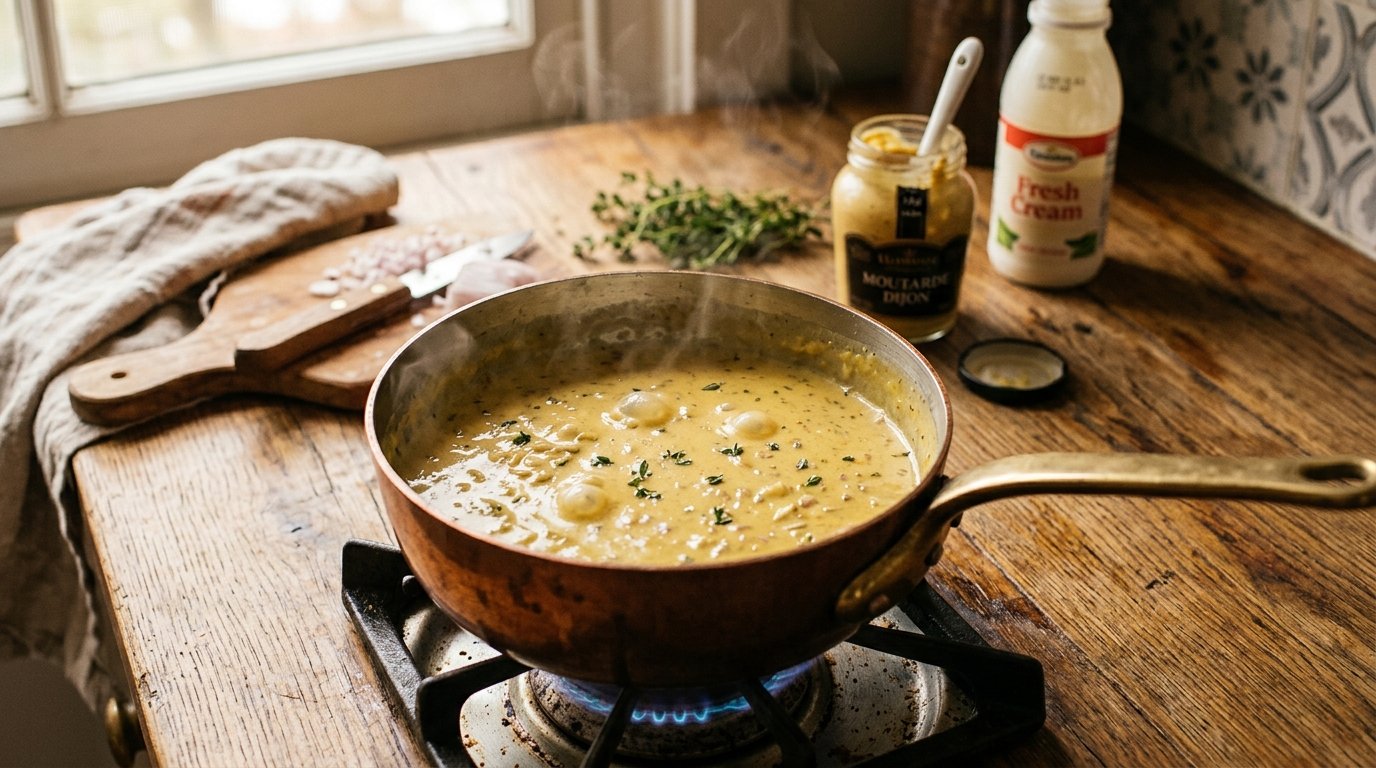
This mustard cream sauce is a simple way to add a touch of richness and flavour to everyday meals. Dijon mustard brings a pleasant tang, while fresh cream creates a smooth, velvety texture. Shallots, garlic and thyme add aromatic depth, bringing all the flavours together in a delicious finishing sauce.
Made with a handful of everyday ingredients, this quick sauce is ready in approximately 20 minutes. A splash of white wine or a squeeze of lemon juice adds brightness, while wholegrain mustard creates extra texture and a slightly different flavour.
Serve it over seared chicken, grilled fish, pork chops or roasted vegetables. It is equally delicious stirred through pasta or spooned over potatoes and grain bowls.
Finely chop the shallot, mince the garlic and remove the thyme leaves from their stems if using fresh herbs.
Sauté the shallot:
Melt the butter in a small saucepan over medium heat, or heat the olive oil.
Add the shallot and cook for 2–3 minutes, stirring occasionally, until softened and translucent.
Add the garlic, if using, and cook for another 30 seconds until fragrant.
Add the wine and stock:
If using white wine, pour it into the pan and allow it to simmer for 1–2 minutes to reduce slightly.
Add the stock and thyme, then simmer for another 2–3 minutes.
Stir in the mustard:
Add the Dijon mustard and whisk or stir until it is evenly incorporated into the liquid.
Add the cream:
Reduce the heat to low and gradually stir in the cream.
Simmer gently for 3–5 minutes, stirring regularly, until the sauce thickens enough to coat the back of a spoon.
Avoid boiling rapidly.
Season the sauce:
Add salt and black pepper to taste.
Finish with a small squeeze of lemon juice if you prefer a brighter flavour.
Serve warm:
Remove from the heat and spoon over chicken, pork, fish, vegetables, or your favourite side dishes.
This velvety sauce balances tangy mustard with rich cream and aromatic shallots. It’s quick to make and elevates everything from seared chicken to steamed greens. 😊
Why You’ll Love This Recipe
Rich and tangy: Dijon mustard adds a pleasant sharpness that balances the smooth cream.
Quick to prepare: A handful of ingredients creates a delicious homemade sauce in around 20 minutes.
Versatile: It complements meat, fish, vegetables, pasta and grain-based meals.
Easy to customise: Use wholegrain mustard, fresh herbs, white wine or dairy-free alternatives to change the flavour.
Restaurant-style finish: A simple drizzle can turn an everyday meal into something special.
A Little About Mustard Cream Sauce
Mustard cream sauce is inspired by classic European cooking, where mustard is often used to add flavour and balance to rich sauces. Dijon mustard is particularly useful because it has a smooth consistency and a distinctive tang without overwhelming the other ingredients.
The combination of mustard, cream and herbs creates a sauce that is both comforting and lively. Shallots provide a gentle sweetness, thyme adds fragrance, and stock gives the sauce savoury depth.
Tips for the Best Mustard Cream Sauce
Use good-quality Dijon mustard: It provides the distinctive tangy flavour that makes this sauce special.
Soften the shallots gently: Cook them until translucent rather than allowing them to brown too much.
Add the garlic carefully: Garlic can burn quickly, so cook it briefly before adding the liquid.
Reduce the wine first: If using white wine, allow it to simmer before adding the stock and cream to develop a more balanced flavour.
Keep the heat low: Once the cream has been added, simmer gently rather than boiling rapidly.
Adjust the consistency: For a thicker sauce, simmer for another minute or two. For a thinner sauce, add a splash of warm stock.
Balance the flavour: Add a little lemon juice if the sauce tastes too rich, or a small amount of cream if the mustard flavour is too strong.
Taste before seasoning: Dijon mustard and stock can both contain salt, so adjust the seasoning towards the end.
Serve shortly after cooking: The sauce is at its smoothest and silkiest when freshly prepared.
Uses for This Recipe
This mustard cream sauce is a versatile addition to your kitchen. Its tangy, savoury flavour works beautifully with a variety of dishes.
Serve over seared chicken: Spoon over grilled or pan-fried chicken breasts and thighs for a delicious main course.
Pair with pork chops: The mustard complements the natural richness of pork.
Finish grilled fish: Drizzle over salmon, trout or white fish for a creamy, tangy accompaniment.
Enhance roasted vegetables: Pour over broccoli, cauliflower, carrots, parsnips or potatoes.
Make creamy mustard pasta: Toss with penne, fusilli or tagliatelle, adding mushrooms or spinach if desired.
Dress grain bowls: Spoon over quinoa, wild rice, barley or farro with roasted vegetables.
Prepare savoury crêpes: Use as a filling or topping with mushrooms, spinach and cheese.
Upgrade sandwiches: Spread a little inside toasted sandwiches, paninis or wraps.
Serve with eggs: Drizzle over poached eggs, omelettes or rösti for a delicious brunch.
Add to vegetable bakes: Use as a creamy sauce for a potato, leek or cauliflower gratin.
Storage and Reheating
Mustard cream sauce is best served freshly made, but leftovers can be stored and reheated carefully.
Refrigeration: Allow the sauce to cool slightly, transfer it to a clean, airtight container, and refrigerate within two hours. Use within 3–4 days.
Reheating on the stove: Warm gently in a small saucepan over low heat, stirring regularly. Add a splash of stock or cream if the sauce has thickened.
Microwave reheating: Place in a microwave-safe container and heat in short intervals, stirring between each interval until thoroughly hot.
Freezing: Freezing is not recommended for the best texture, as cream-based sauces can separate or become grainy after thawing.
Make-ahead preparation: Chop the shallot and garlic ahead of time and measure the other ingredients. For the freshest result, prepare the sauce shortly before serving.
What to Serve with Mustard Cream Sauce
This sauce pairs particularly well with simply prepared mains and vegetables. Its tangy flavour balances rich ingredients and adds a creamy finish to lighter dishes.
Seared Chicken Breasts: Spoon over pan-fried chicken with roasted potatoes and seasonal vegetables.
Grilled Salmon or Trout: Dijon mustard complements the natural richness of oily fish.
Pork Tenderloin or Chops: Serve with thyme-roasted potatoes and green vegetables.
Roasted Cauliflower: Drizzle over golden cauliflower florets and finish with toasted almonds or fresh parsley.
Steamed Green Beans: A light vegetable side that works beautifully with the creamy sauce.
Roasted Carrots: Their natural sweetness balances the tanginess of the mustard.
Creamy Polenta: Serve the sauce over soft polenta for a comforting vegetarian meal.
Wild Rice or Barley Pilaf: Earthy grains provide a lovely contrast to the smooth sauce.
Wilted Spinach: Add freshness and a gentle savoury flavour to the plate.
Roasted Garlic Mashed Potatoes: A comforting combination of creamy potatoes and tangy mustard sauce.
Here are some fun variations to experiment with for your Mustard Cream Sauce recipe:
Variations
Maple Dijon Sauce: Add 1 tsp maple syrup for a subtle sweetness that pairs especially well with pork and roasted root vegetables.
Wholegrain Mustard Sauce: Replace half the Dijon mustard with wholegrain mustard for a textured finish.
Horseradish Mustard Sauce: Stir in 1 tsp prepared horseradish for a stronger, more pronounced flavour.
Curry Mustard Sauce: Add a pinch of mild curry powder and replace the thyme with fresh coriander for a warming variation.
Sour Cream Mustard Sauce: Replace the fresh cream with sour cream for a tangier finish. Stir it in over low heat and avoid boiling.
Coconut Mustard Sauce: Use coconut cream and vegetable stock for a dairy-free alternative. A little lime zest and fresh coriander work well with this version.
White Wine Mustard Sauce: Increase the white wine slightly and allow it to reduce before adding the stock and cream for extra depth.
Garlic and Herb Mustard Sauce: Add an extra garlic clove and finish with chopped parsley, chives or tarragon.
Parmesan Mustard Sauce: Stir in a little finely grated Parmesan at the end for a richer, savoury flavour.
Lemon Mustard Sauce: Add lemon zest and juice for a fresh, bright finish that works particularly well with fish.
Mushroom Mustard Sauce: Add sliced mushrooms with the shallots and cook until golden before continuing with the recipe.
Mustard and Roasted Garlic Sauce: Mash a roasted garlic clove into the sauce for a mellow, sweet garlic flavour.
Final Thoughts
This mustard cream sauce is a wonderful example of how a few simple ingredients can create something truly delicious. The tang of Dijon mustard, the richness of cream and the gentle flavour of shallots and thyme come together in a smooth, versatile sauce.
Keep it classic with fresh thyme, or experiment with whole-grain mustard, lemon, mushrooms or roasted garlic. Serve it over chicken, pork, fish or vegetables whenever you want to add a little extra flavour to the table.
Frequently Asked Questions
Can I make mustard cream sauce without cream?
Yes. You can use a dairy-free cream alternative, such as oat or soya cooking cream, or use additional stock for a lighter sauce. The texture and flavour will vary depending on the alternative you choose.
Can I use wholegrain mustard instead of Dijon?
Absolutely. Wholegrain mustard gives the sauce a slightly coarser texture and visible mustard seeds. You can also combine equal amounts of Dijon and wholegrain mustard.
Why is my mustard cream sauce too thin?
It may need a little more time to reduce. Simmer gently for another 1–2 minutes, stirring regularly. If you need a thicker sauce quickly, mix a small amount of cornflour with cold water and add it gradually while stirring.
Why has my cream sauce separated?
Cream sauces can separate when exposed to excessive heat or rapid boiling. Keep the temperature low once the cream has been added and stir regularly. If the sauce begins to separate, remove it from the heat and whisk gently.
Can I make mustard cream sauce ahead of time?
Yes. You can prepare it a few hours ahead and refrigerate it in an airtight container. Reheat gently over low heat, adding a little stock or cream to restore its consistency.
Which herbs work best in mustard cream sauce?
Thyme is a classic choice, but rosemary, tarragon, parsley and chives also work well. Use fresh herbs for a brighter flavour or dried herbs in smaller quantities.
Is mustard cream sauce suitable for vegetarians?
Yes, provided you use vegetable stock and check that your mustard and cream alternatives are suitable for your dietary requirements.
Can I use this sauce with fish?
Yes. Dijon mustard cream sauce is particularly delicious with salmon, trout and white fish. Add a little lemon juice and fresh parsley for a lighter finish.
Essential cookies enable basic functions and are necessary for the proper function of the website.
Name
Description
Duration
Cookie Preferences
This cookie is used to store the user's cookie consent preferences.
30 days
These cookies are needed for adding comments on this website.
Name
Description
Duration
comment_author
Used to track the user across multiple sessions.
Session
comment_author_email
Used to track the user across multiple sessions.
Session
comment_author_url
Used to track the user across multiple sessions.
Session
Google's current Sign in with Google client library. It renders the Google sign-in button, or the One Tap prompt, so visitors can log in to your site with their Google account. It replaces the older Google Sign-In platform library.
Set on your own domain by the Sign in with Google client library. Records whether the visitor has dismissed the One Tap sign-in prompt and for how long it should stay hidden, plus the time the library last loaded and a browsing session id used for the same purpose. Sites that pass a custom state_cookie_name will see that name instead.
180 days
g_csrf_token
Set on your own domain by the Sign in with Google client library and submitted together with the sign-in credential, so your site can confirm the sign-in came from its own page and not from a forged cross-site request.
5 minutes
Statistics cookies collect information anonymously. This information helps us understand how visitors use our website.
Google Analytics is a powerful tool that tracks and analyzes website traffic for informed marketing decisions.
Contains information related to marketing campaigns of the user. These are shared with Google AdWords / Google Ads when the Google Ads and Google Analytics accounts are linked together.
90 days
__utma
ID used to identify users and sessions
2 years after last activity
__utmt
Used to monitor number of Google Analytics server requests
10 minutes
__utmb
Used to distinguish new sessions and visits. This cookie is set when the GA.js javascript library is loaded and there is no existing __utmb cookie. The cookie is updated every time data is sent to the Google Analytics server.
30 minutes after last activity
__utmc
Used only with old Urchin versions of Google Analytics and not with GA.js. Was used to distinguish between new sessions and visits at the end of a session.
End of session (browser)
__utmz
Contains information about the traffic source or campaign that directed user to the website. The cookie is set when the GA.js javascript is loaded and updated when data is sent to the Google Anaytics server
6 months after last activity
__utmv
Contains custom information set by the web developer via the _setCustomVar method in Google Analytics. This cookie is updated every time new data is sent to the Google Analytics server.
2 years after last activity
__utmx
Used to determine whether a user is included in an A / B or Multivariate test.
18 months
_ga
ID used to identify users
2 years
_gali
Used by Google Analytics to determine which links on a page are being clicked
30 seconds
_ga_
ID used to identify users
2 years
_gid
ID used to identify users for 24 hours after last activity
24 hours
_gat
Used to monitor number of Google Analytics server requests when using Google Tag Manager
1 minute
Marketing cookies are used to follow visitors to websites. The intention is to show ads that are relevant and engaging to the individual user.
Google Ads is an online advertising platform that enables businesses to create targeted ads displayed on Google search results and partner sites.
Targeting cookie. Used to create a user profile and display relevant and personalised Google Ads to the user.
2 years
__Secure-1PSIDCC
Targeting cookie. Used to create a user profile and display relevant and personalised Google Ads to the user.
2 years
__Secure-3PAPISID
Profiles the interests of website visitors to serve relevant and personalised ads through retargeting.
2 years
AEC
AEC cookies ensure that requests within a browsing session are made by the user, and not by other sites. These cookies prevent malicious sites from acting on behalf of a user without that user's knowledge.
6 months
ADS_VISITOR_ID
Cookie required to use the options and on-site web services
2 months
__Secure-3PSIDCC
Targeting cookie. Used to create a user profile and display relevant and personalised Google Ads to the user.
2 years
__Secure-3PSIDTS
Targeting cookie. Used to create a user profile and display relevant and personalised Google Ads to the user.
2 years
__Secure-1PSIDTS
Targeting cookie. Used to create a user profile and display relevant and personalised Google Ads to the user.
2 years
__Secure-1PAPISID
Targeting cookie. Used to create a user profile and display relevant and personalised Google Ads to the user.
2 years
__Secure-3PSID
Targeting cookie. Used to profile the interests of website visitors and display relevant and personalised Google ads.
2 years
Conversion
Google uses cookies for advertising, including serving and rendering ads, personalizing ads (depending on your ad settings at g.co/adsettings), limiting the number of times an ad is shown to a user, muting ads you have chosen to stop seeing, and measuring the effectiveness of ads.
90 days
_gcl_aw
Google uses cookies for advertising, including serving and rendering ads, personalizing ads (depending on your ad settings at g.co/adsettings), limiting the number of times an ad is shown to a user, muting ads you have chosen to stop seeing, and measuring the effectiveness of ads.
90 Days
_gcl_gs
Google uses cookies for advertising, including serving and rendering ads, personalizing ads (depending on your ad settings at g.co/adsettings), limiting the number of times an ad is shown to a user, muting ads you have chosen to stop seeing, and measuring the effectiveness of ads.
90 Days
_gcl_gb
Google uses cookies for advertising, including serving and rendering ads, personalizing ads (depending on your ad settings at g.co/adsettings), limiting the number of times an ad is shown to a user, muting ads you have chosen to stop seeing, and measuring the effectiveness of ads.
90 Days
_gac_gb_
Google uses cookies for advertising, including serving and rendering ads, personalizing ads (depending on your ad settings at g.co/adsettings), limiting the number of times an ad is shown to a user, muting ads you have chosen to stop seeing, and measuring the effectiveness of ads.
90 Days
FPGCLGB
Google uses cookies for advertising, including serving and rendering ads, personalizing ads (depending on your ad settings at g.co/adsettings), limiting the number of times an ad is shown to a user, muting ads you have chosen to stop seeing, and measuring the effectiveness of ads.
90 Days
FPGCLAW
Google uses cookies for advertising, including serving and rendering ads, personalizing ads (depending on your ad settings at g.co/adsettings), limiting the number of times an ad is shown to a user, muting ads you have chosen to stop seeing, and measuring the effectiveness of ads.
90 Days
You can find more information in our Cookie Policy and .