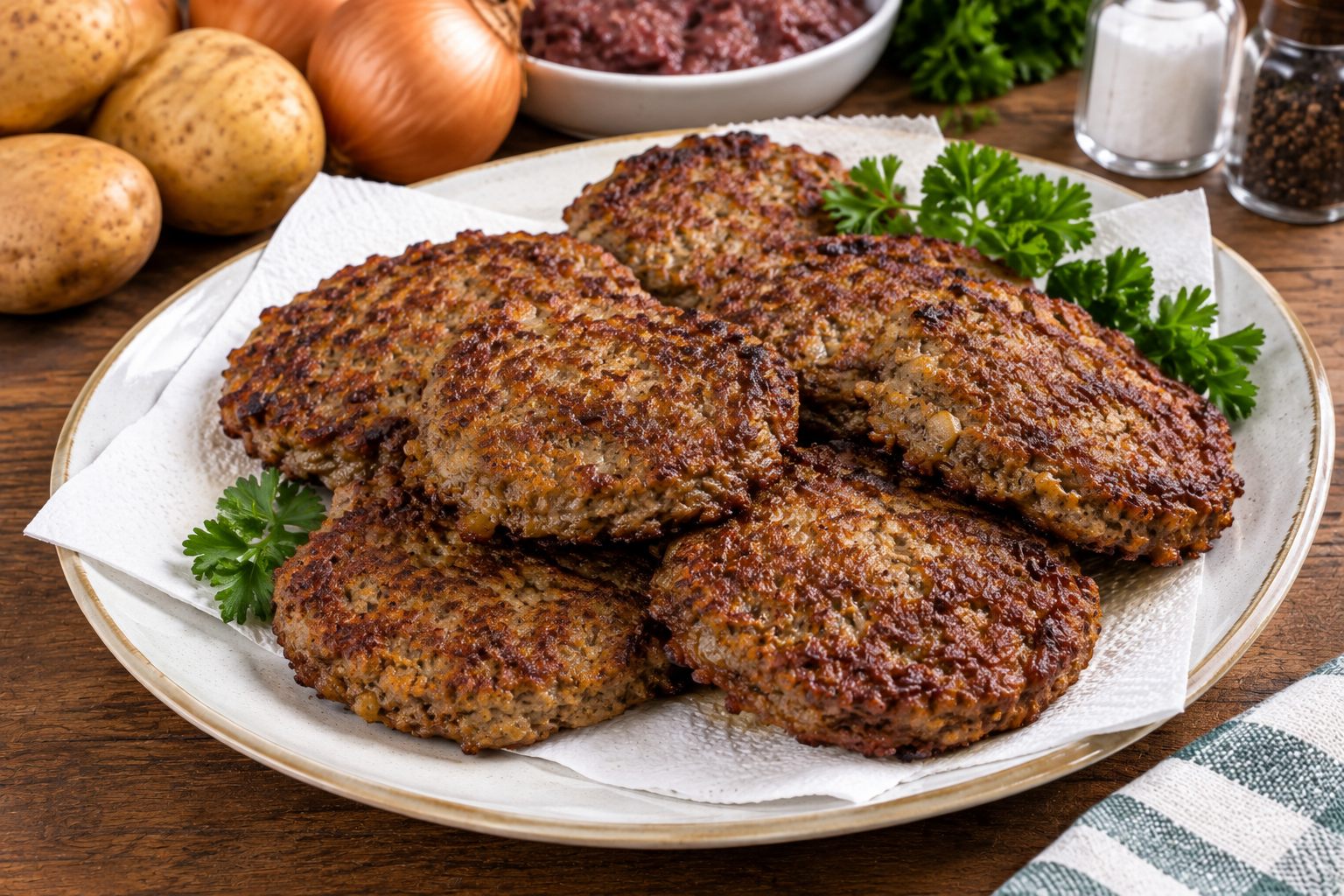
Liver patties, also known as lewerkoekies in South African cooking, are a traditional savoury dish that turns minced liver into delicious, golden-brown patties. Made with sheep, beef or ostrich liver, this recipe combines grated potatoes and onions with eggs and cake flour to create a hearty mixture that holds together beautifully when cooked.
The grated potato adds moisture and texture, while the onion brings natural sweetness. A little vinegar adds tanginess, and seasoning with salt and pepper brings all the flavours together. Once pan-fried, the patties develop a lightly crisp exterior with a tender, savoury centre.
Serve these homemade liver patties with creamy mashed potatoes, tomato and onion salad, or a spoonful of chutney for a comforting South African-style meal. They are also delicious served in a roll or alongside fresh vegetables.
If the grated potatoes release a lot of liquid, gently squeeze out some excess moisture.
Combine the ingredients:
Place the minced liver in a large mixing bowl.
Add the grated potatoes and onions.
Mix in the vinegar, sifted cake flour and baking powder.
Add the beaten eggs, salt and black pepper.
Stir thoroughly until all the ingredients are evenly combined.
Check the consistency:
The mixture should be thick enough to spoon into the frying pan and hold its shape.
If it is too loose, add a little extra sifted flour, one tablespoon at a time.
Keep the mixture chilled while preparing the pan.
Heat the oil:
Add a shallow layer of vegetable oil to a large frying pan.
Warm over medium heat.
The oil should be hot enough to cook the patties steadily without browning the outside too quickly.
Shape the patties:
Use a spoon to portion the mixture into the pan.
Gently flatten each portion into a small, even patty.
Leave enough space between the patties so they cook evenly.
Cook in batches rather than overcrowding the pan.
Cook until thoroughly done:
Fry the patties for approximately 4–5 minutes on the first side, depending on their thickness.
Carefully turn them and cook the other side until golden brown.
Lower the heat if the outside browns too quickly.
Because these patties contain liver, check that the centres reach a safe internal temperature of 71°C before serving. A food thermometer is the most reliable way to check.
Drain and serve:
Transfer the cooked patties to a plate lined with paper towels to absorb excess oil.
Serve warm with mashed potatoes, fresh salad or your favourite chutney.
A nutritious and flavorful dish, perfect for a hearty meal. 😊 Enjoy your cooking! 🍽️✨
Why You’ll Love These Liver Patties
Traditional South African flavour: A homemade version of the familiar lewerkoekie.
Hearty and satisfying: Liver, potatoes and eggs create a substantial savoury patty.
Full of texture: Grated potatoes and onions add moisture and help create a tender centre.
Versatile: Enjoy as a main meal, in a sandwich or as part of a savoury platter.
Easy to customise: Add herbs, spices or different accompaniments to suit your taste.
Great for family meals: A generous batch makes it easy to serve several people.
A South African Favourite: Lewerkoekies
Lewerkoekies are a familiar feature of traditional South African home cooking. Recipes vary between families, with some using minced liver, grated potato, onion and flour to create small savoury patties.
They are often served with mashed potatoes, tomato and onion salad or chutney. This version keeps the preparation simple while allowing the natural flavour of the liver and the sweetness of the onion to shine through.
Tips for the Best Liver Patties
Use fresh liver: Choose fresh, properly refrigerated liver from a reliable supplier.
Remove excess moisture: Grated potatoes can release quite a lot of liquid. Squeezing out the excess helps the patties hold together.
Grate the vegetables evenly: Finely grated potato and onion distribute more easily through the mixture.
Mix thoroughly: Make sure the flour, eggs and baking powder are evenly incorporated.
Check the consistency: The mixture should be thick enough to portion with a spoon. Add extra flour gradually if necessary.
Keep the patties similar in size: Even portions help them cook at a consistent rate.
Use moderate heat: Cooking too quickly can brown the outside before the centre is fully cooked.
Avoid overcrowding: Fry in batches so the oil temperature remains steady.
Cook thoroughly: Liver patties must be cooked all the way through. Check the centre reaches 71°C.
Serve freshly cooked: They are especially enjoyable while warm and lightly crisp on the outside.
Uses for Liver Patties
Liver patties can be served in several delicious ways:
Classic family meal: Serve with mashed potatoes, gravy and sautéed onions.
Burger alternative: Place a cooked patty in a roll with lettuce, tomato and chutney.
Breakfast addition: Serve alongside eggs and toast for a savoury breakfast.
Snack or appetiser: Cut into smaller portions and serve with a dipping sauce.
Salad topping: Slice cooked patties and add to a fresh salad for a hearty meal.
South African-style serving: Pair with tomato and onion salad and Mrs Ball’s chutney.
Lunchbox meal: Pack cooked patties with suitable accompaniments, keeping them properly chilled until ready to eat.
Storage and Reheating
Cooling: Allow cooked patties to cool slightly and refrigerate promptly, within two hours of cooking.
Refrigeration: Store in a sealed, airtight container in the refrigerator at 5°C or colder and use within 1–2 days.
Reheating: Reheat thoroughly in a covered frying pan over medium-low heat or in the oven until steaming hot throughout.
Avoid repeated reheating: Reheat only the portions you intend to serve.
Freezing: Cooked patties can be frozen in a freezer-safe container with baking paper between layers. For best quality, use within 2–3 months.
Thawing: Thaw frozen patties in the refrigerator before reheating thoroughly.
Raw mixture: Keep the uncooked liver mixture refrigerated and prepare it promptly. Do not leave it at room temperature.
What to Serve with Liver Patties
These savoury patties pair beautifully with comforting sides, fresh salads and tangy sauces.
Creamy Mashed Potatoes: A classic, buttery accompaniment that balances the savoury liver.
Caramelised Onions: Their natural sweetness complements the rich flavour of the patties.
Tomato and Onion Salad: A fresh South African favourite that adds colour and acidity.
Tangy Pickles: Provide a sharp contrast to the hearty patties.
Fresh Bread Rolls: Perfect for making a simple liver patty sandwich.
Roasted Root Vegetables: Carrots, beetroot and sweet potatoes make a delicious side.
Classic Coleslaw: Crisp cabbage and a creamy dressing add freshness.
Sweet and Sour Mustard Sauce: A tangy accompaniment that works well with savoury liver.
Mrs Ball’s Chutney: A traditional South African condiment that adds a sweet and fruity flavour.
Here are some fun variations to experiment with for your Liver Patties recipe:
Variations
Traditional South African Lewerkoekies: Serve with tomato and onion salad, chutney and mashed potatoes.
Spiced Liver Patties: Add smoked paprika, ground cumin or coriander for a deeper savoury flavour.
Herb-Infused Patties: Mix in fresh parsley, thyme or rosemary for an aromatic touch.
Crunchy Coated Patties: Coat the shaped patties lightly in breadcrumbs before frying for an extra crisp exterior.
Cheesy Liver Patties: Add a little grated cheddar to the mixture for a richer flavour.
Garlic and Onion Patties: Add minced garlic for extra savoury depth.
Mild Liver and Beef Patties: Combine the liver with some minced beef for a gentler liver flavour, adjusting the binding ingredients if needed.
Chilli Liver Patties: Add a small amount of chilli flakes or finely chopped fresh chilli for gentle heat.
Lemon and Herb Patties: Add lemon zest and fresh parsley to brighten the flavour.
Final Thoughts
These homemade liver patties are a delicious take on a traditional South African favourite. The combination of minced liver, grated potatoes, onion and simple seasonings creates hearty patties with a golden exterior and a tender, savoury centre.
Serve them with creamy mashed potatoes, fresh tomato and onion salad or a generous spoonful of chutney for a comforting family meal. Whether you keep them traditional or experiment with herbs and spices, these liver patties are a lovely addition to your collection of homemade South African recipes.
Frequently Asked Questions
What type of liver can I use?
You can use sheep, beef, or ostrich liver for this recipe. Each has a slightly different flavour, so choose the variety you enjoy most.
Why are my liver patties falling apart?
The mixture may contain too much moisture or may not have enough binding ingredients. Squeeze excess liquid from the grated potatoes and add a little extra flour if the mixture is too loose.
Why are my liver patties tough?
Overcooking can make liver dry and firm. Use moderate heat and check the internal temperature with a food thermometer so the patties are cooked safely without being left in the pan longer than necessary.
Can I prepare the mixture ahead of time?
It is best to prepare and cook the mixture promptly because it contains raw liver and eggs. If preparing ingredients ahead, keep them separately covered in the refrigerator and combine shortly before cooking.
Can I bake liver patties instead of frying them?
Yes. Arrange spoonfuls of the mixture on a lightly greased, lined baking tray and bake at approximately 190°C until browned and cooked through. Cooking time will depend on their thickness. Check that the centres reach 71°C before serving.
Can I freeze liver patties?
Yes. Cooked patties can be cooled, packed into freezer-safe containers and frozen. Thaw them in the refrigerator and reheat thoroughly before serving.
What sauce goes best with liver patties?
Tomato chutney, Mrs Ball’s chutney, mustard sauce, and a simple onion gravy are all delicious options. Choose a tangy sauce to balance the rich savoury flavour.
Essential cookies enable basic functions and are necessary for the proper function of the website.
Name
Description
Duration
Cookie Preferences
This cookie is used to store the user's cookie consent preferences.
30 days
These cookies are needed for adding comments on this website.
Name
Description
Duration
comment_author
Used to track the user across multiple sessions.
Session
comment_author_email
Used to track the user across multiple sessions.
Session
comment_author_url
Used to track the user across multiple sessions.
Session
Google's current Sign in with Google client library. It renders the Google sign-in button, or the One Tap prompt, so visitors can log in to your site with their Google account. It replaces the older Google Sign-In platform library.
Set on your own domain by the Sign in with Google client library. Records whether the visitor has dismissed the One Tap sign-in prompt and for how long it should stay hidden, plus the time the library last loaded and a browsing session id used for the same purpose. Sites that pass a custom state_cookie_name will see that name instead.
180 days
g_csrf_token
Set on your own domain by the Sign in with Google client library and submitted together with the sign-in credential, so your site can confirm the sign-in came from its own page and not from a forged cross-site request.
5 minutes
Statistics cookies collect information anonymously. This information helps us understand how visitors use our website.
Google Analytics is a powerful tool that tracks and analyzes website traffic for informed marketing decisions.
Contains information related to marketing campaigns of the user. These are shared with Google AdWords / Google Ads when the Google Ads and Google Analytics accounts are linked together.
90 days
__utma
ID used to identify users and sessions
2 years after last activity
__utmt
Used to monitor number of Google Analytics server requests
10 minutes
__utmb
Used to distinguish new sessions and visits. This cookie is set when the GA.js javascript library is loaded and there is no existing __utmb cookie. The cookie is updated every time data is sent to the Google Analytics server.
30 minutes after last activity
__utmc
Used only with old Urchin versions of Google Analytics and not with GA.js. Was used to distinguish between new sessions and visits at the end of a session.
End of session (browser)
__utmz
Contains information about the traffic source or campaign that directed user to the website. The cookie is set when the GA.js javascript is loaded and updated when data is sent to the Google Anaytics server
6 months after last activity
__utmv
Contains custom information set by the web developer via the _setCustomVar method in Google Analytics. This cookie is updated every time new data is sent to the Google Analytics server.
2 years after last activity
__utmx
Used to determine whether a user is included in an A / B or Multivariate test.
18 months
_ga
ID used to identify users
2 years
_gali
Used by Google Analytics to determine which links on a page are being clicked
30 seconds
_ga_
ID used to identify users
2 years
_gid
ID used to identify users for 24 hours after last activity
24 hours
_gat
Used to monitor number of Google Analytics server requests when using Google Tag Manager
1 minute
Marketing cookies are used to follow visitors to websites. The intention is to show ads that are relevant and engaging to the individual user.
Google Ads is an online advertising platform that enables businesses to create targeted ads displayed on Google search results and partner sites.
Targeting cookie. Used to create a user profile and display relevant and personalised Google Ads to the user.
2 years
__Secure-1PSIDCC
Targeting cookie. Used to create a user profile and display relevant and personalised Google Ads to the user.
2 years
__Secure-3PAPISID
Profiles the interests of website visitors to serve relevant and personalised ads through retargeting.
2 years
AEC
AEC cookies ensure that requests within a browsing session are made by the user, and not by other sites. These cookies prevent malicious sites from acting on behalf of a user without that user's knowledge.
6 months
ADS_VISITOR_ID
Cookie required to use the options and on-site web services
2 months
__Secure-3PSIDCC
Targeting cookie. Used to create a user profile and display relevant and personalised Google Ads to the user.
2 years
__Secure-3PSIDTS
Targeting cookie. Used to create a user profile and display relevant and personalised Google Ads to the user.
2 years
__Secure-1PSIDTS
Targeting cookie. Used to create a user profile and display relevant and personalised Google Ads to the user.
2 years
__Secure-1PAPISID
Targeting cookie. Used to create a user profile and display relevant and personalised Google Ads to the user.
2 years
__Secure-3PSID
Targeting cookie. Used to profile the interests of website visitors and display relevant and personalised Google ads.
2 years
Conversion
Google uses cookies for advertising, including serving and rendering ads, personalizing ads (depending on your ad settings at g.co/adsettings), limiting the number of times an ad is shown to a user, muting ads you have chosen to stop seeing, and measuring the effectiveness of ads.
90 days
_gcl_aw
Google uses cookies for advertising, including serving and rendering ads, personalizing ads (depending on your ad settings at g.co/adsettings), limiting the number of times an ad is shown to a user, muting ads you have chosen to stop seeing, and measuring the effectiveness of ads.
90 Days
_gcl_gs
Google uses cookies for advertising, including serving and rendering ads, personalizing ads (depending on your ad settings at g.co/adsettings), limiting the number of times an ad is shown to a user, muting ads you have chosen to stop seeing, and measuring the effectiveness of ads.
90 Days
_gcl_gb
Google uses cookies for advertising, including serving and rendering ads, personalizing ads (depending on your ad settings at g.co/adsettings), limiting the number of times an ad is shown to a user, muting ads you have chosen to stop seeing, and measuring the effectiveness of ads.
90 Days
_gac_gb_
Google uses cookies for advertising, including serving and rendering ads, personalizing ads (depending on your ad settings at g.co/adsettings), limiting the number of times an ad is shown to a user, muting ads you have chosen to stop seeing, and measuring the effectiveness of ads.
90 Days
FPGCLGB
Google uses cookies for advertising, including serving and rendering ads, personalizing ads (depending on your ad settings at g.co/adsettings), limiting the number of times an ad is shown to a user, muting ads you have chosen to stop seeing, and measuring the effectiveness of ads.
90 Days
FPGCLAW
Google uses cookies for advertising, including serving and rendering ads, personalizing ads (depending on your ad settings at g.co/adsettings), limiting the number of times an ad is shown to a user, muting ads you have chosen to stop seeing, and measuring the effectiveness of ads.
90 Days
You can find more information in our Cookie Policy and .