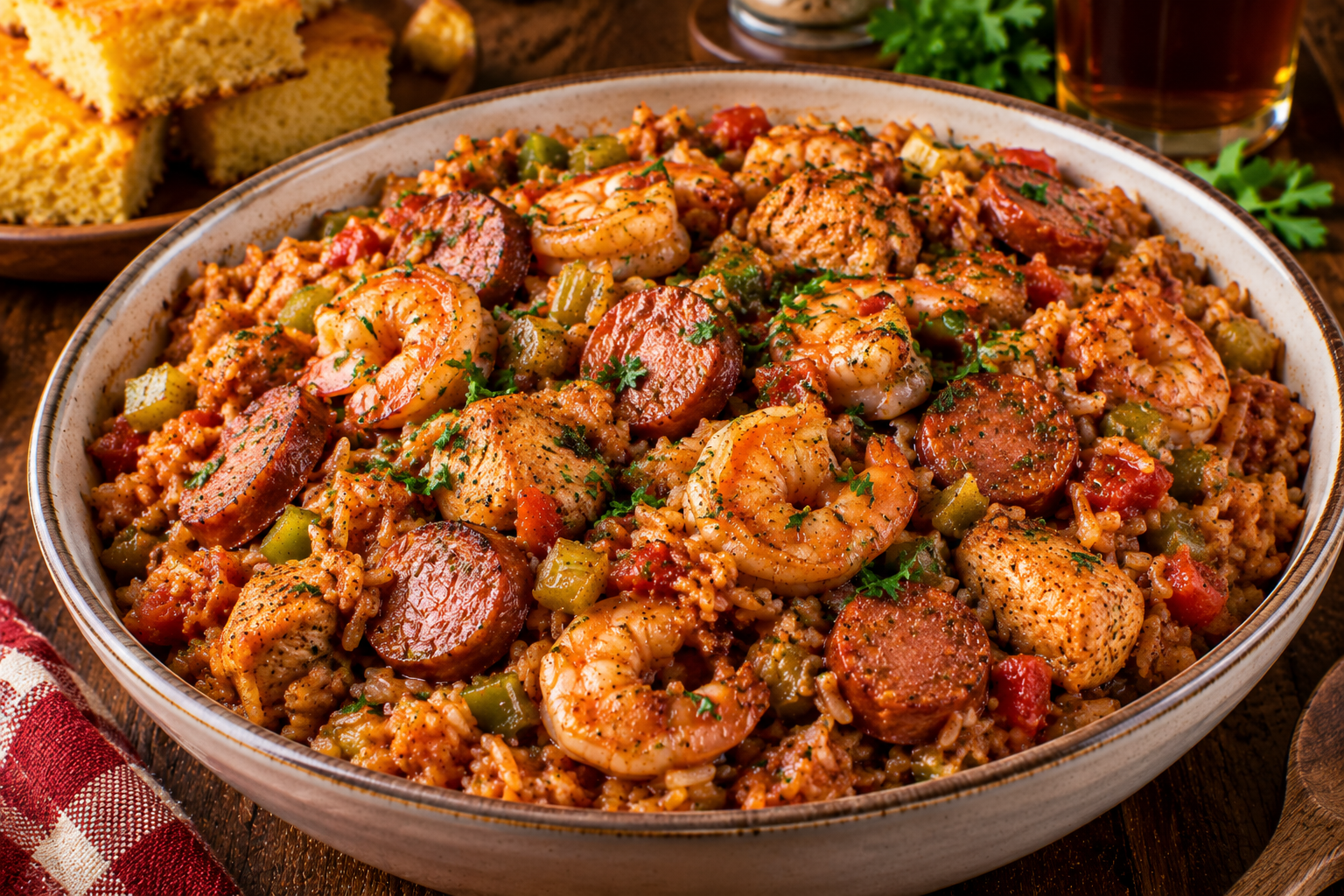
Jambalaya is a flavourful Louisiana classic that brings together smoky sausage, tender chicken, juicy shrimp, rice and aromatic vegetables in one satisfying pot. Inspired by Cajun and Creole cooking, this dish combines onion, green bell pepper and celery with garlic, paprika, thyme and cayenne pepper for a delicious balance of savoury flavour and gentle heat.
As the rice simmers in chicken stock and tomatoes, it absorbs the spices and rich flavours of the meat and vegetables. The shrimp are added towards the end of cooking to keep them tender, while fresh parsley adds a bright finishing touch.
This easy jambalaya recipe is ideal for family dinners, weekend meals and gatherings where everyone can share a generous, comforting dish. With simple ingredients and just one pot to clean, it is a wonderful way to bring bold Louisiana-inspired flavours to your kitchen.
300g smoked sausage (andouille or chorizo), sliced
300g chicken thighs, cubed
300g shrimp, peeled and deveined
2 cups long-grain rice
4 cups chicken stock
1 can (400 g) diced tomatoes
2 tsp paprika
1 tsp cayenne pepper (adjust to taste)
1 tsp thyme
2 bay leaves
Salt and black pepper, to taste
Fresh parsley, chopped (for garnish)
Method:
Sauté the vegetables:
Heat the olive oil in a large, heavy-bottomed pot over medium heat.
Add the diced onion, green bell pepper, and celery.
Cook for 5–7 minutes, stirring occasionally, until softened.
Add the minced garlic and cook for another minute.
Brown the sausage and chicken:
Add the sliced sausage and chicken pieces.
Cook for approximately 5 minutes, stirring occasionally, until the sausage begins to brown and the chicken is lightly coloured on the outside.
Add the seasonings:
Stir in the paprika, cayenne pepper, thyme, bay leaves, salt, and black pepper.
Mix well so the spices coat the meat and vegetables.
Add the rice:
Stir in the uncooked long-grain rice and cook for 1–2 minutes, allowing it to absorb some of the flavours in the pot.
Pour in the stock and tomatoes:
Add the chicken stock and diced tomatoes, including their juice.
Stir well, scraping up any browned bits from the bottom of the pot.
Bring the mixture to a gentle boil.
Simmer the rice:
Reduce the heat to low, cover with a tight-fitting lid, and simmer for approximately 20–25 minutes, or until the rice is nearly tender and most of the liquid has been absorbed.
Avoid lifting the lid repeatedly, as this allows steam to escape.
Check occasionally to ensure the rice is not sticking or burning.
Add the shrimp:
Arrange the shrimp over the rice and gently fold them in.
Cover and cook for another 5–7 minutes, until the shrimp are opaque and cooked through.
If the rice needs more time, continue cooking gently until tender, adding a small splash of stock or water if necessary.
Rest and finish:
Remove the pot from the heat and let the jambalaya stand, covered, for 5 minutes.
Remove the bay leaves, fluff the rice gently with a fork, and adjust the seasoning.
Garnish and serve:
Sprinkle with fresh chopped parsley and serve hot in bowls.
✨ Tip: Jambalaya tastes even better the next day—make it ahead and let the flavors deepen overnight. 😊
Jambalaya is a bold, one-pot dish that blends smoky sausage, tender chicken, and sweet shrimp with rice and aromatic vegetables.
🌟 Key Highlights
Holy Trinity: Onion, bell pepper, and celery form the aromatic base.
Proteins: Sausage, chicken, and shrimp create layers of flavor.
Rice: Long-grain rice absorbs spices and stock, making it hearty.
Spices: Paprika, cayenne, thyme, and bay leaves deliver depth and heat.
Tomatoes: Add acidity and balance, especially in Creole-style versions.
Why You’ll Love This Jambalaya
A complete one-pot meal: Rice, meat, seafood and vegetables come together in one dish.
Bold, savoury flavour: Smoked sausage, garlic and Cajun-inspired spices give every spoonful plenty of character.
Tender chicken and shrimp: Adding the seafood near the end helps prevent it from becoming rubbery.
Perfect for sharing: The generous portions make it ideal for family meals and casual entertaining.
Easy to customise: Adjust the heat, swap the proteins or add extra vegetables to suit your preferences.
Tips for the Best Jambalaya
Use long-grain rice: It generally holds its shape well and helps produce a fluffy rather than overly sticky result.
Brown the sausage properly: Light browning develops a deeper savoury flavour that carries through the dish.
Measure the liquid carefully: Different rice varieties absorb liquid differently, so check the packet instructions if you use a variety other than standard long-grain rice.
Keep the lid on: Covered, gentle cooking allows the rice to absorb the stock evenly.
Avoid constant stirring: Stirring too frequently can break the rice grains and release extra starch. A gentle stir before simmering and a final fluff are usually enough.
Add shrimp at the end: Shrimp cooks quickly, so avoid adding it at the beginning.
Adjust the spice gradually: Cayenne can be quite hot. Start with less if you prefer a milder dish, then add hot sauce at the table if needed.
Allow a short resting time: Five minutes off the heat helps the moisture distribute through the rice.
Storage and Reheating
Jambalaya contains cooked rice, meat and seafood, so prompt and careful storage is important.
Refrigeration: Divide leftovers into shallow containers and refrigerate within 2 hours of cooking. For best food safety, use refrigerated cooked rice within 24 hours.
Reheating: Reheat until steaming hot throughout, reaching 74°C. Add a small splash of stock or water to loosen the rice and heat evenly.
Freezing: For the best texture, freeze portions promptly in airtight, freezer-safe containers. Use within 2–3 months for good quality. The shrimp and rice may soften slightly after thawing.
Make-ahead advice: Jambalaya can be prepared in advance, but cool and refrigerate it promptly rather than leaving the pot out overnight. Reheat thoroughly before serving.
For the best results, store leftovers in individual portions so they cool and reheat more quickly.
To make it part of a full spread, here are dishes and side dishes that pair beautifully with jambalaya:
🥗 Savory Complements
Collard Greens: Earthy, slow-cooked greens for depth.
Okra Fries: Crispy, Southern-style snack.
Corn Maque Choux: Sweet corn sautéed with peppers and cream.
Cucumber Salad: Cooling crunch to balance spice.
🍞 Breads & Extras
Buttermilk Biscuits: Fluffy, buttery side.
Rustic Cornbread: Sweet-savory balance with jambalaya’s spice.
Garlic Breadsticks: Adds warmth and crunch.
French Bread: Classic New Orleans choice for dipping.
🧄 Sauces & Accents
Remoulade Sauce: Tangy dip for fried sides.
Hot Sauce: Fiery drizzle option.
Pickled Okra: Sharp, crunchy garnish.
Creole Mustard: Bold condiment.
🍹 Drinks
Sweet Tea: Southern staple refreshment.
Craft Beer (IPA or Lager): Rustic, casual balance.
Sparkling Water with Lemon: Palate-cleansing sip.
Crisp White Wine: Elegant pairing.
✨ Serving Concepts
Classic Louisiana Plate: Jambalaya with collard greens, French bread, and sweet tea.
Casual Family Spread: Jambalaya with cucumber salad, cornbread, and beer.
Rustic Sharing Board: Jambalaya alongside okra fries and pickled veg.
Modern Fine Dining Plate: Jambalaya plated with remoulade streaks and micro herbs.
Here are some fun variations to experiment with for your Jambalaya recipe:
Variations
🌿 Flavor Twists
Garlic herb jambalaya: Add roasted garlic and fresh thyme for depth.
Spicy jambalaya: Increase cayenne or add jalapeños for extra heat.
Smoky jambalaya: Use smoked paprika or add smoked sausage.
Cheesy jambalaya: Stir in shredded cheddar or Parmesan before serving.
🍯 Sweet-Savory Experiments
Honey jambalaya: Add a touch of honey to balance spice.
Maple jambalaya: Stir in maple syrup for subtle sweetness.
Nutty jambalaya: Top with toasted pecans or peanuts.
Fruit jambalaya: Add pineapple chunks or apple slices for contrast.
🌍 Fusion Ideas
Mexican-style jambalaya: Add chipotle peppers and serve with tortillas.
Greek-inspired jambalaya: Use oregano, olives, and feta.
Asian-style jambalaya: Add soy sauce, ginger, and bok choy.
South African vibe jambalaya: Pair with chakalaka or peri-peri spice.
🍽 Serving Ideas
Present in a rustic pot with rice and scallions.
Offer as part of a family-style spread with cornbread.
Serve in individual cast-iron bowls for flair.
Plate with fresh herbs, chili curls, or citrus wedges for storytelling.
Final Thoughts
Jambalaya is a comforting, flavourful one-pot meal that celebrates the rich culinary traditions of Louisiana. With smoky sausage, tender chicken, juicy shrimp, aromatic vegetables and seasoned rice, it offers a satisfying combination of textures and bold flavours.
Serve it straight from the pot with fresh parsley, cornbread or a crisp salad for a relaxed family meal. Whether you choose the tomato-rich Creole-inspired version or experiment with a Cajun-style variation, this jambalaya recipe is a delicious addition to your collection of hearty homemade dishes.
Frequently Asked Questions
What is the difference between jambalaya and gumbo?
Jambalaya is a rice-based dish in which the rice cooks with the meat, vegetables and seasonings. Gumbo is a stew with a rich broth, usually thickened with a roux and sometimes okra, and is commonly served over separately cooked rice.
Can I use chorizo instead of andouille sausage?
Yes. Smoked chorizo is a useful substitute and adds a distinctive paprika flavour. Depending on the sausage, you may need to adjust the salt and other seasonings.
Why is my jambalaya rice mushy?
Too much liquid, excessive stirring or overcooking can make the rice mushy. Measure the stock carefully, keep the pot covered while simmering and check the rice towards the end of the cooking time.
Can I make jambalaya without shrimp?
Absolutely. Leave out the shrimp and prepare the dish with chicken and sausage. You can also add extra vegetables if you want a more varied texture.
Is jambalaya spicy?
It can be, but the heat is easy to control. Reduce the cayenne pepper for a milder flavour or increase it if you prefer a spicier dish.
Can I make jambalaya ahead of time?
Yes, but cooked rice must be cooled and refrigerated promptly. Store leftovers safely and reheat them until steaming hot throughout. For the freshest seafood texture, you can also prepare the vegetables and brown the meats in advance, then cook the rice and shrimp closer to serving time.
Essential cookies enable basic functions and are necessary for the proper function of the website.
Name
Description
Duration
Cookie Preferences
This cookie is used to store the user's cookie consent preferences.
30 days
These cookies are needed for adding comments on this website.
Name
Description
Duration
comment_author
Used to track the user across multiple sessions.
Session
comment_author_email
Used to track the user across multiple sessions.
Session
comment_author_url
Used to track the user across multiple sessions.
Session
Google's current Sign in with Google client library. It renders the Google sign-in button, or the One Tap prompt, so visitors can log in to your site with their Google account. It replaces the older Google Sign-In platform library.
Set on your own domain by the Sign in with Google client library. Records whether the visitor has dismissed the One Tap sign-in prompt and for how long it should stay hidden, plus the time the library last loaded and a browsing session id used for the same purpose. Sites that pass a custom state_cookie_name will see that name instead.
180 days
g_csrf_token
Set on your own domain by the Sign in with Google client library and submitted together with the sign-in credential, so your site can confirm the sign-in came from its own page and not from a forged cross-site request.
5 minutes
Statistics cookies collect information anonymously. This information helps us understand how visitors use our website.
Google Analytics is a powerful tool that tracks and analyzes website traffic for informed marketing decisions.
Contains information related to marketing campaigns of the user. These are shared with Google AdWords / Google Ads when the Google Ads and Google Analytics accounts are linked together.
90 days
__utma
ID used to identify users and sessions
2 years after last activity
__utmt
Used to monitor number of Google Analytics server requests
10 minutes
__utmb
Used to distinguish new sessions and visits. This cookie is set when the GA.js javascript library is loaded and there is no existing __utmb cookie. The cookie is updated every time data is sent to the Google Analytics server.
30 minutes after last activity
__utmc
Used only with old Urchin versions of Google Analytics and not with GA.js. Was used to distinguish between new sessions and visits at the end of a session.
End of session (browser)
__utmz
Contains information about the traffic source or campaign that directed user to the website. The cookie is set when the GA.js javascript is loaded and updated when data is sent to the Google Anaytics server
6 months after last activity
__utmv
Contains custom information set by the web developer via the _setCustomVar method in Google Analytics. This cookie is updated every time new data is sent to the Google Analytics server.
2 years after last activity
__utmx
Used to determine whether a user is included in an A / B or Multivariate test.
18 months
_ga
ID used to identify users
2 years
_gali
Used by Google Analytics to determine which links on a page are being clicked
30 seconds
_ga_
ID used to identify users
2 years
_gid
ID used to identify users for 24 hours after last activity
24 hours
_gat
Used to monitor number of Google Analytics server requests when using Google Tag Manager
1 minute
Marketing cookies are used to follow visitors to websites. The intention is to show ads that are relevant and engaging to the individual user.
Google Ads is an online advertising platform that enables businesses to create targeted ads displayed on Google search results and partner sites.
Targeting cookie. Used to create a user profile and display relevant and personalised Google Ads to the user.
2 years
__Secure-1PSIDCC
Targeting cookie. Used to create a user profile and display relevant and personalised Google Ads to the user.
2 years
__Secure-3PAPISID
Profiles the interests of website visitors to serve relevant and personalised ads through retargeting.
2 years
AEC
AEC cookies ensure that requests within a browsing session are made by the user, and not by other sites. These cookies prevent malicious sites from acting on behalf of a user without that user's knowledge.
6 months
ADS_VISITOR_ID
Cookie required to use the options and on-site web services
2 months
__Secure-3PSIDCC
Targeting cookie. Used to create a user profile and display relevant and personalised Google Ads to the user.
2 years
__Secure-3PSIDTS
Targeting cookie. Used to create a user profile and display relevant and personalised Google Ads to the user.
2 years
__Secure-1PSIDTS
Targeting cookie. Used to create a user profile and display relevant and personalised Google Ads to the user.
2 years
__Secure-1PAPISID
Targeting cookie. Used to create a user profile and display relevant and personalised Google Ads to the user.
2 years
__Secure-3PSID
Targeting cookie. Used to profile the interests of website visitors and display relevant and personalised Google ads.
2 years
Conversion
Google uses cookies for advertising, including serving and rendering ads, personalizing ads (depending on your ad settings at g.co/adsettings), limiting the number of times an ad is shown to a user, muting ads you have chosen to stop seeing, and measuring the effectiveness of ads.
90 days
_gcl_aw
Google uses cookies for advertising, including serving and rendering ads, personalizing ads (depending on your ad settings at g.co/adsettings), limiting the number of times an ad is shown to a user, muting ads you have chosen to stop seeing, and measuring the effectiveness of ads.
90 Days
_gcl_gs
Google uses cookies for advertising, including serving and rendering ads, personalizing ads (depending on your ad settings at g.co/adsettings), limiting the number of times an ad is shown to a user, muting ads you have chosen to stop seeing, and measuring the effectiveness of ads.
90 Days
_gcl_gb
Google uses cookies for advertising, including serving and rendering ads, personalizing ads (depending on your ad settings at g.co/adsettings), limiting the number of times an ad is shown to a user, muting ads you have chosen to stop seeing, and measuring the effectiveness of ads.
90 Days
_gac_gb_
Google uses cookies for advertising, including serving and rendering ads, personalizing ads (depending on your ad settings at g.co/adsettings), limiting the number of times an ad is shown to a user, muting ads you have chosen to stop seeing, and measuring the effectiveness of ads.
90 Days
FPGCLGB
Google uses cookies for advertising, including serving and rendering ads, personalizing ads (depending on your ad settings at g.co/adsettings), limiting the number of times an ad is shown to a user, muting ads you have chosen to stop seeing, and measuring the effectiveness of ads.
90 Days
FPGCLAW
Google uses cookies for advertising, including serving and rendering ads, personalizing ads (depending on your ad settings at g.co/adsettings), limiting the number of times an ad is shown to a user, muting ads you have chosen to stop seeing, and measuring the effectiveness of ads.
90 Days
You can find more information in our Cookie Policy and .