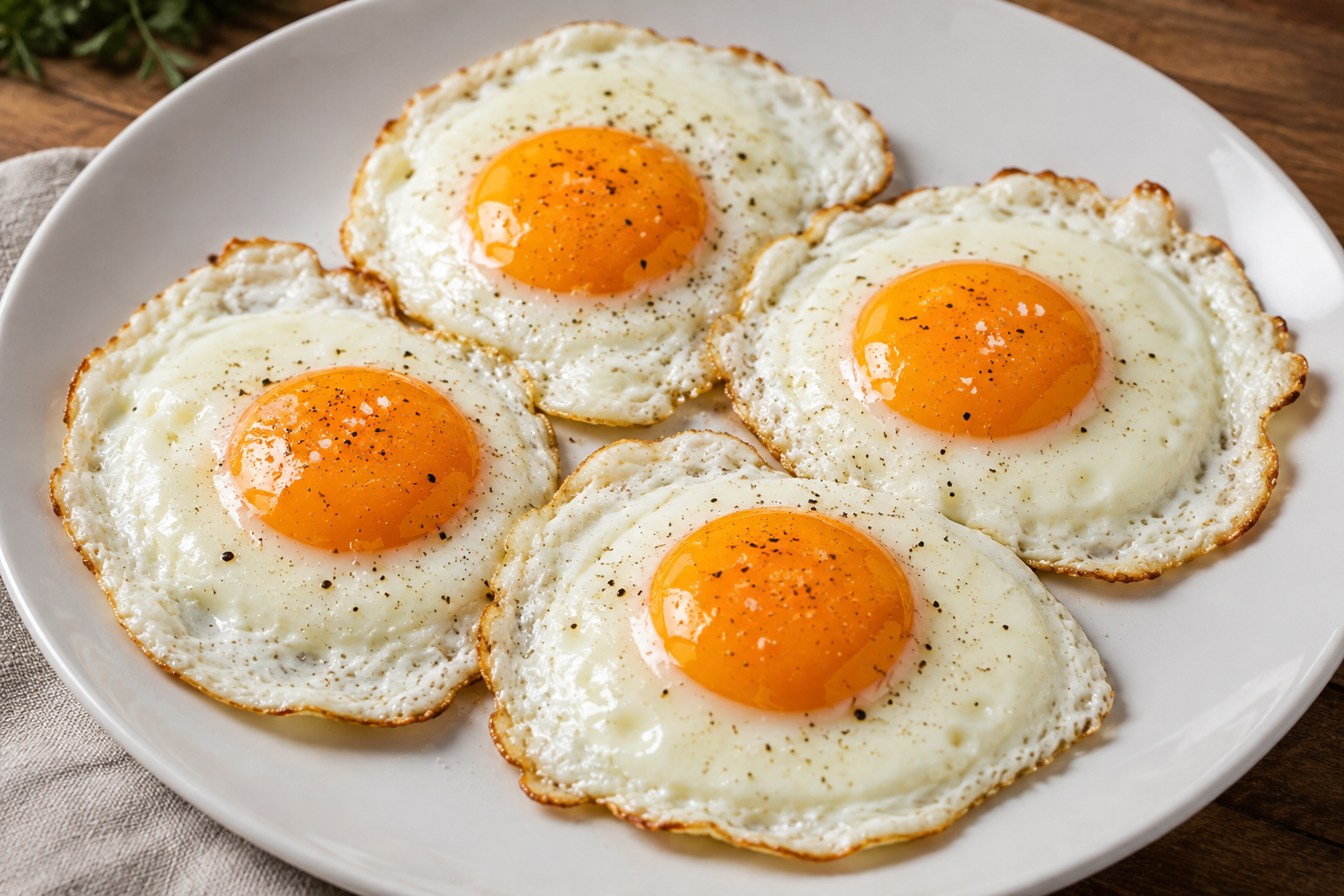
Fried eggs are a timeless breakfast favourite, loved for their simple ingredients, quick preparation and delicious flavour. Cooked in a little butter or oil, fresh eggs develop tender whites and golden yolks that can be prepared just the way you like them.
Whether you prefer sunny-side-up eggs with runny yolks or over-hard eggs cooked until firm, this easy fried eggs recipe gives you several options to suit your taste. A sprinkle of salt and black pepper is all you need to bring out their natural flavour.
Serve fried eggs on buttered toast, alongside crispy bacon and sausages, or over rice, noodles and fresh vegetables. They are a versatile kitchen staple that works just as well for a quick breakfast as for a simple lunch or supper.
Add the butter or oil and allow it to heat gently.
If using butter, let it melt and begin to sizzle without browning excessively.
Crack in the eggs:
Crack each egg into a small bowl first, if preferred, then gently slide it into the pan.
Leave a little space between the eggs so they cook evenly.
Cook the eggs:
Adjust the cooking time according to your preferred style.
Sunny-side up: Cook for approximately 2–3 minutes, until the whites are set and the yolks remain runny. Covering the pan briefly can help the tops of the whites cook without flipping.
Over-easy: Carefully flip the eggs and cook for about 30 seconds to 1 minute, leaving the yolks runny.
Over-medium: Flip the eggs and cook for approximately 1–2 minutes longer, until the yolks are partly set.
Over-hard: Flip the eggs and cook for another 3–4 minutes, or until the yolks are completely firm.
Season:
Sprinkle the eggs with salt and black pepper to taste.
Add fresh herbs or your favourite seasoning if desired.
Serve immediately:
Carefully lift the eggs onto plates using a spatula.
Serve hot with toast, vegetables, sausages or your favourite breakfast sides.
Simple, versatile, and timeless. 😊
Why You’ll Love This Recipe
Quick and easy: Fried eggs are ready in minutes, making them ideal for busy mornings.
Everyday ingredients: Eggs, butter or oil and basic seasonings are all you need.
Made to your preference: Choose runny, slightly set or fully cooked yolks.
Versatile: Serve them for breakfast, lunch or supper.
Easy to customise: Add herbs, spices, cheese or vegetables to create different flavours.
Tips for the Best Fried Eggs
Use a non-stick pan: This makes it easier to cook and lift the eggs without breaking the yolks.
Keep the heat moderate: Excessively high heat can brown the edges before the whites cook through.
Crack eggs into a bowl first: This helps you check for shell fragments and makes it easier to slide the eggs neatly into the pan.
Use fresh eggs: Fresh eggs tend to hold their shape better in the frying pan.
Choose butter or oil: Butter adds a rich flavour, while cooking oil is useful for achieving lightly crisp edges.
Avoid overcrowding: Cook in batches if your pan is too small to accommodate all four eggs comfortably.
Flip gently: Use a thin, flexible spatula and slide it carefully underneath the egg before turning.
Serve straight away: Fried eggs are best enjoyed fresh, before the whites become rubbery or the yolks cool.
Storage
Best enjoyed fresh: Fried eggs taste best immediately after cooking, when the whites are tender and the yolks have the desired consistency.
Refrigeration: If you have leftovers, refrigerate them in a clean, airtight container within two hours of cooking.
Storage time: Use refrigerated cooked eggs within 3–4 days, provided they have been handled and stored safely.
Reheating: Reheat gently in a covered frying pan over low heat until thoroughly hot. Avoid prolonged heating, which can make the eggs tough.
Food safety: Do not leave cooked eggs at room temperature for extended periods. If serving eggs with runny yolks, take extra care when cooking for young children, pregnant people, older adults or anyone with a weakened immune system.
These eggs are essentially a culinary canvas of simplicity—quick, adaptable, and always satisfying.
Here are ideas to serve alongside them:
🥓 Savory Complements
Crispy Bacon: Classic salty balance.
Sautéed Spinach: Bright, earthy contrast.
Grilled Sausages: Hearty breakfast pairing.
Avocado Slices: Creamy, fresh addition.
🍞 Breads & Extras
Soft Dinner Rolls: Pillowy bread for dipping yolks.
Sparkling Water with Lemon: Palate-cleansing option.
✨ Serving Concepts
Classic Breakfast Plate: Fried eggs with bacon, toast, and coffee.
Rustic Sharing Board: Eggs with sourdough, avocado, and pesto.
Casual Brunch Spread: Eggs alongside sausages, focaccia, and orange juice.
Modern Fine Dining Plate: Eggs plated with salsa dots, micro herbs, and chili oil.
Here are some fun variations to experiment with for your Fried Eggs recipe:
Variations
🌿 Flavor Twists
Garlic herb eggs: Sprinkle fresh parsley, dill, or chives with roasted garlic.
Spicy eggs: Add chili flakes, cayenne, or peri-peri spice.
Cheesy eggs: Melt cheddar, mozzarella, or feta over the yolks.
Smoky eggs: Dust with smoked paprika or serve with bacon bits.
🍯 Sweet-Savory Experiments
Honey drizzle eggs: Add a touch of honey for a sweet-savory balance.
Nutty eggs: Sprinkle toasted sesame seeds or crushed peanuts.
Caramelized onion eggs: Top with slow-cooked onions for richness.
Avocado eggs: Serve with sliced avocado or guacamole.
🌍 Fusion Ideas
Mexican-style eggs: Garnish with salsa, jalapeños, and queso fresco.
Greek-inspired eggs: Add olives, feta, and oregano.
Asian-style eggs: Drizzle soy sauce and sesame oil, top with scallions.
South African vibe eggs: Pair with chakalaka or boerewors.
🍽 Serving Ideas
Present on a rustic toast with microgreens.
Offer as part of a breakfast spread with bacon and beans.
Serve in individual skillets with toppings.
Plate with herb sprigs, chili curls, or citrus wedges for storytelling flair.
Final Thoughts
Fried eggs prove that a simple recipe can be both comforting and versatile. With a little butter or oil, a hot pan and a few minutes of cooking, you can prepare eggs to suit almost any meal.
Enjoy them with toast and baked beans for breakfast, add them to a burger or rice bowl, or customise them with herbs, spices and fresh vegetables. Once you know how to control the heat and cooking time, fried eggs become an easy favourite to return to whenever you need a quick, satisfying meal.
Frequently Asked Questions
How do I make fried eggs with runny yolks?
Cook the eggs over medium-low to medium heat until the whites are set while the yolks remain soft. Covering the pan briefly can help cook the whites on top without flipping the eggs.
Why do my fried eggs stick to the pan?
The pan may not be properly coated with butter or oil, or the surface may be unsuitable. A good non-stick frying pan and moderate heat usually make cooking and removing the eggs easier.
Should I use butter or oil for fried eggs?
Both work well. Butter gives the eggs a rich, savoury flavour, while oil is useful for cooking at a slightly higher heat. You can also use a small amount of each.
How can I stop the edges from becoming too crispy?
Lower the heat slightly and allow the eggs to cook more gently. If you prefer soft whites, avoid leaving the pan over high heat for too long.
Can I fry eggs without flipping them?
Yes. For sunny-side-up eggs, cook them without turning. Cover the pan briefly to help the whites set on top while keeping the yolks intact.
Are fried eggs suitable for lunch or supper?
Absolutely. Serve them over rice, noodles, vegetables or toast, or use them to top a burger for a satisfying meal.
How can I tell when fried eggs are cooked?
The whites should be set rather than clear or runny. For the safest option, cook both the whites and yolks until firm.