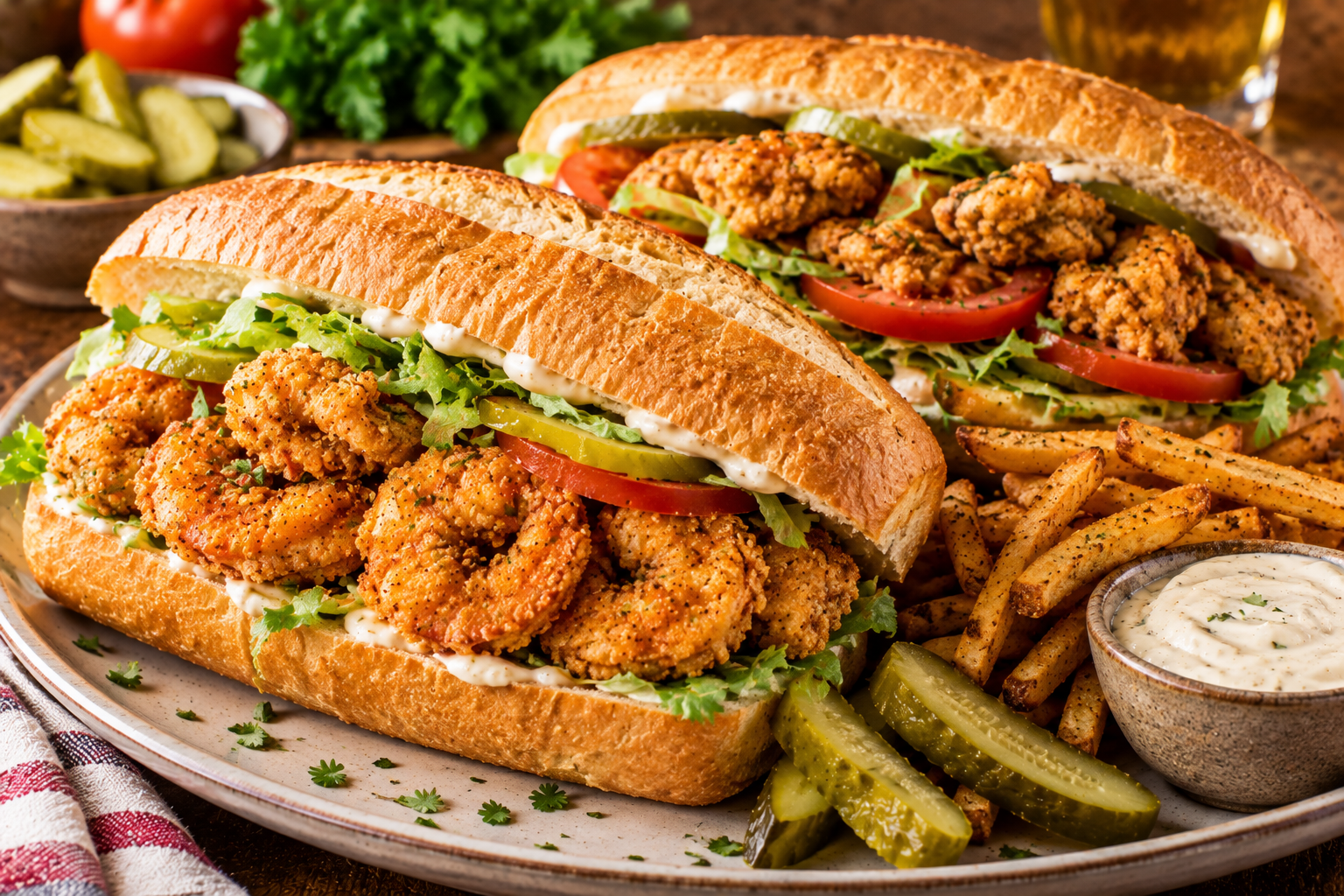
Po’boys are a much-loved Louisiana sandwich known for their generous fillings, crispy textures and bold flavours. Traditionally served in French bread, these satisfying sandwiches are often filled with golden fried shrimp, oysters or catfish, then topped with fresh lettuce, juicy tomatoes, tangy pickles and a creamy mayonnaise-based sauce.
This homemade po’boy recipe brings together crunchy, seasoned seafood and cool, fresh toppings in a soft roll with a lightly crisp crust. Paprika and cayenne add warmth to the coating, while the combination of flour and cornmeal creates a delicious crunch.
Perfect for a casual lunch, family dinner or weekend gathering, these sandwiches are easy to customise with your favourite seafood, sauces and toppings. Serve them warm with crispy fries or coleslaw for a comforting meal inspired by New Orleans.
4 French bread rolls, soft inside with a lightly crisp crust
500 g shrimp, oysters, or catfish, cleaned and prepared
1 cup all-purpose flour
½ cup cornmeal, optional for extra crunch
1 tsp paprika
½ tsp cayenne pepper
Salt and black pepper, to taste
2 eggs, beaten
½ cup milk
Vegetable or canola oil, for frying
For the Toppings
1 cup shredded lettuce
1 tomato, sliced
½ cup sliced pickles
½ cup mayonnaise or garlic aioli
Hot sauce, optional
Method:
Prepare the seafood:
Pat the shrimp, oysters, or catfish dry with paper towels.
If using catfish, cut it into manageable strips.
Season the seafood with paprika, cayenne pepper, salt, and black pepper.
Prepare the coating:
In a shallow bowl, whisk together the eggs and milk.
In a separate bowl, combine the flour and cornmeal, if using.
Mix well so the coating is evenly distributed.
Coat the seafood:
Dip each piece into the egg mixture, allowing excess liquid to drip off.
Transfer to the flour mixture and coat thoroughly.
For a thicker, crunchier crust, press the coating gently onto the seafood.
Heat the oil:
Pour enough oil into a deep, heavy-based frying pan or pot to allow the seafood to cook without sticking to the bottom.
Heat to approximately 175–180°C.
Work carefully around hot oil.
Fry until golden:
Fry the seafood in small batches to avoid overcrowding.
Shrimp generally take about 2–3 minutes per side, depending on their size.
Thin fish strips and oysters may cook in a similar time, but thicker pieces will need longer.
Cook until the coating is golden and the seafood is thoroughly cooked.
Drain the seafood:
Remove the cooked pieces with a slotted spoon and place them on a wire rack or paper towels to drain.
For food safety, cook shrimp to 63°C, fish to 63°C, and oysters until their centres reach at least 63°C.
Prepare the rolls:
Slice the French bread rolls lengthways, leaving one edge attached if you prefer the sandwiches to hold together.
Spread mayonnaise or garlic aioli over the inside of each roll.
Assemble the po’boys:
Add shredded lettuce, tomato slices, and pickles.
Divide the hot, crispy seafood between the rolls and add hot sauce if desired.
Serve immediately:
Press each sandwich together gently, cut in half if preferred, and serve while the seafood is still warm and crunchy.
✨ Tip: For an authentic New Orleans touch, serve the Po’boys with hot sauce and a side of crispy tortilla chips or fries. 😊
Po’boys —crispy fried seafood tucked into soft French bread with creamy dressing and fresh toppings.
🌟 Key Highlights
French bread: Soft inside, crisp outside—the perfect vessel.
Seafood filling: Shrimp, oysters, or catfish, fried golden for crunch.
Seasoning: Paprika and cayenne add warmth and spice.
Classic toppings: Lettuce, tomato, pickles, and mayo or aioli balance richness.
Why You’ll Love These Po’boys
Crispy and flavourful: The seasoned flour and optional cornmeal create a satisfying golden coating.
Fresh toppings: Lettuce, tomato and pickles balance the richness of the fried seafood.
Customisable fillings: Choose shrimp, oysters or catfish according to your preference.
Great for sharing: Serve the sandwiches with sides for a relaxed family meal.
Easy to adapt: Change the sauce, spice level or toppings to create your own version.
Tips for the Best Po’boys
Dry the seafood thoroughly: Excess moisture can prevent the coating from sticking properly.
Keep the oil at the right temperature: Oil that is too cool can make the coating greasy, while excessively hot oil may brown the outside before the seafood cooks through.
Fry in batches: Too much seafood at once lowers the oil temperature and can affect the texture.
Use cornmeal for crunch: Adding cornmeal to the flour creates a slightly coarser, crispier crust.
Choose suitable bread: French rolls should be sturdy enough to hold the filling without being too hard to bite through.
Balance the flavours: Tangy pickles and a little hot sauce help cut through the richness of the fried seafood.
Serve straight away: Po’boys are at their best when the coating is crisp and the bread is fresh.
Storage and Reheating
Storing leftovers: For the best quality, store the fried seafood separately from the bread and fresh toppings. Refrigerate cooked seafood in a covered container within two hours of cooking and use within 3–4 days when kept at 4°C or colder.
Reheating seafood: Reheat the seafood in an oven or air fryer until hot and crisp. Avoid prolonged reheating, which can make the seafood tough. Reheated leftovers should reach 74°C.
Storing assembled sandwiches: Fully assembled po’boys are best eaten immediately. Refrigerating them can soften the bread and coating, particularly when the sandwich contains mayonnaise and fresh vegetables.
Freezing: The fried seafood may be frozen separately, although the coating can lose some crispness after thawing. Freeze promptly in a suitable airtight container and reheat thoroughly before assembling fresh sandwiches.
This Po’boys sandwich is a culinary icon of Louisiana—crispy, creamy, and bold.
Here are dishes and side dishes that pair beautifully with Po’boys:
🥗 Savory Complements
Coleslaw with Tangy Dressing: Cooling crunch against the richness.
Soft Dinner Rolls: Pillowy option for dipping in sauces.
🧄 Sauces & Accents
Remoulade Sauce: Classic New Orleans-style dip.
Hot Sauce: Fiery drizzle option.
Tartar Sauce: Creamy, tangy counterpoint.
Pickled Jalapeños: Spicy garnish.
🍺 Drinks
Craft Beer (IPA or Lager): Rustic, casual balance.
Sweet Tea: Southern staple refreshment.
Sparkling Water with Lemon: Palate-cleansing sip.
Crisp White Wine: Elegant pairing.
✨ Serving Concepts
Classic New Orleans Plate: Po’boys with fries, coleslaw, and sweet tea.
Casual Game Day Spread: Po’boys with onion rings, hush puppies, and beer.
Rustic Sharing Board: Po’boys alongside cornbread and pickled veg.
Modern Fine Dining Plate: Po’boys plated with remoulade streaks and micro herbs.
Here are some fun variations to experiment with for your Po’boys recipe:
Variations
🌿 Flavor Twists
Garlic herb po’boy: Add roasted garlic aioli and fresh parsley.
Spicy po’boy: Use cayenne, jalapeños, or peri-peri mayo.
Cheesy po’boy: Melt provolone or cheddar over the fried seafood.
Smoky po’boy: Add smoked paprika or bacon strips.
🍯 Sweet-Savory Experiments
Honey mustard po’boy: Spread honey-Dijon for tangy sweetness.
Maple po’boy: Glaze seafood with maple syrup before frying.
Nutty po’boy: Sprinkle toasted sesame seeds or crushed peanuts.
Fruit po’boy: Add apple slaw or pineapple salsa for contrast.
🌍 Fusion Ideas
Mexican-style po’boy: Add salsa, avocado, and queso fresco.
Greek-inspired po’boy: Use tzatziki, feta, and olives.
Asian-style po’boy: Glaze seafood with soy sauce and sesame oil.
South African vibe po’boy: Pair with chakalaka or peri-peri mayo.
🍽 Serving Ideas
Present in a rustic basket lined with parchment paper.
Offer as part of a seafood platter with fries and slaw.
Serve in individual sandwich wraps for street-food flair.
Plate with fresh herbs, citrus wedges, or chili curls for storytelling flair.
Final Thoughts
Homemade po’boys combine golden, crispy seafood with fresh vegetables, tangy pickles, and a creamy sauce in a satisfying French bread roll. The contrast between the crunchy coating and cool toppings makes every bite full of flavour and texture.
Whether you choose shrimp, oysters, catfish or a meat-free filling, this recipe is a delicious way to bring a taste of Louisiana-inspired comfort food to your table. Serve warm with fries, coleslaw and your favourite sauce for a memorable homemade meal.
Frequently Asked Questions
What bread is best for po’boys?
French bread with a lightly crisp crust and soft interior is ideal. It should hold the filling securely without being so hard that it becomes difficult to bite through.
Can I make po’boys without seafood?
Yes. Roast beef is another popular filling, while fried aubergine or mushrooms work well for a vegetarian version.
How do I keep the seafood crispy?
Drain the fried seafood on a wire rack, avoid covering it tightly while it is hot and assemble the sandwiches just before serving. Keeping the oil at approximately 175–180°C also helps create a crisp coating.
Can I prepare the ingredients ahead of time?
Yes. Wash and shred the lettuce, slice the tomatoes and pickles, and prepare the sauce in advance. Keep the ingredients refrigerated and fry the seafood shortly before serving.
What sauce goes best with po’boys?
Mayonnaise and garlic aioli are simple choices. Remoulade and tartar sauce are also delicious, while hot sauce adds extra heat.
Are po’boys always made with seafood?
No. Seafood versions are well known, but po’boys can also be made with roast beef and other fillings. The defining idea is a generously filled sandwich served in French bread.
Essential cookies enable basic functions and are necessary for the proper function of the website.
Name
Description
Duration
Cookie Preferences
This cookie is used to store the user's cookie consent preferences.
30 days
These cookies are needed for adding comments on this website.
Name
Description
Duration
comment_author
Used to track the user across multiple sessions.
Session
comment_author_email
Used to track the user across multiple sessions.
Session
comment_author_url
Used to track the user across multiple sessions.
Session
Google's current Sign in with Google client library. It renders the Google sign-in button, or the One Tap prompt, so visitors can log in to your site with their Google account. It replaces the older Google Sign-In platform library.
Set on your own domain by the Sign in with Google client library. Records whether the visitor has dismissed the One Tap sign-in prompt and for how long it should stay hidden, plus the time the library last loaded and a browsing session id used for the same purpose. Sites that pass a custom state_cookie_name will see that name instead.
180 days
g_csrf_token
Set on your own domain by the Sign in with Google client library and submitted together with the sign-in credential, so your site can confirm the sign-in came from its own page and not from a forged cross-site request.
5 minutes
Statistics cookies collect information anonymously. This information helps us understand how visitors use our website.
Google Analytics is a powerful tool that tracks and analyzes website traffic for informed marketing decisions.
Contains information related to marketing campaigns of the user. These are shared with Google AdWords / Google Ads when the Google Ads and Google Analytics accounts are linked together.
90 days
__utma
ID used to identify users and sessions
2 years after last activity
__utmt
Used to monitor number of Google Analytics server requests
10 minutes
__utmb
Used to distinguish new sessions and visits. This cookie is set when the GA.js javascript library is loaded and there is no existing __utmb cookie. The cookie is updated every time data is sent to the Google Analytics server.
30 minutes after last activity
__utmc
Used only with old Urchin versions of Google Analytics and not with GA.js. Was used to distinguish between new sessions and visits at the end of a session.
End of session (browser)
__utmz
Contains information about the traffic source or campaign that directed user to the website. The cookie is set when the GA.js javascript is loaded and updated when data is sent to the Google Anaytics server
6 months after last activity
__utmv
Contains custom information set by the web developer via the _setCustomVar method in Google Analytics. This cookie is updated every time new data is sent to the Google Analytics server.
2 years after last activity
__utmx
Used to determine whether a user is included in an A / B or Multivariate test.
18 months
_ga
ID used to identify users
2 years
_gali
Used by Google Analytics to determine which links on a page are being clicked
30 seconds
_ga_
ID used to identify users
2 years
_gid
ID used to identify users for 24 hours after last activity
24 hours
_gat
Used to monitor number of Google Analytics server requests when using Google Tag Manager
1 minute
Marketing cookies are used to follow visitors to websites. The intention is to show ads that are relevant and engaging to the individual user.
Google Ads is an online advertising platform that enables businesses to create targeted ads displayed on Google search results and partner sites.
Targeting cookie. Used to create a user profile and display relevant and personalised Google Ads to the user.
2 years
__Secure-1PSIDCC
Targeting cookie. Used to create a user profile and display relevant and personalised Google Ads to the user.
2 years
__Secure-3PAPISID
Profiles the interests of website visitors to serve relevant and personalised ads through retargeting.
2 years
AEC
AEC cookies ensure that requests within a browsing session are made by the user, and not by other sites. These cookies prevent malicious sites from acting on behalf of a user without that user's knowledge.
6 months
ADS_VISITOR_ID
Cookie required to use the options and on-site web services
2 months
__Secure-3PSIDCC
Targeting cookie. Used to create a user profile and display relevant and personalised Google Ads to the user.
2 years
__Secure-3PSIDTS
Targeting cookie. Used to create a user profile and display relevant and personalised Google Ads to the user.
2 years
__Secure-1PSIDTS
Targeting cookie. Used to create a user profile and display relevant and personalised Google Ads to the user.
2 years
__Secure-1PAPISID
Targeting cookie. Used to create a user profile and display relevant and personalised Google Ads to the user.
2 years
__Secure-3PSID
Targeting cookie. Used to profile the interests of website visitors and display relevant and personalised Google ads.
2 years
Conversion
Google uses cookies for advertising, including serving and rendering ads, personalizing ads (depending on your ad settings at g.co/adsettings), limiting the number of times an ad is shown to a user, muting ads you have chosen to stop seeing, and measuring the effectiveness of ads.
90 days
_gcl_aw
Google uses cookies for advertising, including serving and rendering ads, personalizing ads (depending on your ad settings at g.co/adsettings), limiting the number of times an ad is shown to a user, muting ads you have chosen to stop seeing, and measuring the effectiveness of ads.
90 Days
_gcl_gs
Google uses cookies for advertising, including serving and rendering ads, personalizing ads (depending on your ad settings at g.co/adsettings), limiting the number of times an ad is shown to a user, muting ads you have chosen to stop seeing, and measuring the effectiveness of ads.
90 Days
_gcl_gb
Google uses cookies for advertising, including serving and rendering ads, personalizing ads (depending on your ad settings at g.co/adsettings), limiting the number of times an ad is shown to a user, muting ads you have chosen to stop seeing, and measuring the effectiveness of ads.
90 Days
_gac_gb_
Google uses cookies for advertising, including serving and rendering ads, personalizing ads (depending on your ad settings at g.co/adsettings), limiting the number of times an ad is shown to a user, muting ads you have chosen to stop seeing, and measuring the effectiveness of ads.
90 Days
FPGCLGB
Google uses cookies for advertising, including serving and rendering ads, personalizing ads (depending on your ad settings at g.co/adsettings), limiting the number of times an ad is shown to a user, muting ads you have chosen to stop seeing, and measuring the effectiveness of ads.
90 Days
FPGCLAW
Google uses cookies for advertising, including serving and rendering ads, personalizing ads (depending on your ad settings at g.co/adsettings), limiting the number of times an ad is shown to a user, muting ads you have chosen to stop seeing, and measuring the effectiveness of ads.
90 Days
You can find more information in our Cookie Policy and .