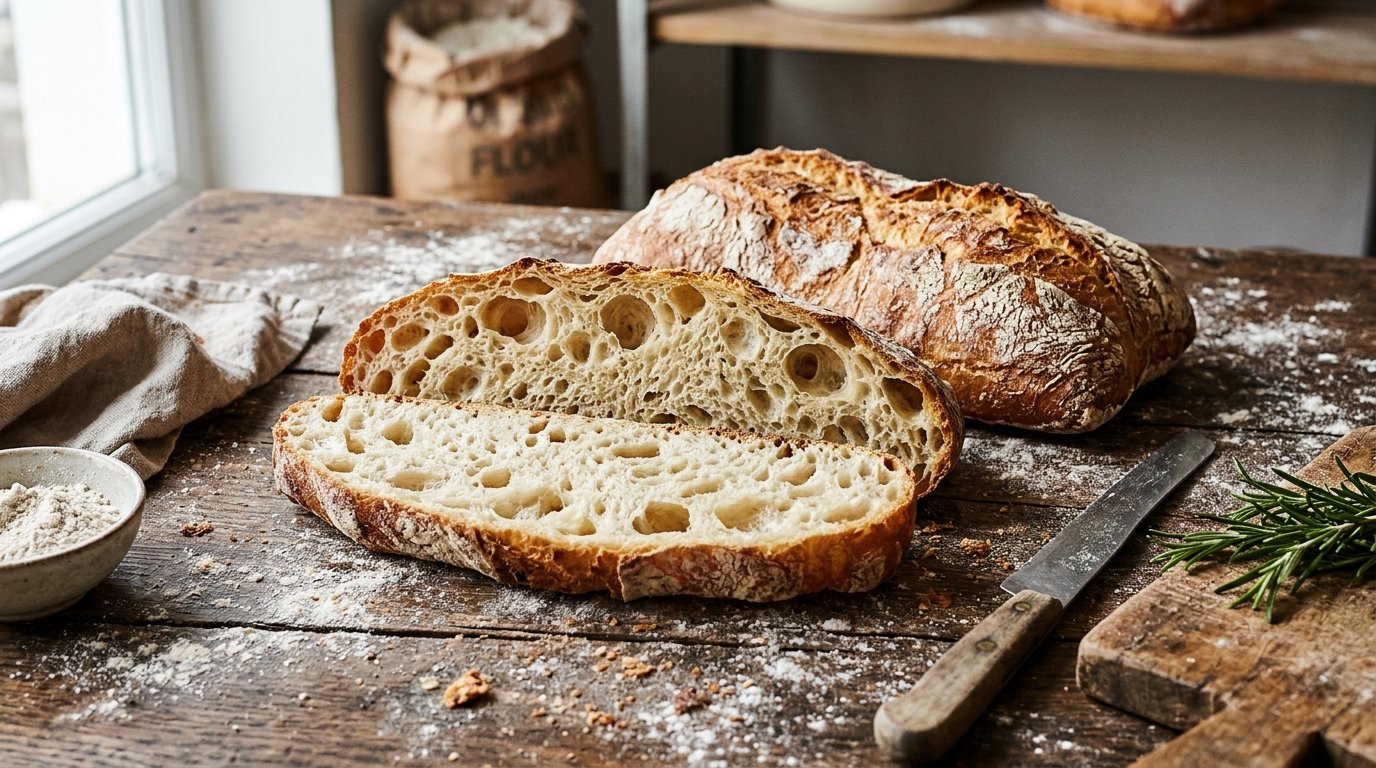
Bring the flavours of an Italian bakery into your kitchen with this homemade crusty ciabatta recipe. Known for its golden crust, chewy texture and beautifully open crumb, ciabatta is a versatile bread that works wonderfully for sandwiches, paninis, dipping into olive oil or serving alongside soups and stews.
This recipe begins with a simple poolish, a flour-and-water starter that ferments overnight with a small amount of yeast. The long fermentation develops flavour and helps create a lighter, more complex loaf. The final dough is soft and sticky, so instead of traditional kneading, a series of gentle stretch-and-folds builds the strength needed to hold the bread’s characteristic air pockets.
Although ciabatta requires patience, the process is straightforward and uses everyday baking ingredients. With careful handling, a hot oven and a little steam, you can bake rustic loaves with a crisp exterior and a soft, chewy interior right at home.
The evening before baking, combine the 150 g bread flour, 150 ml water, and ¼ teaspoon instant yeast in a medium bowl.
Stir until no dry flour remains and the mixture is smooth and thick.
Cover loosely and leave at room temperature for 12–16 hours.
The poolish should become bubbly, expanded, and fragrant, with a surface that may begin to flatten slightly when it reaches maturity.
Mix the dough:
In a large mixing bowl, combine the prepared poolish, 350 g bread flour, 250 ml water, salt, and ½ teaspoon instant yeast.
Mix with a sturdy spoon or dough scraper until everything is incorporated.
The dough will be sticky and loose, which is normal for ciabatta.
Rest the dough:
Cover the bowl and leave the dough to rest for 30 minutes.
This allows the flour to absorb the water and makes the dough easier to strengthen through folding.
Perform the stretch-and-folds:
With slightly damp hands, lift one edge of the dough, stretch it gently upwards and fold it over the centre.
Rotate the bowl and repeat on the remaining sides.
Cover and rest for 30 minutes, then repeat.
Complete four sets of stretch-and-folds over approximately two hours, keeping the dough covered between sets.
Each round should help the dough become smoother, stronger, and more elastic.
Prepare the work surface:
Generously dust a clean work surface with flour.
Gently turn out the dough, taking care not to press out too many of the air bubbles that have developed during fermentation.
Shape the loaves:
Using a floured dough scraper, divide the dough into two or three portions.
Gently stretch each portion into a rough rectangle.
Avoid kneading or rolling the dough tightly, as this can remove the air pockets that give ciabatta its open texture.
Transfer the loaves to a baking tray lined with baking paper and lightly dusted with flour or cornmeal.
Allow the final proof:
Cover the loaves loosely with a clean tea towel or lightly greased cling film.
Leave them to rise for 45–60 minutes, or until noticeably puffy.
Handle them gently when uncovering them.
Preheat the oven:
Towards the end of the final proof, preheat the oven to 220°C.
If you plan to create steam, place a sturdy metal roasting tray on a lower rack while the oven heats.
Never use a glass dish for this purpose unless it is specifically designed for the temperature and thermal conditions involved.
Bake with steam:
Place the baking tray with the loaves in the oven.
Carefully pour a small amount of boiling water into the preheated metal tray on the lower rack, keeping your face and hands away from the escaping steam.
Close the oven door promptly.
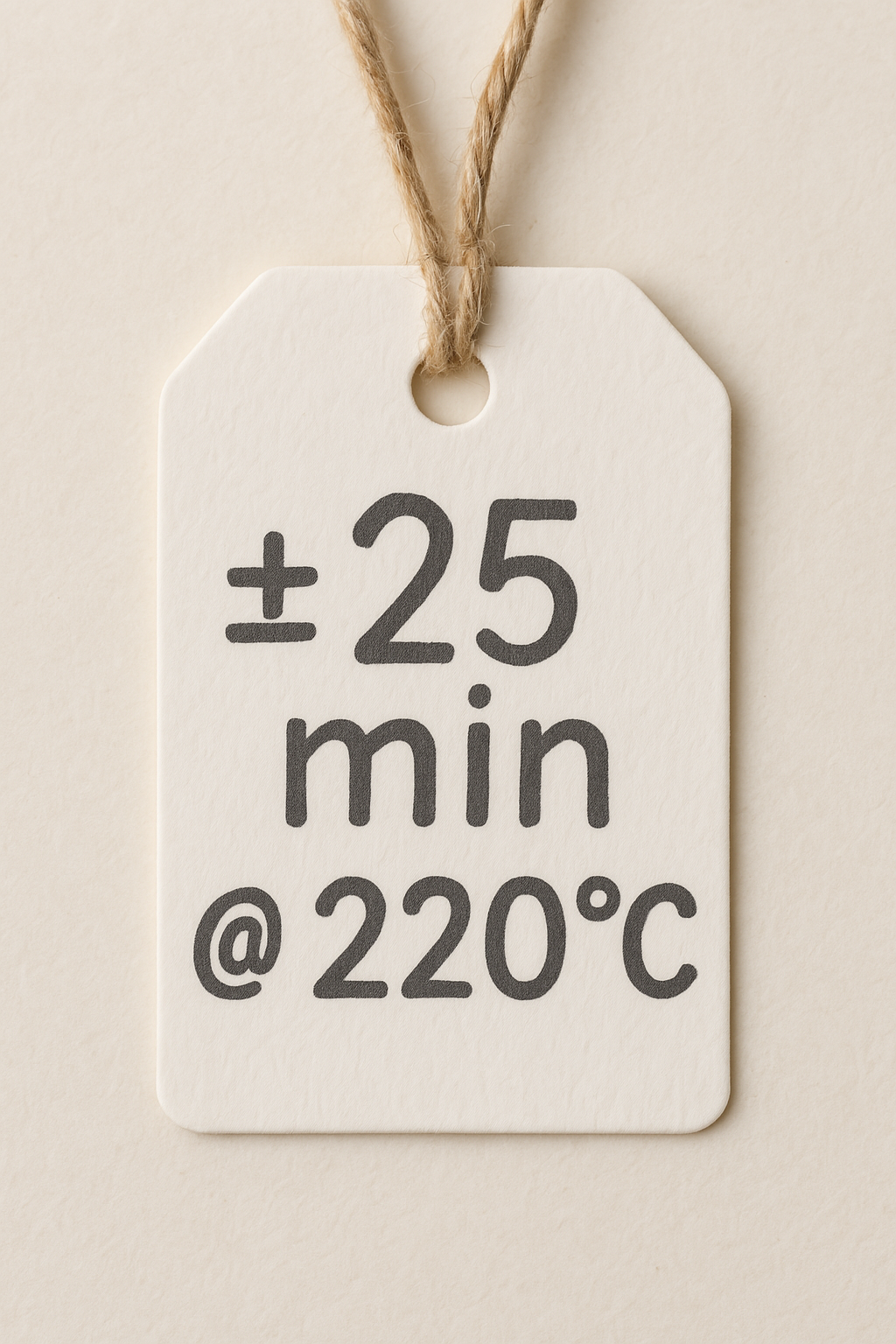
Bake for 25–30 minutes, until the ciabatta is golden brown and the crust feels firm.
Cool before slicing:
Transfer the baked loaves to a wire rack and leave them to cool for at least 30–45 minutes.
This allows the crumb to set properly and helps prevent a gummy texture when sliced.
Why You’ll Love This Recipe
Rustic artisan texture: The combination of a wet dough and gentle folding encourages a chewy crumb with irregular air pockets.
Deep, developed flavour: Overnight fermentation gives the bread more character than a quick-rise loaf.
Crispy golden crust: A hot oven and steam help develop a satisfying crust.
No intensive kneading: Stretch-and-folds build dough strength without requiring prolonged kneading.
Versatile for everyday meals: Use it for sandwiches, toast, bruschetta, dipping bread and more.
Simple ingredients: Bread flour, water, yeast and salt are all you need for the basic dough.
A Little About Ciabatta Bread
Ciabatta is an Italian bread recognised by its rustic, elongated shape and soft, open crumb. Its name means “slipper” in Italian, referring to the traditional flat, elongated appearance of the loaf.
Unlike some breads that use a firm dough, ciabatta is made with a relatively high proportion of water. This creates a sticky mixture that can be challenging to handle but helps produce the bread’s distinctive texture.
The poolish is an important part of this recipe. By mixing a portion of the flour and water with a little yeast the night before, you give fermentation time to develop flavour and structure. Gentle folding then strengthens the dough while preserving the gas bubbles needed for an airy interior.
Tips for the Best Crusty Ciabatta
Measure ingredients by weight: Weighing flour and water is more reliable than using cups, particularly for a high-hydration dough. Too much flour can make the finished bread dense.
Use a mature poolish: The starter should be bubbly and fragrant. If it has barely risen, it may need more time. If it has collapsed significantly and smells unpleasant, it may have fermented for too long.
Expect sticky dough: Ciabatta dough is naturally wetter than many other bread doughs. Use damp hands or a dough scraper rather than adding large amounts of extra flour.
Give the dough enough rest: The resting periods allow the gluten to develop gradually and make the dough easier to handle.
Fold gently and consistently: Stretch-and-folds build strength without aggressively squeezing out the air. Keep the dough covered between sets to prevent the surface from drying out.
Handle the dough carefully: When dividing and shaping, use a dough scraper and light movements. Rough handling can remove the air bubbles that help create ciabatta’s characteristic crumb.
Use flour generously when shaping: Dust the work surface and scraper well enough to prevent sticking, but avoid kneading extra flour into the dough.
Allow the final proof: The shaped loaves should look puffy before baking. Proofing time will vary with room temperature, so use the appearance of the dough as your guide.
Create steam safely: Steam can help the crust form properly during the early stages of baking. Use a suitable metal tray, pour carefully and never lean over the oven when adding water.
Bake until golden: A pale crust may be softer and less developed. Bake until the loaves have a rich golden-brown colour and a firm exterior.
Cool completely: Cutting into ciabatta too early can compress the soft crumb and make it seem underbaked. Let the loaves cool on a wire rack before slicing.
Adjust for your kitchen: Flour absorption, humidity and room temperature all affect dough consistency and fermentation. Focus on the dough’s texture and appearance rather than following the clock alone.
Uses for This Recipe
Ciabatta’s chewy interior and crisp crust make it ideal for countless sweet and savoury dishes.
Panini sandwiches: Slice horizontally and fill with mozzarella, tomato, basil, grilled chicken or roasted vegetables before pressing until crisp.
Deli sandwiches: Fill with cheese, lettuce, tomato, cooked meats or your favourite sandwich spreads.
Breakfast toast: Toast slices and top with avocado, poached eggs, ricotta and honey, or butter and jam.
Garlic bread: Slice the loaf, brush with garlic butter and herbs, then bake until lightly crisp.
Bruschetta: Toast small slices and top with chopped tomatoes, basil, garlic and olive oil.
Croutons: Cut day-old ciabatta into cubes, toss with olive oil and seasoning, and bake until crisp.
Soup dipping bread: Serve warm slices with tomato soup, minestrone or hearty vegetable stew.
Bread pudding: Use slightly stale ciabatta in a savoury bread pudding with vegetables and cheese, or in a sweet version with custard and cinnamon.
Pizza-style bread: Split a loaf, add tomato sauce, cheese and toppings, then bake until the cheese melts.
Antipasto platter: Slice and serve with olives, cheeses, pesto, hummus and marinated vegetables.
Storage and Reheating
Ciabatta is at its best on the day it is baked, when the crust is crisp and the crumb is soft. Proper storage helps preserve its texture.
Room temperature: Allow the bread to cool completely, then store it in a paper bag or bread box for up to 1–2 days. A plastic bag keeps the crumb softer but also softens the crust.
Re-crisping: Lightly mist the crust with water and place the loaf in an oven preheated to 180°C for approximately 5–10 minutes. Let it cool briefly before slicing.
Freezing: Freeze completely cooled ciabatta in a freezer-safe bag for up to 2–3 months for the best quality. You can freeze the loaves whole or slice them first for convenience.
Reheating from frozen: Warm a whole loaf in a 180°C oven for approximately 10–15 minutes, adjusting the time to its size. Toast individual slices directly from frozen.
Using stale ciabatta: Turn older bread into croutons, breadcrumbs, bruschetta or bread pudding rather than wasting it.
Avoid refrigerating ciabatta, as refrigeration can cause bread to stale more quickly.
What to Serve with Crusty Ciabatta
Ciabatta pairs beautifully with Italian-inspired dishes, hearty soups, fresh salads, and a variety of spreads.
Soups and Stews
Minestrone: A vegetable-packed Italian soup that pairs naturally with crusty bread.
Beef stew: Use ciabatta to soak up rich gravy and cooking juices.
Seafood stew: Crusty bread is ideal for enjoying a tomato-based broth with fish and shellfish.
Salads and Vegetables
Caprese salad: Fresh tomatoes, mozzarella, basil and olive oil make a simple Mediterranean pairing.
Grilled vegetables: Serve with courgettes, aubergines and bell peppers dressed with olive oil and herbs.
Ratatouille: This vegetable stew is delicious with bread for soaking up the sauce.
Classic Caesar salad: Toasted ciabatta can also be cut into homemade croutons.
Roasted asparagus: A squeeze of lemon adds freshness alongside the bread.
Tomato and avocado salad: Juicy tomatoes and creamy avocado provide a fresh contrast to the crusty loaf.
Cheese and Spreads
Burrata with olive oil: Tear the bread into pieces and use it to scoop up the creamy cheese.
Brie and fig jam: A lovely combination for a cheese board or appetiser.
Pesto: Spread basil pesto over toasted slices for an easy snack.
Garlic aioli: A creamy garlic dip complements the crusty exterior.
Hummus: Serve with hummus and fresh vegetable sticks.
Olive tapenade: Its savoury, briny flavour works well with the mild bread.
Breakfast and Sandwiches
Avocado and poached egg: Toasted ciabatta makes a sturdy base for a simple brunch.
Ricotta and honey: A creamy, lightly sweet topping for breakfast.
Grilled chicken panini: Add cheese, tomatoes and pesto for a satisfying sandwich.
Smoked salmon and cream cheese: Finish with capers and thinly sliced red onion.
Italian sausage and peppers: Serve as a filling sandwich or alongside the bread.
Prosciutto and rocket: A simple combination for a Mediterranean-style lunch.
Here are some fun variations to experiment with for your Crusty Ciabatta recipe:
Variations
🧄 Savory Flavor Boosts
Olive & Herb Ciabatta: Fold in chopped Kalamata olives and 1–2 tsp of dried herbs (like rosemary or thyme) during the final stretch-and-fold.
Cheddar & Jalapeño: Add shredded sharp cheddar and diced jalapeños for a bold, spicy twist.
Caramelized Onion: Mix in sweet, golden caramelized onions for a rich, savory depth.
🍅 Mediterranean-Inspired
Sun-Dried Tomato & Basil: Add chopped sun-dried tomatoes and fresh basil for a vibrant, aromatic loaf.
Feta & Spinach: Fold in crumbled feta and wilted spinach for a Greek-style ciabatta.
Pesto Swirl: Spread a thin layer of pesto on the dough before the final fold for a marbled effect.
🧈 Sweet Variations
Cinnamon Raisin Ciabatta: Add 1 tsp cinnamon and ½ cup raisins for a breakfast-friendly version.
Orange Zest & Honey: Mix in 1 tbsp orange zest and drizzle honey on top before baking for a fragrant, lightly sweet loaf.
Chocolate Chip Ciabatta: Fold in dark chocolate chips for a dessert-style bread with a crusty bite.
🌾 Texture Enhancers
Seeded Crust: Sprinkle sesame, poppy, or flax seeds on top before baking for added crunch.
Whole Grain Boost: Replace 50g of bread flour with whole wheat or rye flour for a heartier texture.
Cornmeal Dusting: Use cornmeal instead of flour on the baking sheet for a rustic, crisp bottom.
🥖 Shape Experiments
Mini Ciabatta Rolls: Divide dough into 6–8 small portions for sandwich-ready rolls.
Ciabatta Slippers: Shape into longer, thinner loaves for extra crust and dramatic presentation.
Stuffed Ciabatta Pockets: Carefully fold in fillings like mozzarella and tomato or ham and cheese before shaping.
Final Thoughts
Crusty ciabatta is a wonderful example of how simple ingredients and patient fermentation can create exceptional homemade bread. The overnight poolish develops flavour, while gentle stretch-and-folds build the structure needed for a chewy crumb and rustic, airy interior.
Serve it with olive oil, soups, salads and cheese boards, or turn it into a delicious panini for lunch. Once you become comfortable handling the sticky dough, you can experiment with olives, herbs, roasted garlic and other additions to make this classic Italian-style bread your own.
Frequently Asked Questions
What makes ciabatta different from baguette?
Ciabatta typically has a wetter dough and a more irregular, open crumb, while a baguette usually has a more uniform interior and a long, slender shape. Both can have a crisp crust, but their textures and shaping techniques differ.
Why is ciabatta dough so sticky?
Ciabatta contains a relatively high proportion of water compared with the flour. This creates the soft dough needed for an open crumb. Use damp hands and a dough scraper instead of adding too much flour.
Can I make ciabatta without a poolish?
Yes. You can make a simpler ciabatta dough by mixing the flour, water, yeast, and salt directly. However, the overnight poolish adds flavour and fermentation benefits, so the final bread may taste different.
Can I leave the poolish overnight?
Yes. The poolish is designed to ferment for approximately 12–16 hours at room temperature. The exact timing depends on the temperature of your kitchen. It should be bubbly and fragrant when ready, rather than completely collapsed or unpleasant-smelling.
Why didn’t my ciabatta develop large air pockets?
Large air pockets depend on dough hydration, fermentation, gluten development, and gentle handling. Make sure the poolish is active, complete the stretch-and-folds, and avoid pressing the dough flat when shaping. The size of the holes will naturally vary between batches.
Can I use plain flour instead of bread flour?
Yes, but the bread may have a softer structure and a less chewy texture. Bread flour is generally preferable because its higher protein content helps the dough develop the strength needed to hold gas.
How do I know when ciabatta is fully baked?
The crust should be golden brown and firm, and the loaf should sound hollow when tapped underneath. If using a thermometer, a centre temperature of approximately 95–99°C is a useful indication that a lean loaf is baked through.
Can I prepare ciabatta dough ahead of time?
Yes. The poolish is already prepared ahead of time. You can also refrigerate the mixed dough during fermentation to slow the process, but you will need to allow extra time for it to warm up and rise before shaping and baking.
Can I freeze homemade ciabatta?
Absolutely. Allow the bread to cool completely, wrap it well, and freeze it in a suitable bag. Reheat in the oven to refresh the crust, or toast slices directly from frozen.
Can I make ciabatta without steam?
Yes. Steam helps the crust develop, but it is not essential. You can still bake ciabatta in a hot oven without adding water, although the crust may differ slightly from a loaf baked with steam.
Essential cookies enable basic functions and are necessary for the proper function of the website.
Name
Description
Duration
Cookie Preferences
This cookie is used to store the user's cookie consent preferences.
30 days
These cookies are needed for adding comments on this website.
Name
Description
Duration
comment_author
Used to track the user across multiple sessions.
Session
comment_author_email
Used to track the user across multiple sessions.
Session
comment_author_url
Used to track the user across multiple sessions.
Session
Google's current Sign in with Google client library. It renders the Google sign-in button, or the One Tap prompt, so visitors can log in to your site with their Google account. It replaces the older Google Sign-In platform library.
Set on your own domain by the Sign in with Google client library. Records whether the visitor has dismissed the One Tap sign-in prompt and for how long it should stay hidden, plus the time the library last loaded and a browsing session id used for the same purpose. Sites that pass a custom state_cookie_name will see that name instead.
180 days
g_csrf_token
Set on your own domain by the Sign in with Google client library and submitted together with the sign-in credential, so your site can confirm the sign-in came from its own page and not from a forged cross-site request.
5 minutes
Statistics cookies collect information anonymously. This information helps us understand how visitors use our website.
Google Analytics is a powerful tool that tracks and analyzes website traffic for informed marketing decisions.
Contains information related to marketing campaigns of the user. These are shared with Google AdWords / Google Ads when the Google Ads and Google Analytics accounts are linked together.
90 days
__utma
ID used to identify users and sessions
2 years after last activity
__utmt
Used to monitor number of Google Analytics server requests
10 minutes
__utmb
Used to distinguish new sessions and visits. This cookie is set when the GA.js javascript library is loaded and there is no existing __utmb cookie. The cookie is updated every time data is sent to the Google Analytics server.
30 minutes after last activity
__utmc
Used only with old Urchin versions of Google Analytics and not with GA.js. Was used to distinguish between new sessions and visits at the end of a session.
End of session (browser)
__utmz
Contains information about the traffic source or campaign that directed user to the website. The cookie is set when the GA.js javascript is loaded and updated when data is sent to the Google Anaytics server
6 months after last activity
__utmv
Contains custom information set by the web developer via the _setCustomVar method in Google Analytics. This cookie is updated every time new data is sent to the Google Analytics server.
2 years after last activity
__utmx
Used to determine whether a user is included in an A / B or Multivariate test.
18 months
_ga
ID used to identify users
2 years
_gali
Used by Google Analytics to determine which links on a page are being clicked
30 seconds
_ga_
ID used to identify users
2 years
_gid
ID used to identify users for 24 hours after last activity
24 hours
_gat
Used to monitor number of Google Analytics server requests when using Google Tag Manager
1 minute
Marketing cookies are used to follow visitors to websites. The intention is to show ads that are relevant and engaging to the individual user.
Google Ads is an online advertising platform that enables businesses to create targeted ads displayed on Google search results and partner sites.
Targeting cookie. Used to create a user profile and display relevant and personalised Google Ads to the user.
2 years
__Secure-1PSIDCC
Targeting cookie. Used to create a user profile and display relevant and personalised Google Ads to the user.
2 years
__Secure-3PAPISID
Profiles the interests of website visitors to serve relevant and personalised ads through retargeting.
2 years
AEC
AEC cookies ensure that requests within a browsing session are made by the user, and not by other sites. These cookies prevent malicious sites from acting on behalf of a user without that user's knowledge.
6 months
ADS_VISITOR_ID
Cookie required to use the options and on-site web services
2 months
__Secure-3PSIDCC
Targeting cookie. Used to create a user profile and display relevant and personalised Google Ads to the user.
2 years
__Secure-3PSIDTS
Targeting cookie. Used to create a user profile and display relevant and personalised Google Ads to the user.
2 years
__Secure-1PSIDTS
Targeting cookie. Used to create a user profile and display relevant and personalised Google Ads to the user.
2 years
__Secure-1PAPISID
Targeting cookie. Used to create a user profile and display relevant and personalised Google Ads to the user.
2 years
__Secure-3PSID
Targeting cookie. Used to profile the interests of website visitors and display relevant and personalised Google ads.
2 years
Conversion
Google uses cookies for advertising, including serving and rendering ads, personalizing ads (depending on your ad settings at g.co/adsettings), limiting the number of times an ad is shown to a user, muting ads you have chosen to stop seeing, and measuring the effectiveness of ads.
90 days
_gcl_aw
Google uses cookies for advertising, including serving and rendering ads, personalizing ads (depending on your ad settings at g.co/adsettings), limiting the number of times an ad is shown to a user, muting ads you have chosen to stop seeing, and measuring the effectiveness of ads.
90 Days
_gcl_gs
Google uses cookies for advertising, including serving and rendering ads, personalizing ads (depending on your ad settings at g.co/adsettings), limiting the number of times an ad is shown to a user, muting ads you have chosen to stop seeing, and measuring the effectiveness of ads.
90 Days
_gcl_gb
Google uses cookies for advertising, including serving and rendering ads, personalizing ads (depending on your ad settings at g.co/adsettings), limiting the number of times an ad is shown to a user, muting ads you have chosen to stop seeing, and measuring the effectiveness of ads.
90 Days
_gac_gb_
Google uses cookies for advertising, including serving and rendering ads, personalizing ads (depending on your ad settings at g.co/adsettings), limiting the number of times an ad is shown to a user, muting ads you have chosen to stop seeing, and measuring the effectiveness of ads.
90 Days
FPGCLGB
Google uses cookies for advertising, including serving and rendering ads, personalizing ads (depending on your ad settings at g.co/adsettings), limiting the number of times an ad is shown to a user, muting ads you have chosen to stop seeing, and measuring the effectiveness of ads.
90 Days
FPGCLAW
Google uses cookies for advertising, including serving and rendering ads, personalizing ads (depending on your ad settings at g.co/adsettings), limiting the number of times an ad is shown to a user, muting ads you have chosen to stop seeing, and measuring the effectiveness of ads.
90 Days
You can find more information in our Cookie Policy and .