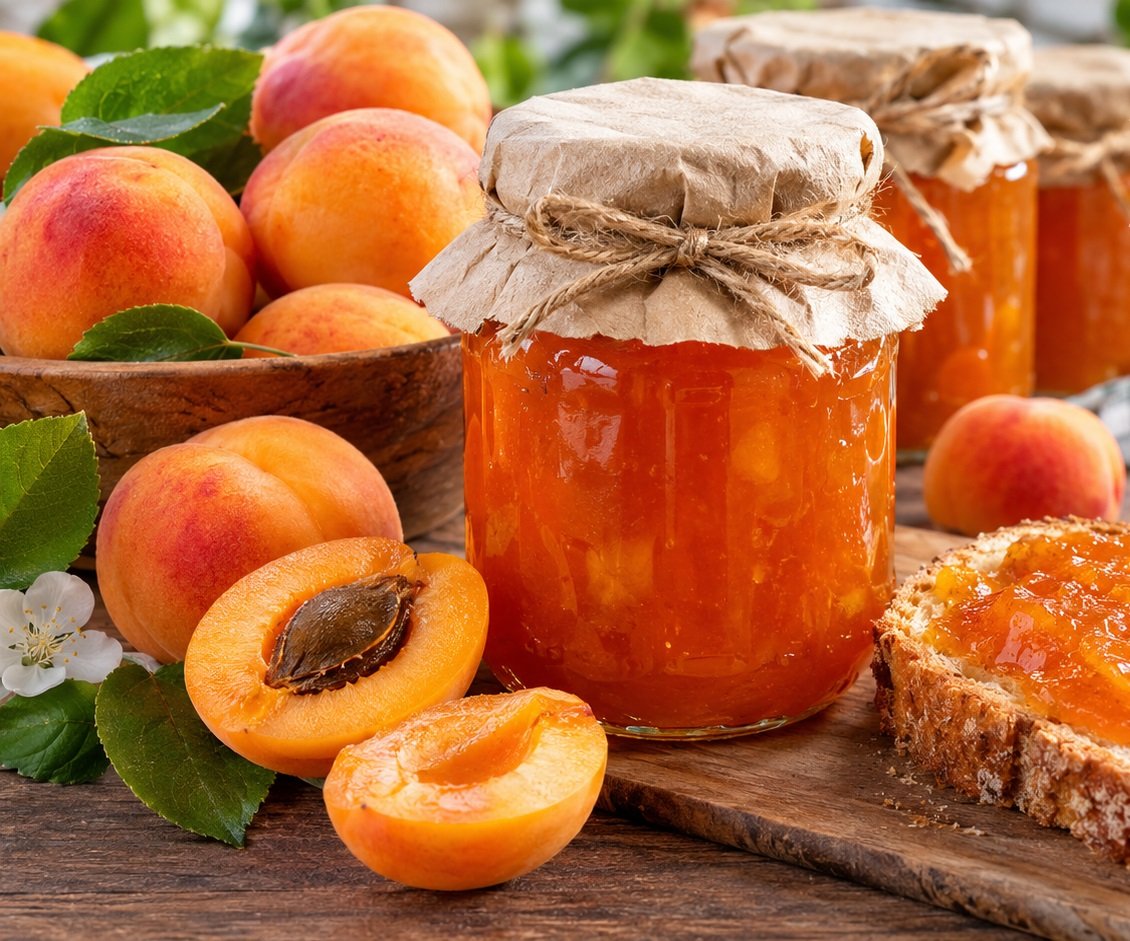
Homemade Apricot Jam captures the sweet, tangy flavour of ripe apricots in a beautiful golden preserve. Made with fresh apricots, sugar, lemon juice and a little water, this recipe transforms simple ingredients into a delicious jam that is perfect for breakfast, baking and sharing.
As the apricots simmer, they soften and release their natural juices. The sugar helps create a glossy consistency, while the lemon juice adds brightness and helps the fruit set. You can leave the jam slightly chunky for a rustic texture or mash the fruit for a smoother finish.
Spread it on warm toast, serve it with freshly baked scones, or use it as a filling for cakes and biscuits. This homemade apricot jam is a wonderful way to enjoy seasonal fruit and bring a little sunshine to your kitchen.
Wash the apricots thoroughly, remove the stones, and cut the fruit into quarters.
Discard any bruised or spoiled portions.
Soften the fruit:
Place the apricots, lemon juice, and water in a large, wide, heavy-based saucepan.
Heat gently, then simmer for 10–15 minutes, stirring occasionally, until the fruit softens.
Mash the apricots:
Use a wooden spoon or potato masher to break down the softened fruit.
Leave some pieces intact if you prefer a chunky jam.
For a smoother texture, mash thoroughly.
Add the sugar:
Stir in the granulated sugar until it has dissolved.
Keep the heat moderate and stir regularly to prevent the mixture from catching on the bottom of the pan.
Boil the jam:
Increase the heat and bring the mixture to a steady rolling boil.
Cook uncovered for approximately 20–30 minutes, stirring frequently as the jam thickens.
The exact time will depend on the ripeness of the fruit, the width of your saucepan, and how much moisture evaporates.
Test for setting:
Place a small plate in the freezer before you begin cooking.
Spoon a little jam onto the cold plate and leave it for a moment.
Push the edge with your finger; if the surface wrinkles slightly, the jam may be ready.
If it remains runny, continue cooking for another 5 minutes and test again.
A jam thermometer can also help; a traditional jam setting point is around 104–105°C at sea level, although the result can vary with altitude and the fruit mixture.
Prepare the jars:
Use clean, heat-safe jars and lids suitable for preserving.
Wash and prepare them according to the manufacturer’s instructions and a recognised home-preserving method.
Keep the jars hot until filling.
Fill the jars:
Remove the jam from the heat and allow excessive bubbling to settle.
Carefully ladle the hot jam into the prepared jars, following a tested preserving method for the correct headspace and closure.
Cool and store safely:
For refrigerator jam, allow the jars to cool and refrigerate promptly. For pantry storage, use a tested recipe and proper boiling-water canning process appropriate for the jar size and your altitude.
Simply pouring hot jam into jars and tightening the lids does not make it safe for long-term room-temperature storage.
Serve and enjoy:
Once cooled, spoon the jam onto toast, scones or pastries, or use it in your favourite baking recipes.
A golden, sunshine-sweet Apricot Jam that’s simple, pectin-free, and full of fruit-forward flavor. It’s perfect for toast, pastries, or glazing cakes. 😊
This apricot jam is sunshine in a jar—bright, tangy, and endlessly versatile.
Why You’ll Love This Homemade Apricot Jam
Fresh fruit flavour: Ripe apricots provide a naturally fruity, slightly tangy taste.
Simple ingredients: The recipe uses just four basic ingredients.
Customisable texture: Make it chunky or smooth, depending on your preference.
Versatile in the kitchen: Enjoy it at breakfast, in desserts or as part of a savoury glaze.
Lovely for gifting: Properly preserved jam can make a thoughtful homemade gift when prepared and stored safely.
A seasonal favourite: It is a delicious way to make the most of fresh apricots when they are available.
Tips for the Best Apricot Jam
Choose ripe apricots: Use fragrant, ripe fruit for the best flavour. Avoid fruit that is mouldy or spoiled.
Use a wide saucepan: A wide pan allows moisture to evaporate more efficiently, helping the jam thicken.
Stir regularly: As the mixture thickens, it can stick to the bottom of the pan. Stir frequently, especially towards the end of cooking.
Dissolve the sugar before the rolling boil: Stirring until the sugar dissolves helps create a more even texture and reduces the chance of undissolved crystals.
Do not rush the cooking: The jam needs enough time to reduce and reach the desired consistency, but prolonged cooking can darken the colour and dull the fruit flavour.
Use the chilled-plate test: This gives you a useful indication of how the jam will set once cool. Avoid judging the consistency while the jam is still very hot.
Adjust the texture: Mash the apricots for a smooth, spreadable jam or leave some pieces for a more rustic result.
Measure the ingredients accurately: The balance of fruit, sugar and lemon juice affects flavour and consistency. Avoid reducing the sugar substantially if you want a reliable set.
Prepare jars correctly: Clean jars are important, but ordinary cleaning alone is not sufficient for shelf-stable preserving. Follow a tested canning procedure if storing jam in the pantry.
Label your jars: Write the preparation date on each jar so you can keep track of storage time.
Storage and Reheating
Refrigerator storage: Transfer the cooled jam to a clean, airtight container or jar and refrigerate promptly. For this recipe, which has not been validated as a shelf-stable canning formula, use it within approximately 2–3 weeks and always follow any shorter storage guidance from a tested recipe.
Freezing: For longer storage, freeze the jam in freezer-safe containers, leaving room for expansion. Use within approximately 3 months for best quality and thaw in the refrigerator.
Pantry storage: Do not store this jam at room temperature merely because the jars are hot or the lids seal. Use a tested canning recipe and the appropriate processing method for safe pantry storage.
Reheating: Jam generally does not need reheating. If it becomes very firm in the refrigerator, stir it before serving or warm a small portion gently in a saucepan.
Discard if spoiled: Do not taste jam that shows mould, fermentation, an unusual smell or other signs of spoilage. Discard the contents rather than removing just the affected surface.
This apricot jam is sunshine in a jar—bright, tangy, and endlessly versatile. Here’s a set of dishes and sides to showcase it across meals, boards, and occasions:
🍞 Breakfast & Brunch Pairings
Let the jam take center stage in morning spreads:
Buttermilk Scones or Crumpets: Serve warm with a generous spoonful of jam
Stuffed French Toast: Layer apricot jam with cream cheese or mascarpone
Greek Yogurt Parfait: Swirl with granola and fresh berries for texture and tang
🧀 Cheese & Savory Boards
Apricot jam adds a sweet contrast to rich, salty bites:
Brie or Triple-Crème Cheese: Spread on crackers with a dollop of jam
Goat Cheese Toasts: Top crostini with chèvre and apricot jam
Prosciutto-Wrapped Melon: Add a touch of jam for a sweet-savory twist
🍗 Glazes & Sauces
Use it as a base for savory glazes or dressings:
Apricot Jam Glazed Chicken or Pork Chops: Mix with Dijon mustard and soy sauce for a sticky, caramelized finish
Roasted Carrots or Sweet Potatoes: Toss with jam and olive oil before baking
Salad Dressing: Whisk with vinegar and olive oil for a fruity vinaigrette
🍰 Baked Goods & Desserts
Apricot jam brings moisture and flavor to sweets:
Thumbprint Cookies: Classic buttery dough with jam-filled centers
Apricot Jam Coffee Cake: Layer jam between batter and streusel topping
Mini Tarts or Puff Pastry Bites: Fill with jam and top with whipped cream or nuts
🍸 Cocktail Accents
Yes, jam in drinks—trust the mixologists:
Apricot Jam Whiskey Sour: Shake with bourbon, lemon juice, and a spoonful of jam
Sparkling Apricot Fizz: Stir jam into prosecco or soda water for a fruity twist
Here are some fun variations to experiment with for your Apricot Jam recipe:
Variations
🍯 Sweet & Floral Variations
Honey Vanilla Apricot Jam: Replace half the sugar with honey and add 1 tsp vanilla extract for a warm, mellow sweetness.
Lavender Apricot Jam: Infuse 1 tsp dried culinary lavender in the simmering stage, then strain before jarring for a delicate floral note.
🌶️ Spiced & Bold Twists
Ginger Apricot Jam: Add 1 tsp grated fresh ginger or ½ tsp ground ginger during the simmer for a zesty kick.
Chili Apricot Jam: Stir in ¼ tsp chili flakes or a pinch of cayenne for sweet heat—perfect for cheese boards or glazes.
🍊 Citrus & Herb Accents
Orange Apricot Jam: Swap lemon juice for orange juice and add 1 tsp orange zest for a sunny, citrus-forward jam.
Rosemary Apricot Jam: Simmer with a sprig of rosemary, then remove before blending for a savory herbal depth.
🍷 Boozy & Rich
Amaretto Apricot Jam: Add 1 tbsp amaretto liqueur at the end of cooking for a nutty, aromatic finish.
White Wine Apricot Jam: Replace water with dry white wine for a sophisticated twist—great with soft cheeses.
🍓 Fruity Pairings
Apricot Raspberry Jam: Add ½ cup fresh raspberries during the simmer for a tangy contrast and vibrant color.
Peach-Apricot Jam: Mix in 1 cup chopped peaches for a mellow, summery blend.
🥥 Exotic & Textural
Coconut Apricot Jam: Use coconut sugar instead of granulated sugar and stir in 1 tbsp shredded coconut for tropical flair.
Almond Apricot Jam: Add ¼ tsp almond extract and a handful of slivered almonds post-blend for crunch and aroma.
Final Thoughts
Homemade Apricot Jam is a delicious way to preserve the bright, fruity flavour of ripe apricots. With its golden colour, gentle citrus tang and customisable texture, it is a welcome addition to breakfast tables, baking projects and afternoon tea.
Spread it on warm toast, spoon it over scones or use it to glaze savoury dishes for a sweet fruit finish. Follow safe storage and preserving practices, and enjoy this sunny homemade favourite whenever you want a little taste of summer.
Frequently Asked Questions
Do I need to peel apricots before making jam?
No. Apricot skins soften during cooking and contribute colour and fruit texture. Simply wash the fruit, remove the stones and cut the apricots into pieces.
Can I make apricot jam without pectin?
Yes. Apricots contain some natural pectin, and the sugar, lemon juice and cooking process help the jam thicken. The final set depends on the fruit’s ripeness and the cooking conditions, so the result may be softer than a jam made with added pectin.
Why has my apricot jam not set?
It may need more cooking time, or the fruit may have been particularly ripe and low in natural pectin. Continue cooking in short intervals and test on a chilled plate. Remember that jam thickens further as it cools.
Can I use frozen apricots?
Yes. Thaw the apricots first and include their juices in the saucepan. The cooking time may vary depending on how much liquid the fruit releases.
Can I reduce the amount of sugar?
Reducing sugar can change the texture, setting and keeping quality of the jam. For a lower-sugar version, use a tested recipe specifically developed for reduced-sugar preserving rather than simply cutting the sugar in this recipe.
How do I make the jam smoother?
Mash the softened fruit thoroughly with a potato masher. If you prefer a very smooth texture, carefully blend the softened fruit before adding the sugar, taking care when handling hot ingredients.
Why is lemon juice added to apricot jam?
Lemon juice brightens the flavour and contributes acidity, which helps the jam set. It is also part of the ingredient balance, so avoid omitting it when following a tested preserving recipe.
Can I give homemade apricot jam as a gift?
Yes. Use attractive, clean jars and add a label with the jam’s name and preparation date. Keep the jam refrigerated unless it has been safely processed using a tested method for shelf-stable storage.
Essential cookies enable basic functions and are necessary for the proper function of the website.
Name
Description
Duration
Cookie Preferences
This cookie is used to store the user's cookie consent preferences.
30 days
These cookies are needed for adding comments on this website.
Name
Description
Duration
comment_author
Used to track the user across multiple sessions.
Session
comment_author_email
Used to track the user across multiple sessions.
Session
comment_author_url
Used to track the user across multiple sessions.
Session
Google's current Sign in with Google client library. It renders the Google sign-in button, or the One Tap prompt, so visitors can log in to your site with their Google account. It replaces the older Google Sign-In platform library.
Set on your own domain by the Sign in with Google client library. Records whether the visitor has dismissed the One Tap sign-in prompt and for how long it should stay hidden, plus the time the library last loaded and a browsing session id used for the same purpose. Sites that pass a custom state_cookie_name will see that name instead.
180 days
g_csrf_token
Set on your own domain by the Sign in with Google client library and submitted together with the sign-in credential, so your site can confirm the sign-in came from its own page and not from a forged cross-site request.
5 minutes
Statistics cookies collect information anonymously. This information helps us understand how visitors use our website.
Google Analytics is a powerful tool that tracks and analyzes website traffic for informed marketing decisions.
Contains information related to marketing campaigns of the user. These are shared with Google AdWords / Google Ads when the Google Ads and Google Analytics accounts are linked together.
90 days
__utma
ID used to identify users and sessions
2 years after last activity
__utmt
Used to monitor number of Google Analytics server requests
10 minutes
__utmb
Used to distinguish new sessions and visits. This cookie is set when the GA.js javascript library is loaded and there is no existing __utmb cookie. The cookie is updated every time data is sent to the Google Analytics server.
30 minutes after last activity
__utmc
Used only with old Urchin versions of Google Analytics and not with GA.js. Was used to distinguish between new sessions and visits at the end of a session.
End of session (browser)
__utmz
Contains information about the traffic source or campaign that directed user to the website. The cookie is set when the GA.js javascript is loaded and updated when data is sent to the Google Anaytics server
6 months after last activity
__utmv
Contains custom information set by the web developer via the _setCustomVar method in Google Analytics. This cookie is updated every time new data is sent to the Google Analytics server.
2 years after last activity
__utmx
Used to determine whether a user is included in an A / B or Multivariate test.
18 months
_ga
ID used to identify users
2 years
_gali
Used by Google Analytics to determine which links on a page are being clicked
30 seconds
_ga_
ID used to identify users
2 years
_gid
ID used to identify users for 24 hours after last activity
24 hours
_gat
Used to monitor number of Google Analytics server requests when using Google Tag Manager
1 minute
Marketing cookies are used to follow visitors to websites. The intention is to show ads that are relevant and engaging to the individual user.
Google Ads is an online advertising platform that enables businesses to create targeted ads displayed on Google search results and partner sites.
Targeting cookie. Used to create a user profile and display relevant and personalised Google Ads to the user.
2 years
__Secure-1PSIDCC
Targeting cookie. Used to create a user profile and display relevant and personalised Google Ads to the user.
2 years
__Secure-3PAPISID
Profiles the interests of website visitors to serve relevant and personalised ads through retargeting.
2 years
AEC
AEC cookies ensure that requests within a browsing session are made by the user, and not by other sites. These cookies prevent malicious sites from acting on behalf of a user without that user's knowledge.
6 months
ADS_VISITOR_ID
Cookie required to use the options and on-site web services
2 months
__Secure-3PSIDCC
Targeting cookie. Used to create a user profile and display relevant and personalised Google Ads to the user.
2 years
__Secure-3PSIDTS
Targeting cookie. Used to create a user profile and display relevant and personalised Google Ads to the user.
2 years
__Secure-1PSIDTS
Targeting cookie. Used to create a user profile and display relevant and personalised Google Ads to the user.
2 years
__Secure-1PAPISID
Targeting cookie. Used to create a user profile and display relevant and personalised Google Ads to the user.
2 years
__Secure-3PSID
Targeting cookie. Used to profile the interests of website visitors and display relevant and personalised Google ads.
2 years
Conversion
Google uses cookies for advertising, including serving and rendering ads, personalizing ads (depending on your ad settings at g.co/adsettings), limiting the number of times an ad is shown to a user, muting ads you have chosen to stop seeing, and measuring the effectiveness of ads.
90 days
_gcl_aw
Google uses cookies for advertising, including serving and rendering ads, personalizing ads (depending on your ad settings at g.co/adsettings), limiting the number of times an ad is shown to a user, muting ads you have chosen to stop seeing, and measuring the effectiveness of ads.
90 Days
_gcl_gs
Google uses cookies for advertising, including serving and rendering ads, personalizing ads (depending on your ad settings at g.co/adsettings), limiting the number of times an ad is shown to a user, muting ads you have chosen to stop seeing, and measuring the effectiveness of ads.
90 Days
_gcl_gb
Google uses cookies for advertising, including serving and rendering ads, personalizing ads (depending on your ad settings at g.co/adsettings), limiting the number of times an ad is shown to a user, muting ads you have chosen to stop seeing, and measuring the effectiveness of ads.
90 Days
_gac_gb_
Google uses cookies for advertising, including serving and rendering ads, personalizing ads (depending on your ad settings at g.co/adsettings), limiting the number of times an ad is shown to a user, muting ads you have chosen to stop seeing, and measuring the effectiveness of ads.
90 Days
FPGCLGB
Google uses cookies for advertising, including serving and rendering ads, personalizing ads (depending on your ad settings at g.co/adsettings), limiting the number of times an ad is shown to a user, muting ads you have chosen to stop seeing, and measuring the effectiveness of ads.
90 Days
FPGCLAW
Google uses cookies for advertising, including serving and rendering ads, personalizing ads (depending on your ad settings at g.co/adsettings), limiting the number of times an ad is shown to a user, muting ads you have chosen to stop seeing, and measuring the effectiveness of ads.
90 Days
You can find more information in our Cookie Policy and .