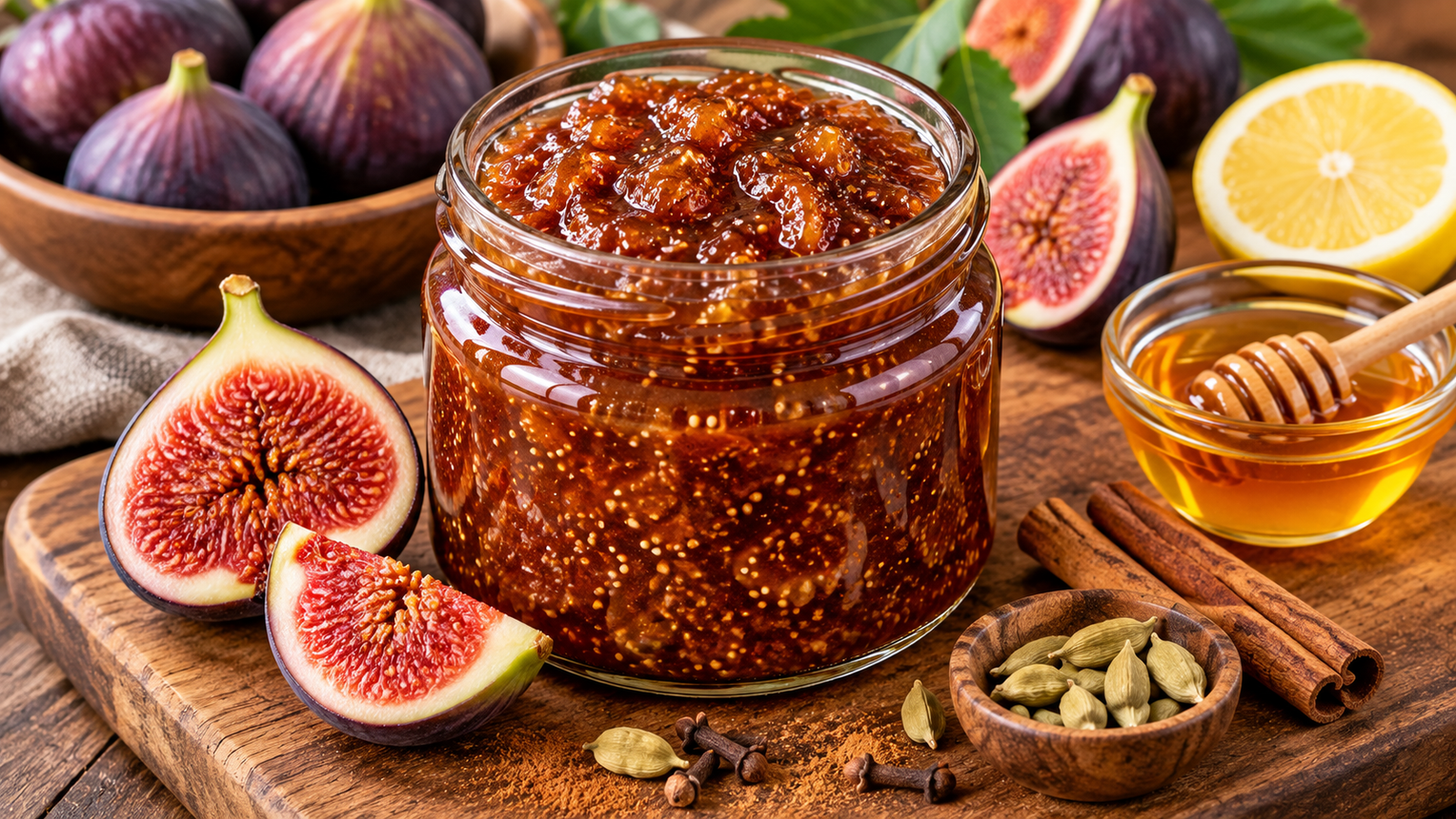
Sweet, fragrant and beautifully rich, this homemade Fig Jam transforms ripe figs into a delicious preserve with honey, fresh lemon juice and warming spices. Vanilla and cardamom add a delicate floral aroma, while cinnamon and a hint of cloves bring comforting depth to every spoonful.
This small-batch recipe lets the natural sweetness of fresh figs shine without a long list of ingredients. As the figs simmer, they soften and release their juices, creating a thick, spoonable jam you can leave chunky or blend until smooth.
Spread it over warm toast, swirl it into yoghurt, or serve it alongside your favourite cheeses and crackers. This spiced fig jam is equally lovely at breakfast, on a grazing board or as a thoughtful homemade gift when kept refrigerated and labelled with its storage instructions.
Wash the figs gently under cool running water and pat them dry.
Remove the stems and chop the fruit into quarters or smaller pieces.
The skins can remain on because they soften during cooking.
Combine the ingredients.
Place the chopped figs, honey, lemon juice, vanilla extract, cardamom, cinnamon, cloves, and water in a medium saucepan.
Stir gently to distribute the ingredients evenly.
Bring to a simmer.
Heat the mixture over medium heat until it begins to bubble.
Reduce the heat to low and simmer gently, stirring regularly to prevent the fruit and honey from sticking to the bottom of the pan.
Cook until thickened.
Simmer for approximately 25–35 minutes, or until the figs have broken down and the mixture has reduced to a thick, glossy consistency.
Mash the fruit with a wooden spoon as it softens.
If the mixture becomes too thick before the figs are tender, add a small splash of water.
Adjust the texture.
For a rustic jam, leave the mixture chunky and mash it to your preferred consistency.
For a smoother preserve, remove the saucepan from the heat and carefully blend with an immersion blender.
Take care because the mixture will be hot.
Check the consistency.
Place a small spoonful on a cool plate and allow it to stand briefly.
The jam should settle into a thick, spoonable layer rather than run like syrup.
Remember that it will thicken further as it cools.
Cool and store safely.
Remove the pan from the heat and allow the jam to cool slightly.
Transfer it to a clean, heat-safe container, then refrigerate promptly in an airtight container once cooled.
Label with the preparation date and keep refrigerated.
A beautifully balanced fig jam that’s simple, fragrant, and versatile—perfect for pairing with cheese, spreading on toast, or swirling into yogurt. 😊
Why You’ll Love This Fig Jam
Naturally fruity: Fresh figs provide a rich, mellow sweetness and a distinctive flavour.
Warmly spiced: Cardamom, cinnamon and cloves add aromatic depth without needing complicated ingredients.
Sweetened with honey: Honey complements the fruit and gives the preserve a rounded sweetness.
Easy to customise: Adjust the spices, citrus or texture to suit your taste.
Sweet and savoury versatility: Enjoy it with breakfast, desserts, cheeses or roasted dishes.
Small-batch friendly: Make a manageable quantity without needing a specialised preserving setup.
What Makes Fig Jam Special?
Figs have a naturally sweet flavour and soft flesh that breaks down beautifully when cooked. Their tiny edible seeds add texture, while the fruit’s natural sugars help create a rich, jam-like consistency as moisture evaporates.
In this recipe, lemon juice provides a bright contrast to the sweetness, while honey adds its own floral notes. Cardamom contributes a fragrant, slightly citrusy character, and cinnamon and cloves bring warmth.
Unlike a tested shelf-stable preserve, this small-batch recipe is designed for refrigeration. The cooking time and ingredients are intended to produce a thick, spoonable jam for everyday use, not a product guaranteed to be safe for storage at room temperature.
Tips for the Best Fig Jam
Choose ripe figs. Soft, fragrant figs generally provide the best flavour and sweetness. Remove any fruit that is mouldy or spoiled.
Keep the skins on. Fig skins soften during cooking and contribute texture and colour to the finished jam.
Cut the figs evenly. Smaller pieces break down more quickly and help the mixture cook evenly.
Simmer gently. A low, steady simmer allows the figs to soften without scorching the honey or fruit.
Stir regularly. As the jam thickens, it becomes more likely to stick to the bottom of the pan.
Taste before finishing. Fig sweetness varies naturally. Add a little extra lemon juice if you prefer a brighter, less sweet flavour.
Use the spices carefully. Cardamom and cloves can become dominant, so measure them accurately and adjust in future batches to suit your preference.
Blend with care. If using an immersion blender, keep the blade submerged to minimise splashing from the hot mixture.
Allow for cooling. Jam thickens as it cools, so avoid cooking it until it becomes overly stiff in the saucepan.
Use clean utensils. Always use a clean spoon when serving the jam to reduce the risk of contamination.
Storage and Reheating
Refrigerating: Transfer the cooled jam to a clean, airtight container and refrigerate promptly at 4°C or colder. For this small-batch recipe, use within 1–2 weeks. Always use a clean spoon and discard the jam if you notice mould, fermentation, an unusual smell, or other signs of spoilage.
Freezing: Freeze the cooled jam in a freezer-safe container, leaving a little space for expansion. Freeze for up to approximately 3 months for best quality. Thaw in the refrigerator and stir before serving.
Reheating: Fig jam is usually served cold or at room temperature. If you want to use it as a warm glaze or sauce, heat only the portion needed in a small saucepan over low heat. Add a splash of water if it is too thick.
Important preserving note: Although clean containers help reduce contamination, simply placing hot jam into a sterilised jar and sealing it does not make this recipe shelf-stable. Do not store it at room temperature or give it as an unrefrigerated preserve. Shelf-stable canning requires a tested recipe and the correct processing method.
Uses for This Recipe
Fig jam is useful for much more than spreading on toast. Its sweet, spiced flavour works in breakfast dishes, baking, appetisers and savoury sauces.
Breakfast spreads: Spoon over toast, scones, crumpets or warm homemade bread.
Yoghurt and porridge: Swirl into plain yoghurt, oatmeal or overnight oats for a fruity finish.
Sandwiches and wraps: Pair with cheese, roasted vegetables or suitable savoury fillings.
Baking: Use as a filling for thumbprint biscuits, sandwich biscuits, pastries or crumble bars.
Desserts: Spoon over cheesecake, panna cotta or vanilla ice cream.
Savoury glazes: Combine a little jam with mustard or balsamic vinegar for a glaze for roasted vegetables or meat.
Homemade gifts: Package in a small, clean container, keep refrigerated and include a preparation date and storage instructions.
What to Serve with Fig Jam
The combination of sweet figs, honey and warming spices makes this jam especially good with creamy cheeses, crusty bread, roasted vegetables and simple desserts.
Cheese and Grazing Boards
Brie or Camembert: Creamy, mild cheeses that complement the jam’s sweetness.
Goat’s cheese: Its tangy flavour balances the rich fruit.
Mature cheddar: A savoury, sharp contrast to the honey and spices.
Blue cheese: Its bold flavour works particularly well with sweet fig preserve.
Crackers and crostini: Provide a crisp base for cheese and jam.
Toasted walnuts or almonds: Add crunch and a nutty flavour.
Here are some fun variations to experiment with for your Fig Jam recipe:
Fun Variations
Orange and Cardamom Fig Jam
Replace some of the lemon juice with orange juice and add a little finely grated orange zest. Keep the cardamom for a fragrant, citrus-forward preserve.
Lemon and Thyme Fig Jam
Add a small sprig of fresh thyme during cooking and remove it before blending or storing. The herbal flavour pairs especially well with goat’s cheese and roasted vegetables.
Ginger and Chilli Fig Jam
Add ½ teaspoon finely grated fresh ginger and a small pinch of chilli flakes. The gentle heat balances the fruit’s sweetness and works well with savoury dishes.
Balsamic Fig Jam
Stir in 1 tablespoon balsamic vinegar near the end of cooking. Taste before adding more lemon juice, as the vinegar already contributes acidity. This variation is especially good with cheese boards and roasted vegetables.
Strawberry and Fig Jam
Add approximately ½ cup chopped strawberries to the saucepan. The strawberries bring a brighter berry flavour, although the final consistency and cooking time may change because of the additional fruit and moisture.
Blueberry and Lime Fig Jam
Add ½ cup blueberries and replace the lemon juice with lime juice. Simmer until the fruit breaks down and the mixture thickens, stirring regularly.
Vanilla and Walnut Fig Jam
Keep the vanilla in the original recipe and stir in finely chopped toasted walnuts after cooking. For the best texture, add the nuts only to the portion you plan to use soon, as they can soften during storage.
Rosemary and Fig Jam
Add a small sprig of fresh rosemary during simmering and remove it before storing. This savoury variation pairs beautifully with roasted vegetables and selected cheeses.
Port-Style Fig Preserve
For a richer flavour, replace some of the water with a little port. Simmer until the fruit softens and the mixture thickens. This is a refrigerated preserve and is not a shelf-stable canning recipe.
Final Thoughts
This homemade Fig Jam brings together the natural sweetness of ripe figs, floral honey, bright lemon and warming spices in a delicious little preserve. Its rich texture and balanced flavour make it just as welcome on morning toast as it is beside a selection of cheeses or spooned over a favourite dessert.
Keep the texture rustic or blend it smooth, experiment with citrus and herbs, and enjoy finding new ways to use each batch. Store it safely in the refrigerator or freezer, and you’ll have a versatile, fruit-filled addition to your kitchen.
Frequently Asked Questions
Do I need to peel figs before making jam?
No. The skins can remain on because they soften during simmering. Leaving them on also saves preparation time and gives the finished jam a more rustic texture.
Can I use dried figs instead of fresh figs?
Fresh figs are best for this recipe. Dried figs contain less moisture and are more concentrated in sweetness, so they require a different liquid balance and cooking method. Use a recipe specifically developed for dried figs if substituting them.
Why is my fig jam too runny?
It may need more cooking time. Continue simmering gently until excess liquid evaporates and the fruit mixture thickens. Remember that the jam will become firmer as it cools.
Why is my fig jam too thick?
Stir in a small amount of warm water or lemon juice, a teaspoon at a time, until you reach your preferred consistency. Warm it gently if necessary to make mixing easier.
Can I reduce the honey?
Yes. You can reduce the honey slightly if your figs are particularly sweet. However, this recipe is intended for refrigerated storage, and the amount of honey should not be treated as a guarantee of preservation or room-temperature safety.
Can I make fig jam without the spices?
Absolutely. Leave out the cardamom, cinnamon and cloves for a simpler fig preserve. Vanilla and lemon alone provide a lovely balance.
Can I use frozen figs?
Yes, provided they were frozen while in good condition. Thaw them in the refrigerator and drain off any excess liquid if necessary. The cooking time may vary depending on how much moisture the fruit releases.
How do I know when the jam is ready?
The figs should be soft, the mixture should look glossy and reduced, and a small spoonful should hold its shape reasonably well on a cool plate. It will thicken further after cooling.
Is homemade fig jam shelf-stable?
Not this recipe. It has not been formulated or tested for safe room-temperature canning. Keep it refrigerated and use it within 1–2 weeks, or freeze it for longer storage.
Essential cookies enable basic functions and are necessary for the proper function of the website.
Name
Description
Duration
Cookie Preferences
This cookie is used to store the user's cookie consent preferences.
30 days
These cookies are needed for adding comments on this website.
Name
Description
Duration
comment_author
Used to track the user across multiple sessions.
Session
comment_author_email
Used to track the user across multiple sessions.
Session
comment_author_url
Used to track the user across multiple sessions.
Session
Google's current Sign in with Google client library. It renders the Google sign-in button, or the One Tap prompt, so visitors can log in to your site with their Google account. It replaces the older Google Sign-In platform library.
Set on your own domain by the Sign in with Google client library. Records whether the visitor has dismissed the One Tap sign-in prompt and for how long it should stay hidden, plus the time the library last loaded and a browsing session id used for the same purpose. Sites that pass a custom state_cookie_name will see that name instead.
180 days
g_csrf_token
Set on your own domain by the Sign in with Google client library and submitted together with the sign-in credential, so your site can confirm the sign-in came from its own page and not from a forged cross-site request.
5 minutes
Statistics cookies collect information anonymously. This information helps us understand how visitors use our website.
Google Analytics is a powerful tool that tracks and analyzes website traffic for informed marketing decisions.
Contains information related to marketing campaigns of the user. These are shared with Google AdWords / Google Ads when the Google Ads and Google Analytics accounts are linked together.
90 days
__utma
ID used to identify users and sessions
2 years after last activity
__utmt
Used to monitor number of Google Analytics server requests
10 minutes
__utmb
Used to distinguish new sessions and visits. This cookie is set when the GA.js javascript library is loaded and there is no existing __utmb cookie. The cookie is updated every time data is sent to the Google Analytics server.
30 minutes after last activity
__utmc
Used only with old Urchin versions of Google Analytics and not with GA.js. Was used to distinguish between new sessions and visits at the end of a session.
End of session (browser)
__utmz
Contains information about the traffic source or campaign that directed user to the website. The cookie is set when the GA.js javascript is loaded and updated when data is sent to the Google Anaytics server
6 months after last activity
__utmv
Contains custom information set by the web developer via the _setCustomVar method in Google Analytics. This cookie is updated every time new data is sent to the Google Analytics server.
2 years after last activity
__utmx
Used to determine whether a user is included in an A / B or Multivariate test.
18 months
_ga
ID used to identify users
2 years
_gali
Used by Google Analytics to determine which links on a page are being clicked
30 seconds
_ga_
ID used to identify users
2 years
_gid
ID used to identify users for 24 hours after last activity
24 hours
_gat
Used to monitor number of Google Analytics server requests when using Google Tag Manager
1 minute
Marketing cookies are used to follow visitors to websites. The intention is to show ads that are relevant and engaging to the individual user.
Google Ads is an online advertising platform that enables businesses to create targeted ads displayed on Google search results and partner sites.
Targeting cookie. Used to create a user profile and display relevant and personalised Google Ads to the user.
2 years
__Secure-1PSIDCC
Targeting cookie. Used to create a user profile and display relevant and personalised Google Ads to the user.
2 years
__Secure-3PAPISID
Profiles the interests of website visitors to serve relevant and personalised ads through retargeting.
2 years
AEC
AEC cookies ensure that requests within a browsing session are made by the user, and not by other sites. These cookies prevent malicious sites from acting on behalf of a user without that user's knowledge.
6 months
ADS_VISITOR_ID
Cookie required to use the options and on-site web services
2 months
__Secure-3PSIDCC
Targeting cookie. Used to create a user profile and display relevant and personalised Google Ads to the user.
2 years
__Secure-3PSIDTS
Targeting cookie. Used to create a user profile and display relevant and personalised Google Ads to the user.
2 years
__Secure-1PSIDTS
Targeting cookie. Used to create a user profile and display relevant and personalised Google Ads to the user.
2 years
__Secure-1PAPISID
Targeting cookie. Used to create a user profile and display relevant and personalised Google Ads to the user.
2 years
__Secure-3PSID
Targeting cookie. Used to profile the interests of website visitors and display relevant and personalised Google ads.
2 years
Conversion
Google uses cookies for advertising, including serving and rendering ads, personalizing ads (depending on your ad settings at g.co/adsettings), limiting the number of times an ad is shown to a user, muting ads you have chosen to stop seeing, and measuring the effectiveness of ads.
90 days
_gcl_aw
Google uses cookies for advertising, including serving and rendering ads, personalizing ads (depending on your ad settings at g.co/adsettings), limiting the number of times an ad is shown to a user, muting ads you have chosen to stop seeing, and measuring the effectiveness of ads.
90 Days
_gcl_gs
Google uses cookies for advertising, including serving and rendering ads, personalizing ads (depending on your ad settings at g.co/adsettings), limiting the number of times an ad is shown to a user, muting ads you have chosen to stop seeing, and measuring the effectiveness of ads.
90 Days
_gcl_gb
Google uses cookies for advertising, including serving and rendering ads, personalizing ads (depending on your ad settings at g.co/adsettings), limiting the number of times an ad is shown to a user, muting ads you have chosen to stop seeing, and measuring the effectiveness of ads.
90 Days
_gac_gb_
Google uses cookies for advertising, including serving and rendering ads, personalizing ads (depending on your ad settings at g.co/adsettings), limiting the number of times an ad is shown to a user, muting ads you have chosen to stop seeing, and measuring the effectiveness of ads.
90 Days
FPGCLGB
Google uses cookies for advertising, including serving and rendering ads, personalizing ads (depending on your ad settings at g.co/adsettings), limiting the number of times an ad is shown to a user, muting ads you have chosen to stop seeing, and measuring the effectiveness of ads.
90 Days
FPGCLAW
Google uses cookies for advertising, including serving and rendering ads, personalizing ads (depending on your ad settings at g.co/adsettings), limiting the number of times an ad is shown to a user, muting ads you have chosen to stop seeing, and measuring the effectiveness of ads.
90 Days
You can find more information in our Cookie Policy and .