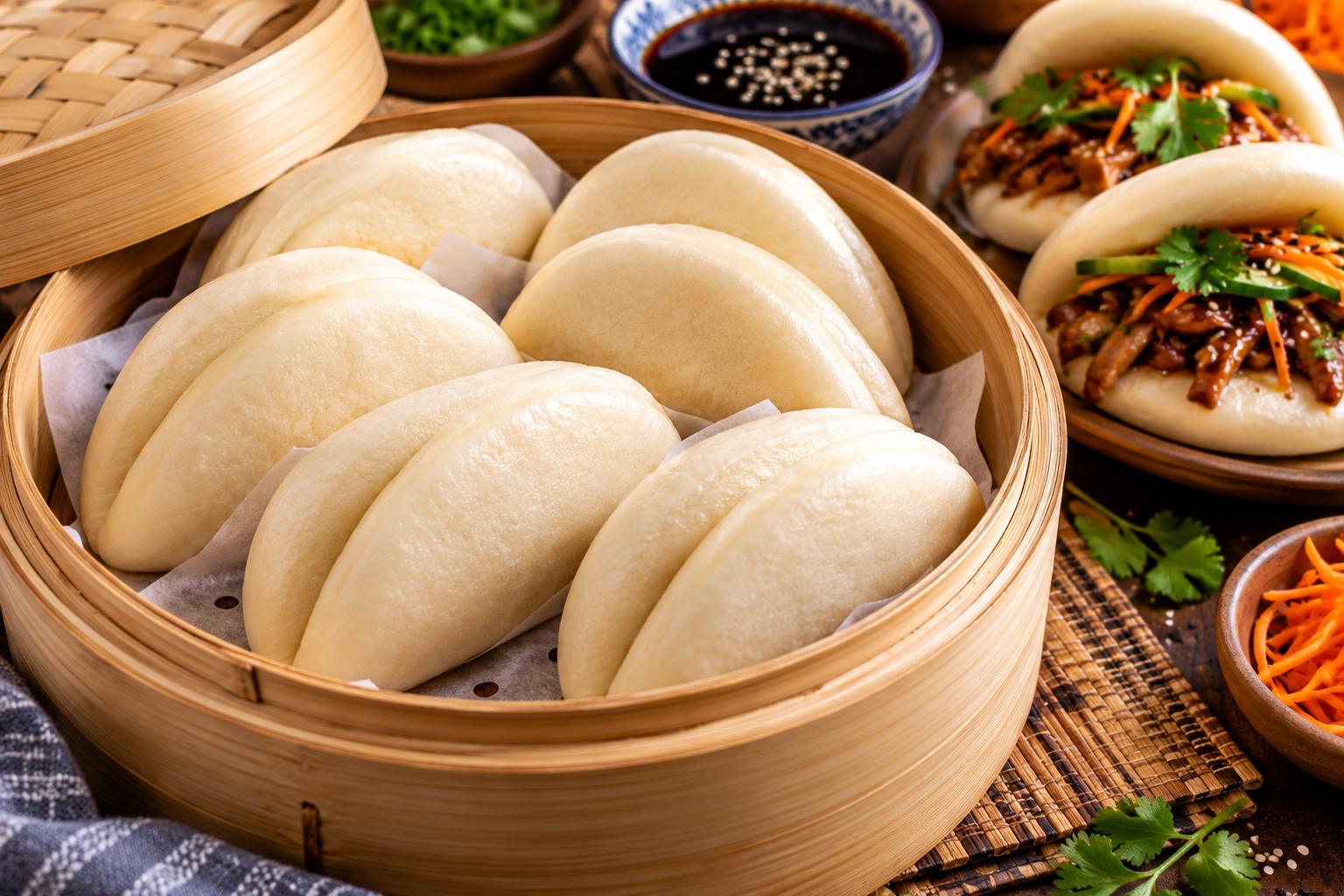
Soft, pillowy and slightly sweet, these homemade Bao Buns are perfect for filling with your favourite savoury ingredients. Made with flour, yeast, milk and a little sugar, the dough rises into a light, tender bun that is easy to fold and steam.
These steamed buns are wonderfully versatile. Fill them with sticky pork belly, crispy tofu, spicy chicken or pickled vegetables for a delicious street-food-inspired meal. Their mild flavour pairs beautifully with bold sauces, crunchy toppings and fresh herbs.
Whether you’re preparing a family dinner, creating a DIY bao bar for guests or experimenting with creative fusion fillings, this recipe gives you a delicious starting point. With a little patience during the rising stages, you can make soft, homemade bao buns in your own kitchen.
2 tbsp neutral oil, such as vegetable or avocado oil, plus extra for brushing
Method:
Activate the yeast.
In a small bowl, combine the warm water, warm milk, yeast, and sugar.
Stir gently and leave for 5–10 minutes, until the mixture looks foamy.
If it does not foam, the yeast may be inactive and should be replaced.
Prepare the dough.
In a large mixing bowl, combine the flour, baking powder, and salt.
Add the yeast mixture and oil.
Mix until a soft dough forms.
Knead until smooth.
Knead with a stand mixer fitted with a dough hook for approximately 5–8 minutes, or by hand for 8–10 minutes.
The dough should feel smooth and elastic.
If it is very sticky, add a small amount of flour at a time, taking care not to make it too dry.
Allow the dough to rise.
Shape the dough into a ball and place it in a lightly oiled bowl.
Cover and leave in a warm, draught-free place for approximately 1–2 hours, or until it has doubled in size.
Rising time depends on the temperature of your kitchen.
Divide and shape the buns.
Gently press the dough to release excess air.
Roll it out on a lightly floured surface to approximately 5–6 mm thick.
Cut out 10–12 circles, each about 8–9 cm wide.
Gather and reroll the scraps if needed.
Fold into half-moons.
Lightly brush one side of each dough circle with oil.
Fold it in half without pressing the edges together.
Gently roll over the folded bun with a rolling pin to even out the shape, if necessary.
Place each bun on an individual square of baking parchment.
Let the buns rise again.
Arrange the shaped buns on a tray, cover loosely and leave for 20–30 minutes, until slightly puffed.
Prepare the steamer.
Bring water to a gentle boil in a pot fitted with a steamer basket.
Make sure the water does not touch the buns.
Line the steamer with perforated parchment or suitable steamer liners, leaving space for the steam to circulate.
Steam the buns.
Place the buns in the steamer, leaving room between them for expansion.
Cover and steam for 8–12 minutes, depending on their size.
Work in batches if necessary, keeping the water at a steady simmer.
Let the steam settle.
Turn off the heat and leave the lid closed for 2–3 minutes before opening it gradually.
This helps reduce sudden temperature changes that can cause the buns to shrink or collapse.
Serve warm.
Carefully remove the buns and fill them with your preferred ingredients.
Serve with dipping sauces, fresh herbs, sliced spring onions, or toasted sesame seeds.
Serving: Fill with braised pork, crispy tofu, pickled vegetables, or spicy chicken. 😊
Why You’ll Love These Bao Buns
Soft and fluffy: Yeast gives the dough its light, pillowy texture.
Perfect for filling: The folded shape creates a convenient pocket for savoury or sweet fillings.
Customisable: Choose traditional-inspired fillings or experiment with your own combinations.
Great for sharing: Set up a bao bar and let everyone assemble their own buns.
Make-ahead friendly: The buns can be frozen after steaming and reheated when needed.
Ideal for entertaining: Their small size makes them suitable for casual dinners, parties and sharing platters.
What Are Bao Buns?
Bao buns are soft steamed buns associated with Chinese cuisine. The term bao broadly refers to a bun, and filled varieties come in different shapes and styles.
This recipe makes folded buns commonly served as pockets for fillings. They are often called gua bao or folded bao buns, and they are popular with combinations of braised meat, pickled vegetables, fresh herbs and savoury sauces.
The gentle sweetness and soft texture of the dough balance rich fillings and crunchy toppings. Steaming rather than baking keeps the buns pale, tender and moist.
Tips for the Best Bao Buns
Check your yeast. Make sure the yeast is active before mixing the dough. Water and milk should be warm, not hot, as excessive heat can damage the yeast.
Measure the flour carefully. Too much flour can make the buns dense. For the best consistency, weigh the flour if you have a kitchen scale.
Knead until elastic. Proper kneading helps develop the structure needed for soft, well-shaped buns.
Allow enough rising time. Look for visible expansion rather than relying only on the clock. A cool kitchen may require extra time.
Avoid overfilling the steamer. Leave space around each bun so the steam can circulate and the dough can expand.
Keep the water below the basket. The buns should cook in steam rather than sit in boiling water.
Use individual parchment squares. These make it easier to lift the buns without stretching or tearing them.
Avoid opening the lid too quickly. Let the buns stand for a few minutes after steaming before opening the lid gradually.
Maintain a steady simmer. A consistent supply of steam helps the buns cook evenly.
Fill just before serving. This keeps the buns soft and prevents wet fillings or sauces from making them soggy.
Storage and Reheating
Refrigerating: Allow steamed buns to cool, then place them in an airtight container and refrigerate for up to 3 days. Refrigeration may make the dough firmer, so reheating with steam is recommended.
Freezing: Freeze fully cooled, unfilled buns in a freezer-safe container or bag for up to 2 months for best quality. Separate layers with baking parchment to prevent sticking.
Reheating from the fridge: Steam for approximately 3–5 minutes, or until heated through and soft again.
Reheating from frozen: Steam for approximately 6–10 minutes, checking that the centre is hot. Timing will depend on the size of the buns and your steamer.
Food safety: Refrigerate cooked buns within two hours of cooking. Store meat, tofu and other perishable fillings separately, following their appropriate refrigeration and reheating requirements.
What to Serve with Bao Buns
Bao buns pair especially well with fillings and sides that combine savoury flavours, fresh vegetables and contrasting textures.
Savoury Fillings
Sticky pork belly: Rich, tender pork with a sweet-savoury glaze.
Five-spice chicken: Shredded chicken tossed in a fragrant sauce.
Crispy tofu: Golden tofu with chilli-garlic sauce for a plant-based option.
Soy-braised mushrooms: Earthy mushrooms with a deep umami flavour.
Miso-glazed aubergine: Soft, savoury aubergine with a sweet-salty glaze.
Pulled chicken: Tender chicken with barbecue or hoisin-style sauce.
Fresh and Crunchy Toppings
Pickled cucumber or daikon
Shredded carrot
Thinly sliced red cabbage
Spring onions
Fresh coriander
Sliced chilli
Sesame slaw with lime and ginger
Sauces and Dips
Hoisin sauce
Soy and ginger dipping sauce
Chilli oil
Sriracha mayonnaise
Peanut sauce
Sweet chilli sauce
Side Dishes
Serve bao buns with vegetable dumplings, a crunchy cucumber salad, steamed greens, fried rice or a light Asian-inspired slaw. For a larger sharing meal, add a selection of pickled vegetables and small dipping bowls.
Here are some fun variations to experiment with for your Bao Buns recipe:
Variations
🌀 Flavor Variations & Dough Twists
Matcha Bao Buns
Add 1 tsp matcha powder to the flour for a subtle green hue and earthy flavor
Pairs beautifully with sweet red bean or citrusy fillings
Black Sesame Buns
Mix in 1 tbsp ground black sesame seeds for a nutty aroma and speckled look
Ideal for savory fillings like miso eggplant or soy-braised mushrooms
Coconut Milk Dough
Swap regular milk for coconut milk for a hint of sweetness and tropical flair
Try with mango-chili slaw or lemongrass tofu
Beet-Tinted Buns
Add a spoonful of beet purée for a vibrant pink tone
Stunning when paired with creamy fillings like whipped feta or avocado
🧁 Filling Inspirations
Savory Classics
Hoisin jackfruit, pickled cucumber, and scallions
Crispy tofu with sriracha mayo and shredded carrot
Sweet Treats
Vanilla custard with toasted coconut
Mascarpone and berry compote with mint
Global Twists
Caprese-style: pesto, mozzarella pearls, and cherry tomatoes
Moroccan-spiced chickpeas with preserved lemon and harissa yogurt
🎨 Styling & Presentation Ideas
Bao Trio Board
Serve three mini buns with distinct fillings and dipping sauces
Use a slate board or bamboo tray for contrast
Open-Faced Bao Sliders
Steam buns flat and top like canapés: think smoked salmon, dill cream, and microgreens
Great for cocktail parties or tasting menus
Vertical Stack Display
Layer buns in a tiered steamer basket with garnish peeking out
Add edible flowers or colored parchment for visual pop
Final Thoughts
Homemade Bao Buns are a rewarding addition to your cooking collection. Their soft, pillowy texture and gently sweet flavour make them ideal for holding bold sauces, tender proteins, crisp vegetables and fresh herbs.
Once you’ve mastered the dough and steaming technique, you can experiment with traditional-inspired fillings or create your own combinations. Serve them fresh from the steamer for a fun, interactive meal that brings a little street-food charm to your table.
Frequently Asked Questions
Why didn’t my bao buns rise?
The yeast may have been inactive, the liquid may have been too hot, or the dough may not have had enough time in a warm place. Check the yeast’s expiry date and allow the dough to rise until visibly expanded.
Why are my bao buns dense?
Dense buns can result from adding too much flour, insufficient kneading, inadequate rising time or steaming before the second rise is complete. Aim for a soft dough and allow the shaped buns to become slightly puffy before steaming.
Why did my bao buns collapse after steaming?
A sudden temperature change can contribute to shrinking. Let the buns stand in the covered steamer for 2–3 minutes after switching off the heat, then open the lid gradually. Underproofing or overproofing can also affect their structure.
Can I make bao buns without a bamboo steamer?
Yes. A metal steamer basket or a suitable steaming insert over a pot of simmering water works well. Line it with suitable parchment and make sure the buns do not touch the water.
Can I prepare the dough ahead of time?
Yes. You can prepare the dough and refrigerate it in a covered, lightly oiled bowl for a slow rise. Allow it to warm slightly before shaping, then give the shaped buns time to puff before steaming. Rising times may vary.
Can I freeze bao buns?
Yes. Freeze the buns after steaming and cooling, preferably before filling them. Reheat from frozen in a steamer until soft and heated through.
Are bao buns vegan?
This version contains milk, so it is not vegan as written. You can substitute unsweetened plant-based milk and use neutral oil to make the dough suitable for a vegan filling, provided the remaining ingredients meet your dietary requirements.
What is the best filling for bao buns?
Sticky pork belly is a popular choice, but crispy tofu, pulled chicken, soy-braised mushrooms, and pickled vegetables are all excellent options. Choose a filling that is flavourful without being too watery.