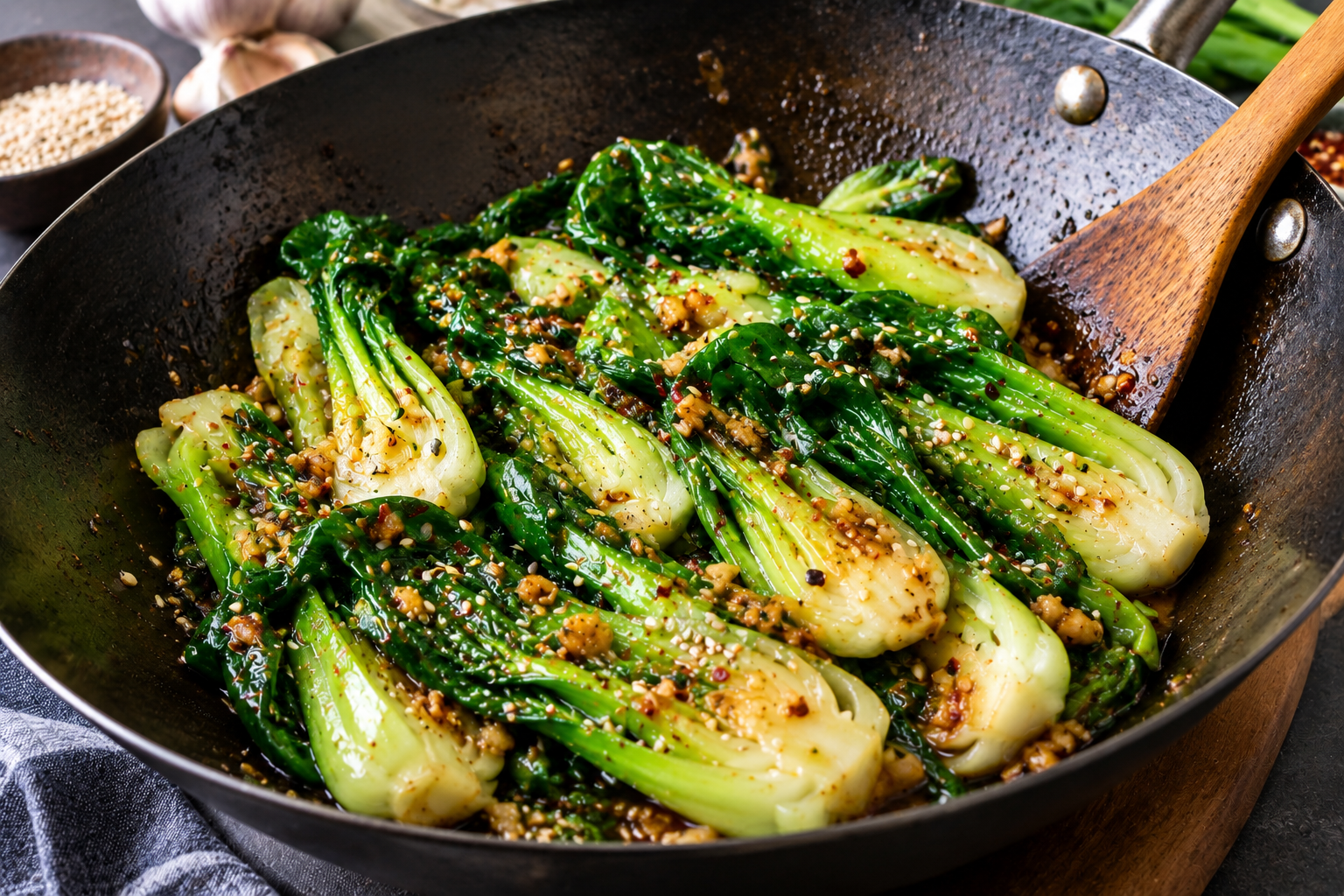
Steamed bok choy is a simple, flavourful side dish that celebrates the natural sweetness and crisp-tender texture of this popular Asian vegetable. Gently steamed until the leaves are vibrant green and the stalks are tender, bok choy makes a fresh, colourful addition to everyday meals.
A savoury garlic sauce made with oyster sauce, soy sauce and toasted sesame oil adds depth and a glossy finish without overpowering the delicate flavour of the greens. A sprinkle of toasted sesame seeds or a pinch of chilli flakes provides extra texture and a little heat.
This easy steamed bok choy recipe is perfect for busy weeknights, Asian-inspired dinners and plant-forward meals. Serve it with jasmine rice, noodles, tofu, fish or grilled chicken for a balanced and satisfying plate.
500g baby bok choy or regular bok choy, halved lengthwise if large
Water, for steaming
For the Garlic Soy Sauce
3 garlic cloves, finely minced
1 tbsp oyster sauce or vegetarian mushroom stir-fry sauce
1 tsp soy sauce, preferably reduced-sodium
1 tsp toasted sesame oil
Black pepper, to taste
Salt, if needed
Optional Garnishes
1 tsp toasted sesame seeds
A pinch of red pepper flakes or sliced fresh chilli
1 lime, cut into wedges
1 spring onion, finely sliced
Method:
Wash the bok choy thoroughly.
Rinse the vegetables under cold running water, gently separating the leaves and stalks where necessary to remove grit.
Pay particular attention to the base, where dirt can collect.
Drain well.
Trim and prepare the stalks.
Slice off the dry, tough ends without removing too much of the base.
Keep small baby bok choy whole or halve larger heads lengthwise so they cook evenly.
Prepare the steamer.
Add approximately 2–3 cm of water to a saucepan or wok and bring it to a boil.
Place the bok choy in a steamer basket above the water, ensuring the vegetables do not sit directly in it.
Steam until tender.
Cover and steam for approximately 3–5 minutes for baby bok choy, or 5–7 minutes for larger pieces.
Check the thickest part of the stalk with a fork. It should be tender while retaining a slight bite, and the leaves should remain bright green.
Make the garlic sauce.
While the bok choy steams, combine the oyster sauce, soy sauce, sesame oil and black pepper in a small bowl.
If the mixture is too concentrated, stir in 1–2 teaspoons of warm water.
Taste before adding salt, as both sauces can be salty.
Warm the garlic gently.
For a smoother, less sharp garlic flavour, heat the sauce ingredients briefly in a small pan over low heat, stirring until warmed.
Add the minced garlic and cook gently for about 30–60 seconds, taking care not to brown or burn it.
Remove from the heat.
Arrange the vegetables.
Transfer the steamed bok choy to a serving platter, arranging the halves cut-side up if desired.
Add the sauce.
Spoon or drizzle the warm garlic sauce over the stalks and leaves, distributing it evenly.
Garnish and serve.
Finish with toasted sesame seeds, sliced spring onions or a pinch of chilli flakes.
Add lime wedges on the side if you enjoy a bright citrus note.
Serve immediately while warm.
Steamed Bok Choy is a light, healthy dish that emphasizes freshness and balance.
🌟 Culinary Context
Bok choy: A mild, slightly sweet leafy green, rich in vitamins A, C, and calcium.
Steaming method: Preserves nutrients, keeps stalks tender, and leaves it vibrant.
Sauce: A classic umami-rich blend with sesame oil for aroma.
Garnishes: Sesame seeds, chili flakes, or lime add texture and brightness.
Why You’ll Love This Steamed Bok Choy
Quick and easy: This side dish comes together in about 15 minutes with minimal preparation.
Fresh and flavourful: Gentle steaming preserves the vegetable’s delicate taste and crisp-tender texture.
A savoury garlic sauce: Soy, oyster sauce and sesame oil add a delicious balance of saltiness and umami.
Versatile: It pairs beautifully with rice, noodles, tofu, seafood and meat.
Easy to adapt: Choose a vegetarian sauce, add ginger or adjust the chilli to suit your preferences.
Colourful presentation: Bright green leaves and glossy stalks bring freshness to the dinner table.
Tips for the Best Steamed Bok Choy
Serve straight away. Bok choy is at its best shortly after steaming, when the leaves are vibrant and the stalks retain their pleasant bite.ng with bold flavor—quick to prepare, nutrient-rich, and adaptable.
Clean between the leaves. Dirt and grit often collect near the base. Separate the leaves gently and rinse thoroughly before cooking.
Choose fresh bok choy. Look for firm, crisp stalks and fresh-looking green leaves without extensive yellowing or wilting.
Cut larger heads evenly. Halving thick heads helps them cook at the same rate as the leaves. Keep small baby bok choy whole if preferred.
Avoid oversteaming. Bok choy cooks quickly. Check it after 3 minutes for baby varieties and continue only until the stalks are tender but still slightly crisp.
Keep the water below the basket. The bok choy should steam above the boiling water rather than boil directly in it.
Do not overdo the sauce. The aim is to enhance the natural flavour of the vegetable. Start with the recommended quantities and adjust to taste.
Take care with the salt. Oyster sauce and soy sauce already contain salt, so taste the finished sauce before adding any extra.
Cook garlic gently. Burnt garlic can taste bitter. Keep the heat low and remove the pan from the stove as soon as the garlic becomes fragrant.
Dry the vegetables if necessary. Allow excess steaming water to drain before adding the sauce so it does not become diluted.
Storage and Reheating
Refrigeration: Allow leftover bok choy to cool briefly and place it in a covered container in the refrigerator within 2 hours. For the best texture, use within 2–3 days.
Store the sauce separately: If preparing ahead, keep the sauce in a separate covered container. This helps prevent the vegetables from becoming overly soft or waterlogged.
Reheating: Warm the bok choy gently in a covered pan with a teaspoon of water, or microwave in short intervals until heated through. Avoid prolonged reheating, which can make the stalks limp.
Freezing: Freezing is not recommended for the best texture. Bok choy contains a lot of water and may become soft after thawing.
Food safety: Refrigerate cooked vegetables promptly and keep them chilled. Reheat leftovers until steaming hot and avoid repeatedly cooling and reheating the same portion.
This steamed bok choy recipe is already a visual and flavor-forward star 🌿—but pairing it with complementary dishes can turn it into a full, balanced meal or an elegant spread. Here are some ideas to match its umami-rich, garlicky profile and delicate texture:
🍚 Grain-Based Companions
Jasmine or Basmati Rice – Clean and fragrant, perfect for soaking up the sauce.
Garlic Fried Rice – Adds a crispy, aromatic contrast.
Quinoa with Scallions & Sesame – Nutty and protein-rich, with a light Asian twist.
🍗 Protein Pairings
Teriyaki Salmon or Seared Tuna – Rich, fatty fish balances bok choy’s freshness.
Ginger-Garlic Shrimp – Quick sautéed shrimp echo the aromatics beautifully.
Five-Spice Grilled Chicken – Earthy and bold, ideal for a composed plate.
Tofu Steak with Miso Glaze – A vegetarian showstopper with depth and umami.
🍄 Vegetable Sidekicks
Shiitake Mushrooms in Soy-Mirin Reduction – Meaty and savory, a natural pairing.
Steamed Carrots with Ginger Glaze – Sweet and bright, for color and contrast.
Roasted Sweet Potatoes with Chili-Lime Drizzle – Earthy, sweet, and spicy.
Asian Slaw with Rice Vinegar & Sesame – Crunchy and refreshing.
🍜 Noodle Options
Sesame-Soy Rice Noodles – Tossed with scallions and slivered bok choy.
Udon Stir-Fry with Mushrooms & Tofu – Hearty and comforting.
Cold Soba with Ponzu Dressing – Light and citrusy, ideal for warmer days.
Here are some fun variations to experiment with for your Steamed Bok Choy recipe:
Variations
🌿 Flavor Variations
Thai-Inspired Coconut Lime Bok Choy
Swap oyster sauce for coconut milk and a splash of lime juice
Add finely chopped lemongrass and a pinch of brown sugar
Garnish with crushed peanuts and fresh cilantro
Korean Gochujang Glaze
Mix gochujang, soy sauce, rice vinegar, and a touch of honey
Steam bok choy, then brush with glaze and broil briefly for caramelization
Top with scallions and toasted sesame seeds
Mediterranean Garlic-Lemon Drizzle
Use olive oil, lemon zest, minced garlic, and a pinch of oregano
Serve with crumbled feta and roasted pine nuts
Optional: add a dollop of Greek yogurt on the side
🧪 Technique Twists
Charred Bok Choy Finish
Steam briefly, then sear cut sides in a hot skillet for smoky depth
Drizzle with sauce post-sear for layered flavor
Pickled Garlic Infusion
Use pickled garlic instead of fresh for a tangy punch
Add a splash of pickling liquid to the sauce for brightness
Cold Marinated Bok Choy
Steam, chill, and marinate in soy-sesame dressing for a refreshing side
Ideal for bento boxes or summer platters
🎨 Styling & Pairing Ideas
Rainbow Trio Plate
Bok choy (green), steamed purple cabbage (with plum sauce), and julienned carrots (with miso glaze)
Plate in a fan or spiral for visual impact
Mini Bok Choy Bundles
Tie baby bok choy stalks with blanched chive strands
Serve upright in a shallow pool of sauce for elegance
Rustic Bowl Presentation
Layer bok choy over brown rice or soba noodles
Top with sauce, a soft-boiled egg, and crispy shallots
Final Thoughts
Steamed bok choy is a simple way to add fresh greens and savoury flavour to everyday meals. With tender stalks, vibrant leaves and a fragrant garlic-soy-sesame sauce, this quick side dish proves that a few well-chosen ingredients can make a delicious difference.
Keep it classic with sesame seeds and spring onions, or experiment with ginger, chilli and citrus to create your own favourite version. Serve it alongside rice, noodles, tofu or fish for an easy, flavourful addition to your table.
Frequently Asked Questions
What does bok choy taste like?
Bok choy has a mild, slightly sweet flavour. The white stalks are crisp and juicy, while the green leaves are softer and more delicate. Its flavour works well with garlic, ginger, soy sauce and sesame oil.
How long should I steam bok choy?
Baby bok choy usually takes around 3–5 minutes, while larger or thicker pieces may take 5–7 minutes. Cooking time depends on the size of the stalks and how tender you prefer them.
Can I use regular bok choy instead of baby bok choy?
Yes. Wash it thoroughly and cut larger heads lengthwise into halves or quarters. Try to keep the pieces similar in size so they cook evenly.
Is this steamed bok choy recipe vegetarian?
It can be. Traditional oyster sauce is made with oysters, so replace it with a vegetarian mushroom stir-fry sauce or vegan oyster-style sauce. Check the other ingredients on the label if you follow a strict vegetarian or vegan diet.
Can I make the garlic sauce ahead of time?
Yes. Mix the sauce ingredients and refrigerate them in a covered container for up to 2 days. For the freshest flavour, warm the sauce gently and prepare the bok choy shortly before serving.
Why is my bok choy watery?
It may have been oversteamed or not drained properly before the sauce was added. Steam just until tender and allow excess water to drain from the stalks before plating.
Can I make this dish gluten-free?
Yes, provided you use gluten-free soy sauce or tamari and check the oyster-style sauce or vegetarian alternative for gluten-containing ingredients. Standard soy sauce and some prepared sauces may contain wheat.
Can I make steamed bok choy without a steamer basket?
Yes. Place a heatproof rack inside a suitably sized pot and add water below the rack. Arrange the bok choy on a heatproof plate or rack that fits inside, cover the pot and steam until tender. Make sure the plate is stable and suitable for high heat.
Can I add other vegetables?
Absolutely. Carrots, mushrooms, snow peas and broccoli can be served alongside bok choy. Adjust the cooking times for each vegetable so everything reaches the desired tenderness without becoming overcooked.