
Chris
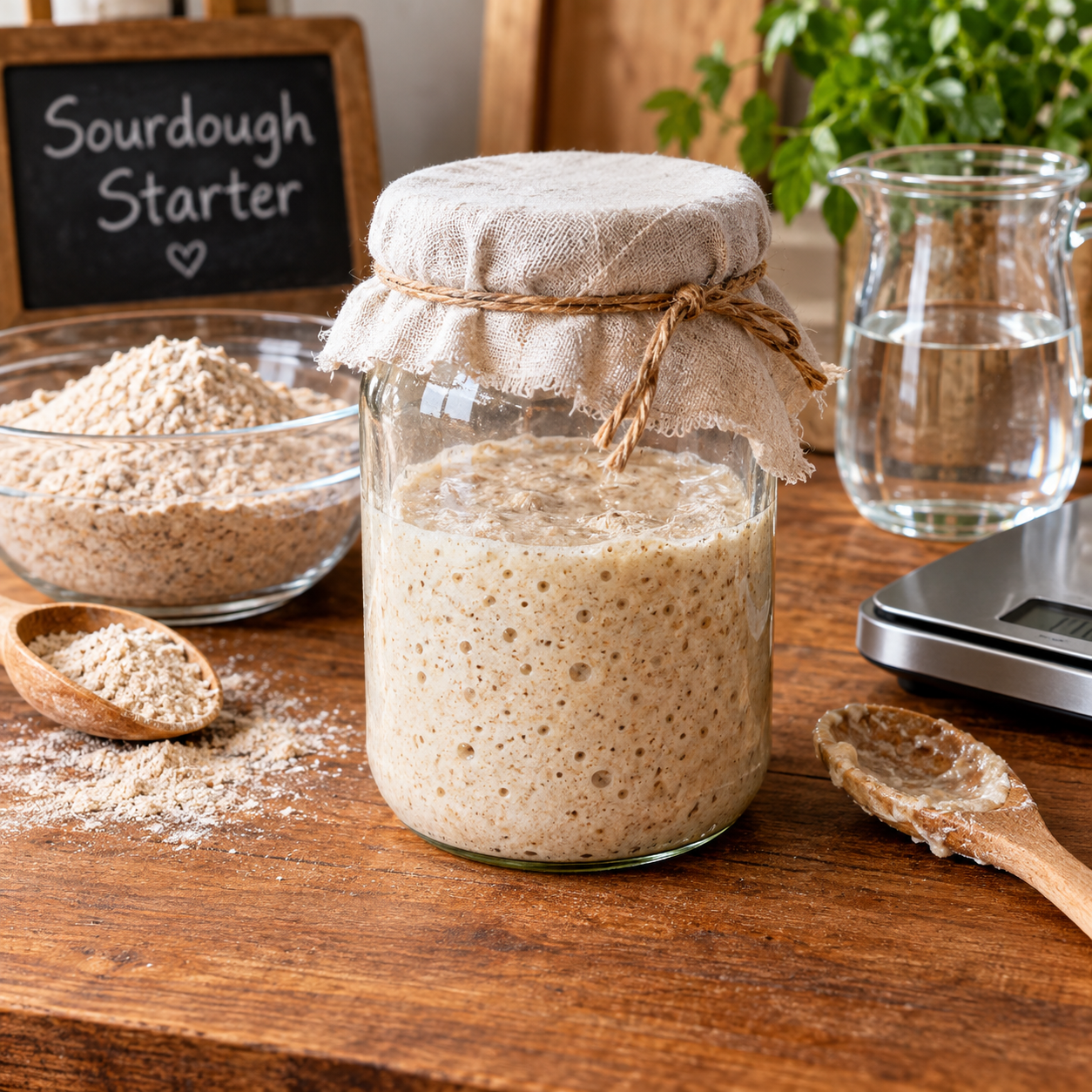
A sourdough starter is more than just flour and water—it’s a living culture that breathes life into bread. With daily feedings, wild yeast and bacteria awaken, creating bubbles, tangy aromas, and the unmistakable character of sourdough.
The process is slow and rhythmic: mix, discard, feed, and wait. Over days, the starter grows stronger, doubling in size and passing the float test—a sign it’s ready to leaven dough. Stored at room temperature or tucked into the fridge, it becomes a long-term kitchen companion, always ready to bake.
This recipe shows how patience and care transform humble ingredients into a powerful ferment, connecting you to centuries of bread-making tradition.
Sourdough Starter
Recipe
Ingredients:
- Starter:
- 100g whole wheat flour (or rye for extra activity)
- 100g filtered water (room temperature)
- Equipment
- Glass jar or container (with loose-fitting lid or cloth cover)
- Digital scale (for accuracy)
- Spoon or spatula
Method:
Day-by-Day Instructions
Day 1: Mix & Begin Fermentation
- In a clean jar, combine 100g whole wheat flour and 100g water.
- Stir until fully incorporated—should resemble thick pancake batter.
- Cover loosely and let sit at room temperature (20–25°C) for 24 hours.
Day 2: Check & Feed
- You may see bubbles or a slight sour smell.
- Discard half the mixture (about 100g).
- Feed with:
- 50g all-purpose flour
- 50g water
- Stir, cover loosely, and rest another 24 hours.
Days 3–7: Daily Feeding Routine
- Repeat the discard and feed process every 24 hours:
- Discard half
- Add 50g flour + 50g water
- Stir and cover
- Signs of progress:
- Bubbles increase
- Smell becomes tangy
- Volume may double between feedings
✅ When Is It Ready?
- Your starter is ready when:
- It doubles in size within 4–6 hours of feeding
- It smells pleasantly sour
- It passes the “float test” (a spoonful floats in water)
🧊 Storage & Maintenance
- Short-term: Keep at room temp, feed daily
- Long-term: Refrigerate and feed weekly
- Always discard before feeding unless baking
Basics & Ferments 😊

Sourdough Starter is the foundation for artisan bread baking—a living culture of wild yeast and lactic acid bacteria that gives sourdough its signature tang and chewy texture.
🌟 Key Highlights
- Flour choice: Whole wheat or rye flour kickstarts fermentation thanks to higher nutrient content.
- Water: Filtered, room-temperature water avoids chlorine, which can inhibit yeast growth.
- Fermentation: Natural yeast and bacteria develop over 5–7 days, producing bubbles, aroma, and rise.
- Discard & feed: Essential to keep the starter balanced and active.
🍴 Uses
- The starter acts as a natural leavening agent, replacing commercial yeast.
- Produces bread with complex flavor, chewy crumb, and crisp crust.
- Can also be used in pancakes, waffles, pizza dough, and crackers.
✨ Tips & Variations
- Float test: Confirms readiness—active starter should float in water.
- Storage options: Room temperature for daily baking, refrigeration for weekly maintenance.
- Flavor tweaks: Different flours (spelt, rye, einkorn) create unique taste profiles.
- Discard recipes: Use leftovers in muffins, pancakes, or crackers.
This recipe is less about cooking and more about cultivating a living culture—patience and consistency are key.
These pairings highlight the bread’s tangy flavor, chewy texture, and crisp crust:
🍲 Soups & Stews
- Creamy Mushroom Soup: Earthy and velvety, perfect for dipping.
- Butternut Squash Soup: Sweet and comforting, ideal for fall or winter meals.
- Minestrone or Lentil Soup: Hearty and wholesome, with plenty of texture.
🧀 Spreads & Dips
- Roasted Red Pepper Hummus: Smoky and creamy, a vibrant contrast to sourdough’s tang.
- French Onion Dip: Rich and savory, with caramelized depth.
- Olive Tapenade or Tzatziki Sauce: Mediterranean-inspired, fresh and flavorful.
🥗 Fresh & Savory Sides
- Caprese Salad: Juicy tomatoes, mozzarella, and basil with balsamic glaze.
- Lentil and Feta Salad: Protein-packed and refreshing.
- Shakshuka: Poached eggs in spiced tomato sauce—perfect for dipping.
🍳 Breakfast & Brunch Ideas
- Sourdough Pancakes: A tangy twist on a classic breakfast.
- Smoked Salmon & Cream Cheese Toasts: Elegant and satisfying.
- Avocado Toast with Chives & Cheddar: Gooey, savory, and fresh.
🧈 Butters & Jams
- Roasted Garlic & Herb Butter: Aromatic and rich.
- Raspberry Jam or Honey: Sweet-tart contrast to sourdough’s depth.

Here are some fun variations to experiment with for your Sourdough Starter recipe:
Variations
🧪 Starter Variations to Explore
🌾 Flour-Based Twists
- Rye-Powered Starter: Use rye flour throughout for a more vigorous fermentation and deeper flavor—perfect for rustic breads.
- Blend Boost: Alternate feedings between whole wheat and bread flour to balance activity and flavor.
🍯 Flavor-Infused Options
- Apple Peel Kickstart: Add a few organic apple peels on Day 1 to introduce wild yeast and speed up fermentation.
- Honey Touch: Stir in ½ tsp raw honey on Day 2 or 3 to gently feed the yeast and add subtle sweetness.
🧂 Mineral Enhancements
- Pinch of Salt: Add a tiny pinch of Himalayan salt on Day 4 to help regulate microbial growth and flavor development.
🥖 Pairing Suggestions
Once your starter is active, try it in:
- Sourdough Rye Loaf: Replace yeast in a Crusty Rye Bread with 150g starter, reduce water slightly, and extend fermentation.
- Sourdough Pancakes or Crackers: Use discard creatively for tangy, waste-free treats.

Thanks for sharing. I read many of your blog posts, cool, your blog is very good. https://www.binance.info/register?ref=IXBIAFVY