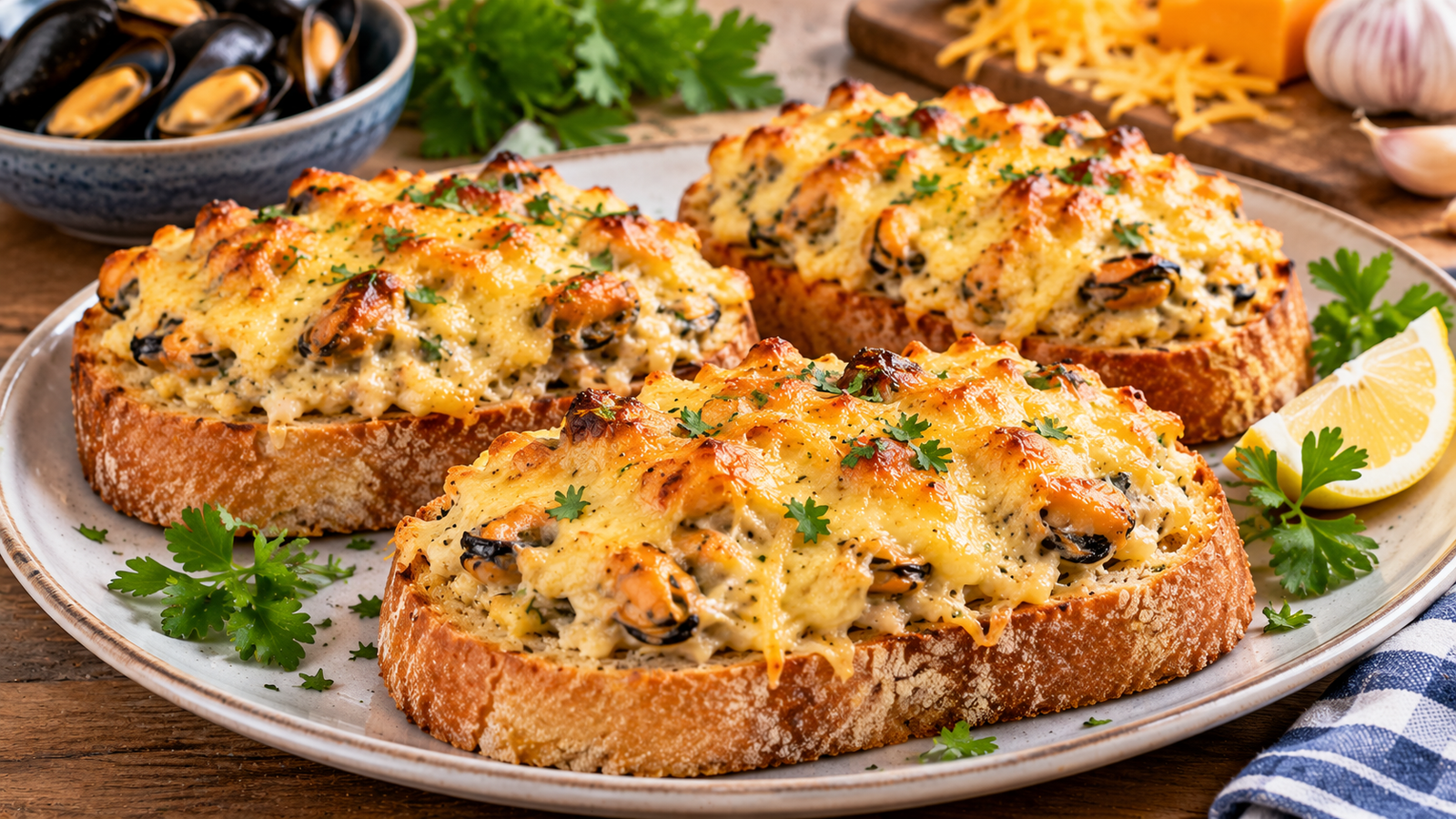
Creamy mussel sandwiches are a delicious way to turn simple ingredients into a rich, savoury seafood treat. Tender mussels are combined with grated onion, chopped garlic, cheddar cheese and mayonnaise to create a creamy topping packed with flavour.
Spread generously over thick slices of French bread, panini or ciabatta, the mussel mixture becomes warm, golden and beautifully cheesy as it bakes. The crisp edges of the toasted bread provide a lovely contrast to the soft, creamy seafood topping.
These easy open sandwiches are perfect for a light lunch, a savoury snack, a casual starter or a relaxed gathering with friends and family. Serve them straight from the oven with a fresh salad or your favourite side dish.
1 French baguette, panini loaf or ciabatta, cut into 8 thick slices
Method:
Preheat the oven:
Preheat your oven to 180°C. Line a baking tray with baking paper or lightly grease it.
Prepare the mussels:
Drain the canned mussels thoroughly.
Check for shell pieces and remove them before using.
Make the creamy topping:
Place the mussels in a mixing bowl.
Add the grated onion, chopped garlic, cheddar cheese, and mayonnaise.
Mix gently until all the ingredients are evenly combined.
Prepare the bread:
Arrange the bread slices in a single layer on the prepared baking tray.
If desired, lightly toast them first for a firmer base.
Assemble the sandwiches:
Divide the mussel mixture evenly between the bread slices, spreading it generously over each piece.
Bake until golden:
Place the tray in the preheated oven and bake for approximately 12–15 minutes, or until the topping is hot, the cheese has melted, and the edges are lightly golden.
Cooking time may vary depending on the thickness of the bread and the amount of topping.
Serve:
Remove from the oven and allow the sandwiches to cool briefly before serving.
Garnish with fresh parsley or a little lemon zest if desired.
A rich, cheesy mussel topping on toasted bread—perfect for a quick and flavorful meal. Enjoy your creamy mussel sandwiches! 🥖🥗😊
Why You’ll Love These Creamy Mussel Sandwiches
Rich and savoury: Mussels, cheddar and mayonnaise create a deliciously creamy seafood topping.
Easy to prepare: A handful of everyday ingredients comes together in just 25 minutes.
Crispy and creamy: Toasted bread provides a satisfying contrast to the soft, cheesy topping.
Perfect for sharing: Cut the slices into smaller portions to create easy party appetisers.
Versatile: Enjoy them for lunch, as a starter or as part of a seafood-inspired meal.
Easy to customise: Add herbs, lemon, chilli or extra cheese to suit your taste.
A Little About Mussel Sandwiches
Mussels have a naturally savoury, slightly sweet seafood flavour that works particularly well with creamy sauces, garlic and cheese. Pairing them with toasted bread creates a satisfying open sandwich that is simple enough for everyday meals but special enough to serve to guests.
Using canned mussels makes this recipe convenient, as the seafood is already cooked and ready to use. Draining them well helps prevent excess moisture from making the topping watery.
Tips for the Best Creamy Mussel Sandwiches
Drain the mussels thoroughly: Excess liquid can make the topping runny and soften the bread.
Use good-quality bread: French bread, ciabatta, and panini all provide a sturdy base for the generous topping.
Grate the onion finely: This distributes the onion flavour evenly without leaving large pieces.
Chop the garlic finely: Smaller pieces help the garlic blend into the creamy mixture.
Choose a good melting cheese: Cheddar gives the topping a lovely savoury flavour and golden finish.
Avoid overloading the bread: Spread the mixture evenly so the topping heats through properly.
Watch the baking time: Remove the sandwiches once the cheese has melted and the edges are golden. Overbaking can dry out the seafood.
Add freshness before serving: A little lemon zest or chopped parsley brightens the rich topping.
Uses for Creamy Mussel Sandwiches
These cheesy seafood sandwiches are wonderfully versatile and can be served in several ways.
Party appetisers: Cut each slice into smaller pieces and arrange on a platter for easy sharing.
Light lunch: Serve two open sandwiches with a fresh green salad.
Seafood platter: Add them to a spread with prawns, calamari and other seafood favourites.
Brunch option: Serve alongside scrambled eggs and fresh greens for a savoury brunch.
Soup accompaniment: Pair with a bowl of tomato soup or vegetable soup for a comforting meal.
Casual entertaining: Prepare the topping ahead of time and assemble just before baking.
Storage and Reheating
For the best texture and food safety, creamy mussel sandwiches are best enjoyed freshly baked.
Refrigeration: Store leftover sandwiches in an airtight container in the refrigerator within 2 hours of cooking. Use within 1–2 days.
Reheating: Place in an oven preheated to 160°C and heat until piping hot throughout. The bread may soften slightly after refrigeration.
Freezing: Freezing the assembled sandwiches is not recommended because the mayonnaise-based topping may separate and the bread can become soggy.
Make-ahead preparation: You can mix the topping in advance and refrigerate it in a covered container. For the best quality, use within 24 hours and assemble the sandwiches shortly before baking.
Food safety: Keep the mussel mixture refrigerated until ready to use. Do not leave seafood or mayonnaise-based mixtures at room temperature for extended periods.
What to Serve with Creamy Mussel Sandwiches
The rich seafood topping pairs beautifully with fresh salads, vegetables and simple sides that balance its creamy texture.
Garlic Butter Fries: Crispy golden fries provide a satisfying contrast to the soft mussel topping.
Rocket Salad with Lemon Dressing: Peppery rocket and fresh lemon help cut through the richness.
Steamed Spinach and Mushrooms: A light vegetable side that complements the garlic and seafood flavours.
Classic Coleslaw: Crisp cabbage and a tangy dressing add freshness to the meal.
Tomato Soup: A warm bowl of tomato soup makes a comforting lunch combination.
Roasted Vegetables: Serve with carrots, courgettes and peppers for a colourful side.
Seafood Chowder: Pair with a small bowl of creamy chowder for a seafood-inspired meal.
Fresh Cucumber Salad: A simple salad with lemon juice and herbs adds a refreshing contrast.
Here are some fun variations to experiment with for your Creamy Mussel Sandwiches recipe:
Variations
Spicy Mussel Sandwiches: Add a little chilli sauce, cayenne pepper or finely chopped fresh chilli to the topping.
Herb and Garlic Mussels: Mix in chopped fresh parsley, dill or chives for a fresh herbal flavour.
Lemon Mussel Sandwiches: Add a little lemon zest and a squeeze of lemon juice to brighten the seafood.
Extra-Creamy Mussel Topping: Replace a small portion of the mayonnaise with cream cheese for a thicker, richer mixture.
Crispy Breadcrumb Topping: Sprinkle panko breadcrumbs over the cheese mixture before baking for an extra-crunchy finish.
Garlic Butter Bread: Brush the bread lightly with garlic butter before adding the mussel mixture.
Chilli Cheese Mussels: Add grated mozzarella alongside the cheddar and a pinch of chilli flakes.
Mediterranean Mussel Sandwiches: Add chopped sun-dried tomatoes, parsley and a few finely chopped olives.
Smoky Bacon Mussels: Sprinkle cooked, crumbled bacon over the topping before baking for a smoky savoury addition.
Final Thoughts
Creamy mussel sandwiches are an easy and delicious way to enjoy seafood with a comforting cheesy twist. The combination of tender mussels, garlic, onion, cheddar and mayonnaise creates a rich topping that turns simple slices of bread into something special.
Serve them fresh from the oven as a party appetiser, a light lunch or part of a seafood-inspired spread. With a little lemon, fresh herbs or a touch of chilli, you can easily customise this recipe to suit your taste.
Frequently Asked Questions
Can I use fresh mussels instead of canned?
Yes. Fresh mussels can be used, but they must be cleaned and cooked thoroughly before being removed from their shells and added to the mixture. Allow them to cool before combining with the other ingredients.
Do I need to cook canned mussels before using them?
No. Canned mussels are generally already cooked and can be added directly to the mixture once drained. The baking step heats the topping and melts the cheese.
Which bread works best?
French baguette, ciabatta and panini are all good choices. Use thick slices that can support the creamy topping without becoming too soft.
Can I prepare the mussel topping ahead of time?
Yes. Mix the mussels, onion, garlic, cheese and mayonnaise, then cover and refrigerate. For the best quality, use within 24 hours and spread over the bread just before baking.
Why is my mussel topping watery?
The mussels may not have been drained thoroughly. Drain them well before mixing and avoid adding extra liquid. If the onion is particularly watery, gently squeeze out some of its excess moisture.
Can I make these sandwiches without mayonnaise?
Yes. You can replace the mayonnaise with softened cream cheese or a thick sour cream, although the flavour and texture will be slightly different.
Can I make these sandwiches in an air fryer?
Yes, if your air fryer has enough space for the bread slices. Arrange them in a single layer and cook at approximately 160–170°C until the topping is hot and the cheese has melted. Check regularly, as cooking times vary between appliances.
Can I serve creamy mussel sandwiches cold?
They are best served warm, straight from the oven, when the cheese is melted and the bread is crisp. Leftovers should be refrigerated promptly and can be reheated thoroughly before serving.
Essential cookies enable basic functions and are necessary for the proper function of the website.
Name
Description
Duration
Cookie Preferences
This cookie is used to store the user's cookie consent preferences.
30 days
These cookies are needed for adding comments on this website.
Name
Description
Duration
comment_author
Used to track the user across multiple sessions.
Session
comment_author_email
Used to track the user across multiple sessions.
Session
comment_author_url
Used to track the user across multiple sessions.
Session
Google's current Sign in with Google client library. It renders the Google sign-in button, or the One Tap prompt, so visitors can log in to your site with their Google account. It replaces the older Google Sign-In platform library.
Set on your own domain by the Sign in with Google client library. Records whether the visitor has dismissed the One Tap sign-in prompt and for how long it should stay hidden, plus the time the library last loaded and a browsing session id used for the same purpose. Sites that pass a custom state_cookie_name will see that name instead.
180 days
g_csrf_token
Set on your own domain by the Sign in with Google client library and submitted together with the sign-in credential, so your site can confirm the sign-in came from its own page and not from a forged cross-site request.
5 minutes
Statistics cookies collect information anonymously. This information helps us understand how visitors use our website.
Google Analytics is a powerful tool that tracks and analyzes website traffic for informed marketing decisions.
Contains information related to marketing campaigns of the user. These are shared with Google AdWords / Google Ads when the Google Ads and Google Analytics accounts are linked together.
90 days
__utma
ID used to identify users and sessions
2 years after last activity
__utmt
Used to monitor number of Google Analytics server requests
10 minutes
__utmb
Used to distinguish new sessions and visits. This cookie is set when the GA.js javascript library is loaded and there is no existing __utmb cookie. The cookie is updated every time data is sent to the Google Analytics server.
30 minutes after last activity
__utmc
Used only with old Urchin versions of Google Analytics and not with GA.js. Was used to distinguish between new sessions and visits at the end of a session.
End of session (browser)
__utmz
Contains information about the traffic source or campaign that directed user to the website. The cookie is set when the GA.js javascript is loaded and updated when data is sent to the Google Anaytics server
6 months after last activity
__utmv
Contains custom information set by the web developer via the _setCustomVar method in Google Analytics. This cookie is updated every time new data is sent to the Google Analytics server.
2 years after last activity
__utmx
Used to determine whether a user is included in an A / B or Multivariate test.
18 months
_ga
ID used to identify users
2 years
_gali
Used by Google Analytics to determine which links on a page are being clicked
30 seconds
_ga_
ID used to identify users
2 years
_gid
ID used to identify users for 24 hours after last activity
24 hours
_gat
Used to monitor number of Google Analytics server requests when using Google Tag Manager
1 minute
Marketing cookies are used to follow visitors to websites. The intention is to show ads that are relevant and engaging to the individual user.
Google Ads is an online advertising platform that enables businesses to create targeted ads displayed on Google search results and partner sites.
Targeting cookie. Used to create a user profile and display relevant and personalised Google Ads to the user.
2 years
__Secure-1PSIDCC
Targeting cookie. Used to create a user profile and display relevant and personalised Google Ads to the user.
2 years
__Secure-3PAPISID
Profiles the interests of website visitors to serve relevant and personalised ads through retargeting.
2 years
AEC
AEC cookies ensure that requests within a browsing session are made by the user, and not by other sites. These cookies prevent malicious sites from acting on behalf of a user without that user's knowledge.
6 months
ADS_VISITOR_ID
Cookie required to use the options and on-site web services
2 months
__Secure-3PSIDCC
Targeting cookie. Used to create a user profile and display relevant and personalised Google Ads to the user.
2 years
__Secure-3PSIDTS
Targeting cookie. Used to create a user profile and display relevant and personalised Google Ads to the user.
2 years
__Secure-1PSIDTS
Targeting cookie. Used to create a user profile and display relevant and personalised Google Ads to the user.
2 years
__Secure-1PAPISID
Targeting cookie. Used to create a user profile and display relevant and personalised Google Ads to the user.
2 years
__Secure-3PSID
Targeting cookie. Used to profile the interests of website visitors and display relevant and personalised Google ads.
2 years
Conversion
Google uses cookies for advertising, including serving and rendering ads, personalizing ads (depending on your ad settings at g.co/adsettings), limiting the number of times an ad is shown to a user, muting ads you have chosen to stop seeing, and measuring the effectiveness of ads.
90 days
_gcl_aw
Google uses cookies for advertising, including serving and rendering ads, personalizing ads (depending on your ad settings at g.co/adsettings), limiting the number of times an ad is shown to a user, muting ads you have chosen to stop seeing, and measuring the effectiveness of ads.
90 Days
_gcl_gs
Google uses cookies for advertising, including serving and rendering ads, personalizing ads (depending on your ad settings at g.co/adsettings), limiting the number of times an ad is shown to a user, muting ads you have chosen to stop seeing, and measuring the effectiveness of ads.
90 Days
_gcl_gb
Google uses cookies for advertising, including serving and rendering ads, personalizing ads (depending on your ad settings at g.co/adsettings), limiting the number of times an ad is shown to a user, muting ads you have chosen to stop seeing, and measuring the effectiveness of ads.
90 Days
_gac_gb_
Google uses cookies for advertising, including serving and rendering ads, personalizing ads (depending on your ad settings at g.co/adsettings), limiting the number of times an ad is shown to a user, muting ads you have chosen to stop seeing, and measuring the effectiveness of ads.
90 Days
FPGCLGB
Google uses cookies for advertising, including serving and rendering ads, personalizing ads (depending on your ad settings at g.co/adsettings), limiting the number of times an ad is shown to a user, muting ads you have chosen to stop seeing, and measuring the effectiveness of ads.
90 Days
FPGCLAW
Google uses cookies for advertising, including serving and rendering ads, personalizing ads (depending on your ad settings at g.co/adsettings), limiting the number of times an ad is shown to a user, muting ads you have chosen to stop seeing, and measuring the effectiveness of ads.
90 Days
You can find more information in our Cookie Policy and .