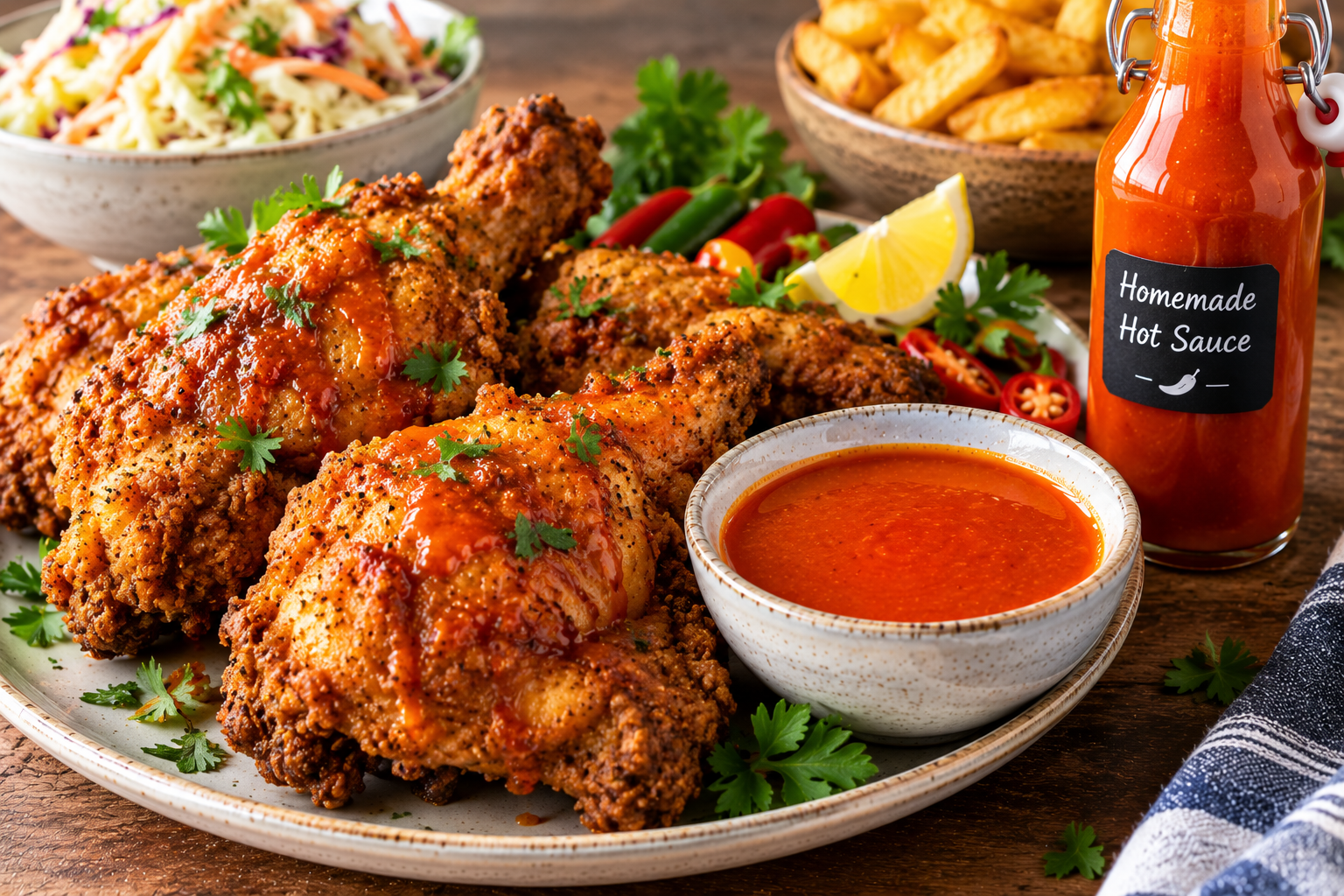
Homemade hot sauce is an easy way to add bold flavour and a little heat to your favourite meals. Made with fresh chilli peppers, garlic, vinegar and a few simple seasonings, this vibrant sauce delivers a delicious balance of spice, tanginess and savoury depth.
The secret to a good homemade hot sauce is choosing the right chillies for your preferred heat level. Jalapeños provide a milder flavour, while habaneros bring considerably more heat. A little sugar softens the sharpness of the vinegar, and blending the cooked ingredients creates a smooth, pourable sauce.
Drizzle it over tacos, eggs, burgers, grilled meats or roasted vegetables, or stir it into soups and marinades for an extra kick. This straightforward recipe is easy to customise, making it a useful condiment to keep in your refrigerator.
2 cups fresh chili peppers, such as jalapeños, habaneros or a mixture
1 cup white vinegar
2 cloves garlic
1 tsp salt
1 tbsp sugar (optional, balances heat)
½ cup water
Method:
Prepare the chillies:
Wash the chillies thoroughly and remove the stems.
For a milder sauce, remove the seeds and some of the inner membranes.
Wear food-safe gloves when handling particularly hot varieties, and avoid touching your eyes or face.
Combine the ingredients:
Place the chillies, garlic, vinegar, water, salt, and optional sugar in a medium saucepan.
Stir to combine.
Simmer until softened:
Bring the mixture to a gentle simmer over medium heat.
Reduce the heat and cook for 10–15 minutes, stirring occasionally, until the chillies have softened.
Keep the kitchen well ventilated, as cooking chillies can release irritating vapours.
Blend the sauce:
Remove the saucepan from the heat and allow the mixture to cool slightly.
Transfer it carefully to a blender and blend until smooth.
Follow your blender manufacturer’s instructions for blending warm liquids, and avoid sealing hot liquid in a blender that is not designed for it.
Adjust the consistency:
If the sauce is too thick, blend in a little water or vinegar.
For a smoother finish, strain it through a fine-mesh sieve.
Taste carefully and adjust the seasoning if needed.
Transfer and refrigerate:
Pour the cooled sauce into clean, heat-safe glass bottles or jars using a clean funnel.
Close the containers and refrigerate promptly.
For this homemade, untested recipe, use within 1–2 weeks for a conservative storage period, and discard it sooner if you notice mould, unusual odours, or other signs of spoilage.
This hot sauce is tangy, fiery, and versatile. 😊
A fiery, customizable condiment that balances heat, acidity, and flavor.
🌟 Key Highlights
Chili peppers: The foundation of heat and flavor; jalapeños give mild spice, habaneros bring intense heat.
Vinegar: Preserves the sauce and adds tangy brightness.
Garlic: Adds savory depth.
Salt and sugar: Balance sharpness and heat.
Water: Adjusts consistency.
Why You’ll Love This Homemade Hot Sauce
Easy to make: A handful of everyday ingredients creates a flavourful homemade condiment.
Customisable heat: Choose mild, medium or hotter chillies to suit your preference.
Fresh flavour: Garlic, vinegar and chillies create a bright, savoury combination.
Versatile: Use it with tacos, burgers, eggs, vegetables, soups and marinades.
Easy to adapt: Add fruit, herbs or spices to create a sauce with your own signature flavour.
Useful for meal preparation: Make a small batch ahead of time and keep it refrigerated for everyday use.
Tips for the Best Homemade Hot Sauce
Choose chillies carefully: Jalapeños are a good starting point for a milder sauce. Habaneros and bird’s eye chillies are considerably hotter, so use them cautiously.
Wear gloves: Chilli oils can irritate skin and eyes. Wash your hands, utensils and work surfaces thoroughly after preparation.
Ventilate your kitchen: Simmering hot chillies can release vapours that irritate the nose, throat and eyes.
Balance the flavours: Sugar is optional, but it can soften the sharpness of vinegar and the intensity of the chilli heat.
Blend carefully: Let the mixture cool slightly and follow your blender’s instructions for warm liquids to prevent splashes or pressure build-up.
Strain for a silky texture: Straining removes seeds and larger pieces, although it also reduces the final yield.
Keep everything clean: Use clean containers, utensils and bottles, and refrigerate the finished sauce promptly.
Do not rely on vinegar alone for preservation: The sauce has not been tested for shelf stability or acidity. Keep it refrigerated rather than storing it at room temperature.
Storage
Refrigerating: Transfer the cooled sauce to a clean, airtight container and refrigerate promptly at 4°C or below. Because this recipe has not been tested for preservation or acidity, use it within 1–2 weeks and keep it chilled throughout storage.
Freezing: For longer storage, freeze the sauce in small freezer-safe containers, leaving a little space for expansion. Thaw in the refrigerator and use a clean spoon when serving.
Important food-safety note: Do not store this homemade sauce in a cupboard or pantry. Filling bottles with hot sauce or using sterilised containers does not, by itself, make a recipe shelf-stable. A tested preservation recipe with verified acidity and processing instructions is needed for safe room-temperature storage.
Here are dishes and side dishes that pair beautifully with Homemade Hot Sauce:
🌮 Bold & Playful
Tacos: Beef, chicken, or veggie tacos with a drizzle of hot sauce.
Loaded Nachos: Cheese, beans, jalapeños, and a spicy kick.
Quesadillas: Gooey cheese folded in tortillas, balanced with heat.
Pickled Vegetables: Tangy crunch that complements chili depth.
🍞 Rustic & Hearty
Burgers: Beef, lentil, or black bean patties with spicy lift.
Grilled Cheese Sandwich: Melty comfort with a fiery edge.
Roasted Potatoes: Crispy wedges with hot sauce drizzle.
🍹 Drinks & Atmosphere
IPA Beer: Hoppy bitterness to balance spice.
Margarita: Citrusy cocktail that mirrors chili brightness.
Sparkling Water with Lime: Refreshing sip to cool the palate.
Here are some fun variations to experiment with for your Homemade Hot Sauce recipe:
Variations
🌶 Heat & Spice Variations
Smoky Chipotle Hot Sauce: Add chipotle peppers in adobo for a smoky depth.
Ghost Pepper Inferno: Use ghost peppers for extreme heat lovers.
Curry-Spiced Hot Sauce: Add curry powder and turmeric for an aromatic twist.
🍊 Sweet & Tangy Twists
Mango Hot Sauce: Blend in ripe mango for tropical sweetness.
Pineapple Chili Sauce: Add pineapple juice for a sweet-tart balance.
Citrus Burst Hot Sauce: Use orange or lime zest for bright acidity.
🌍 Global Fusion
Caribbean Jerk Hot Sauce: Add allspice, thyme, and a splash of rum.
Korean Gochujang Hot Sauce: Mix in gochujang paste for sweet-spicy depth.
Mexican Salsa Roja: Roast tomatoes and chilies before blending for smoky flavor.
South African Peri-Peri Sauce: Use bird’s eye chilies, lemon juice, and paprika for a local classic.
🍽 Serving Ideas
Wing Glaze: Toss fried or grilled wings for sticky heat.
Burger Spread: Mix into mayo for a fiery burger layer.
Taco Drizzle: Use as a finishing drizzle over tacos or burritos.
Marinade Magic: Combine with olive oil for grilling meats or tofu.
✨ This Homemade Hot Sauce is a fiery canvas—you can keep it classic or transform it into tropical, smoky, or global-inspired creations.
Final Thoughts
Homemade hot sauce is a simple way to bring extra personality to your cooking. Fresh chillies, garlic, and vinegar create a bright, punchy condiment that can be adjusted to suit everything from a gentle warmth to a much stronger chilli kick.
Keep a small bottle in the refrigerator and use it to liven up tacos, burgers, eggs, roasted vegetables, and more. Once you’ve mastered the basic recipe, experimenting with smoky, fruity or herb-infused variations is an easy way to discover your favourite combination.
Frequently Asked Questions
Which chillies are best for homemade hot sauce?
Jalapeños work well for a milder sauce, while habaneros deliver a much hotter, fruitier flavour. Bird’s eye chillies provide a sharp, intense heat. You can also combine varieties to create your preferred flavour profile.
Can I make hot sauce less spicy?
Yes. Use milder chillies and remove the seeds and inner membranes before cooking. You can also blend in a little more water or vinegar to dilute the heat, although this will change the consistency and flavour.
Why does my hot sauce taste too vinegary?
The vinegar may be especially noticeable when the sauce is freshly made. A small amount of sugar can help balance the sharpness. For future batches, adjust the balance of ingredients gradually rather than reducing the vinegar substantially, since acidity also affects food safety.
Do I need to strain homemade hot sauce?
No. Straining is optional. Leave the sauce unstrained for a thicker, more rustic texture, or strain it through a fine sieve for a smoother finish.
Can I use apple cider vinegar instead of white vinegar?
Yes, apple cider vinegar can be used for a slightly fruitier flavour. Keep in mind that changing ingredients can affect the final acidity, so the finished sauce should still be refrigerated and treated as a perishable homemade condiment.
Can I use this hot sauce as a marinade?
Yes. Mix a little into a marinade for chicken, fish, meat or tofu. If the sauce comes into contact with raw meat or fish, do not serve that portion directly as a dipping sauce. Use a fresh portion for serving.
Can I make homemade hot sauce without sugar?
Yes. Simply leave out the optional sugar. The sauce will taste sharper and may seem hotter because there is less sweetness to balance the chilli and vinegar.
Essential cookies enable basic functions and are necessary for the proper function of the website.
Name
Description
Duration
Cookie Preferences
This cookie is used to store the user's cookie consent preferences.
30 days
These cookies are needed for adding comments on this website.
Name
Description
Duration
comment_author
Used to track the user across multiple sessions.
Session
comment_author_email
Used to track the user across multiple sessions.
Session
comment_author_url
Used to track the user across multiple sessions.
Session
Google's current Sign in with Google client library. It renders the Google sign-in button, or the One Tap prompt, so visitors can log in to your site with their Google account. It replaces the older Google Sign-In platform library.
Set on your own domain by the Sign in with Google client library. Records whether the visitor has dismissed the One Tap sign-in prompt and for how long it should stay hidden, plus the time the library last loaded and a browsing session id used for the same purpose. Sites that pass a custom state_cookie_name will see that name instead.
180 days
g_csrf_token
Set on your own domain by the Sign in with Google client library and submitted together with the sign-in credential, so your site can confirm the sign-in came from its own page and not from a forged cross-site request.
5 minutes
Statistics cookies collect information anonymously. This information helps us understand how visitors use our website.
Google Analytics is a powerful tool that tracks and analyzes website traffic for informed marketing decisions.
Contains information related to marketing campaigns of the user. These are shared with Google AdWords / Google Ads when the Google Ads and Google Analytics accounts are linked together.
90 days
__utma
ID used to identify users and sessions
2 years after last activity
__utmt
Used to monitor number of Google Analytics server requests
10 minutes
__utmb
Used to distinguish new sessions and visits. This cookie is set when the GA.js javascript library is loaded and there is no existing __utmb cookie. The cookie is updated every time data is sent to the Google Analytics server.
30 minutes after last activity
__utmc
Used only with old Urchin versions of Google Analytics and not with GA.js. Was used to distinguish between new sessions and visits at the end of a session.
End of session (browser)
__utmz
Contains information about the traffic source or campaign that directed user to the website. The cookie is set when the GA.js javascript is loaded and updated when data is sent to the Google Anaytics server
6 months after last activity
__utmv
Contains custom information set by the web developer via the _setCustomVar method in Google Analytics. This cookie is updated every time new data is sent to the Google Analytics server.
2 years after last activity
__utmx
Used to determine whether a user is included in an A / B or Multivariate test.
18 months
_ga
ID used to identify users
2 years
_gali
Used by Google Analytics to determine which links on a page are being clicked
30 seconds
_ga_
ID used to identify users
2 years
_gid
ID used to identify users for 24 hours after last activity
24 hours
_gat
Used to monitor number of Google Analytics server requests when using Google Tag Manager
1 minute
Marketing cookies are used to follow visitors to websites. The intention is to show ads that are relevant and engaging to the individual user.
Google Ads is an online advertising platform that enables businesses to create targeted ads displayed on Google search results and partner sites.
Targeting cookie. Used to create a user profile and display relevant and personalised Google Ads to the user.
2 years
__Secure-1PSIDCC
Targeting cookie. Used to create a user profile and display relevant and personalised Google Ads to the user.
2 years
__Secure-3PAPISID
Profiles the interests of website visitors to serve relevant and personalised ads through retargeting.
2 years
AEC
AEC cookies ensure that requests within a browsing session are made by the user, and not by other sites. These cookies prevent malicious sites from acting on behalf of a user without that user's knowledge.
6 months
ADS_VISITOR_ID
Cookie required to use the options and on-site web services
2 months
__Secure-3PSIDCC
Targeting cookie. Used to create a user profile and display relevant and personalised Google Ads to the user.
2 years
__Secure-3PSIDTS
Targeting cookie. Used to create a user profile and display relevant and personalised Google Ads to the user.
2 years
__Secure-1PSIDTS
Targeting cookie. Used to create a user profile and display relevant and personalised Google Ads to the user.
2 years
__Secure-1PAPISID
Targeting cookie. Used to create a user profile and display relevant and personalised Google Ads to the user.
2 years
__Secure-3PSID
Targeting cookie. Used to profile the interests of website visitors and display relevant and personalised Google ads.
2 years
Conversion
Google uses cookies for advertising, including serving and rendering ads, personalizing ads (depending on your ad settings at g.co/adsettings), limiting the number of times an ad is shown to a user, muting ads you have chosen to stop seeing, and measuring the effectiveness of ads.
90 days
_gcl_aw
Google uses cookies for advertising, including serving and rendering ads, personalizing ads (depending on your ad settings at g.co/adsettings), limiting the number of times an ad is shown to a user, muting ads you have chosen to stop seeing, and measuring the effectiveness of ads.
90 Days
_gcl_gs
Google uses cookies for advertising, including serving and rendering ads, personalizing ads (depending on your ad settings at g.co/adsettings), limiting the number of times an ad is shown to a user, muting ads you have chosen to stop seeing, and measuring the effectiveness of ads.
90 Days
_gcl_gb
Google uses cookies for advertising, including serving and rendering ads, personalizing ads (depending on your ad settings at g.co/adsettings), limiting the number of times an ad is shown to a user, muting ads you have chosen to stop seeing, and measuring the effectiveness of ads.
90 Days
_gac_gb_
Google uses cookies for advertising, including serving and rendering ads, personalizing ads (depending on your ad settings at g.co/adsettings), limiting the number of times an ad is shown to a user, muting ads you have chosen to stop seeing, and measuring the effectiveness of ads.
90 Days
FPGCLGB
Google uses cookies for advertising, including serving and rendering ads, personalizing ads (depending on your ad settings at g.co/adsettings), limiting the number of times an ad is shown to a user, muting ads you have chosen to stop seeing, and measuring the effectiveness of ads.
90 Days
FPGCLAW
Google uses cookies for advertising, including serving and rendering ads, personalizing ads (depending on your ad settings at g.co/adsettings), limiting the number of times an ad is shown to a user, muting ads you have chosen to stop seeing, and measuring the effectiveness of ads.
90 Days
You can find more information in our Cookie Policy and .