Adopted by Nick
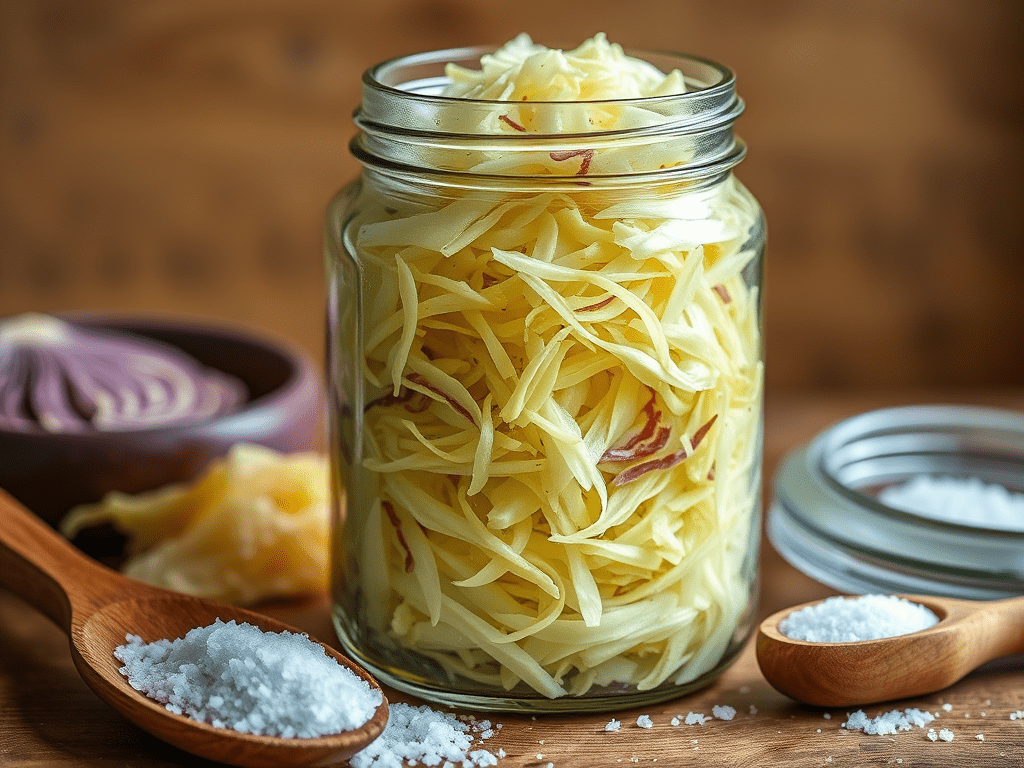
This timeless fermentation ritual transforms humble cabbage into a tangy, probiotic-rich powerhouse. With just two ingredients and a little patience, you’ll unlock layers of flavor and gut-friendly goodness. The process is beautifully simple: shred, salt, pack, and wait. Over the course of a few weeks, natural bacteria work their magic, creating a crisp, sour condiment that elevates everything from sandwiches to fritters.
Whether you’re embracing traditional caraway seeds or keeping it pure, this DIY kraut is a celebration of slow food and self-sufficiency. Ideal for small-batch makers, fermentation fans, or anyone curious about crafting their own pantry staples.
Homemade Sauerkraut
Recipe
Ingredients:
Method:
Prepare the cabbage:
Remove any damaged outer leaves.
Cut the cabbage in half, remove the core, and slice into thin strips (about ⅛ inch thick).
Salt and massage:
Place cabbage in a large bowl and sprinkle with salt.
Let it sit for 20 minutes to draw out moisture.
Then massage and squeeze the cabbage with your hands until it becomes limp and juicy.
Pack the jar:
Transfer the cabbage and its juices into your jar.
Press down firmly with a spoon or kraut pounder to eliminate air pockets and ensure the cabbage is submerged in its own brine.
Weigh it down:
Place a fermentation weight or a smaller jar on top of the cabbage to keep it submerged.
Cover with an airlock lid or a cloth secured with a rubber band.
Ferment:
Leave the jar at room temperature (ideally 65–75°F / 18–24°C) out of direct sunlight.
Fermentation takes at least 1 week , but 3–4 weeks yields deeper flavor.
Taste periodically to check sourness.
Store:
Once it reaches your desired tanginess, transfer the jar to the fridge.
It will keep for 6 months to 1 year .
Always keep the cabbage fully submerged to prevent mold. 😊
Homemade sauerkraut is a culinary powerhouse—tangy, crunchy, probiotic-rich, and incredibly versatile. Here’s how you can use it across different cooking contexts, from everyday meals to storytelling-driven dishes:
🍽️ Everyday Culinary Uses
Topping for sandwiches & wraps : Add to grilled cheese, Reubens, or veggie wraps for a bright, acidic crunch.Side for rich meats : Serve with sausages, pork chops, or brisket to cut through the fat and add zing.Mix into salads : Toss into potato salad, slaws, or grain bowls for texture and fermented flavor.Add to stir-fries : Stir in at the end for a tangy contrast to savory sauces.Scrambled eggs or omelets : Fold in for a savory breakfast twist.Soup enhancer : Stir into lentil, bean, or vegetable soups for depth and brightness.
🧑🍳 Creative & Storytelling-Driven Uses
Sauerkraut fritters : Like your smoky sweetcorn version—perfect for brunch boards or pitch dinners.Fermented taco topping : Use as a probiotic slaw on fish or veggie tacos.Savory pancakes or latkes : Mix into batter for a tangy twist.Pizza topping : Pair with mushrooms, caramelized onions, and a creamy base.Stuffed pastry filling : Combine with cheese or mushrooms in empanadas or hand pies.
🌱 Health & Education Advocacy
Gut-friendly snack : Serve with crackers and hummus to promote digestive health.Fermentation demo : Use in workshops to teach kids or families about microbiomes and food science.Budget-friendly nutrition : Highlight as a low-cost way to add vitamins and probiotics to meals.
Here’s a fresh set of dishes and side dishes that pair beautifully with this homemade sauerkraut —whether you’re serving it as a star ingredient or a tangy accent:
🥘 Hearty Mains
These anchor the meal and let sauerkraut shine as a bold contrast:
Grilled sausages or bratwurst : A classic pairing—serve with mustard and crusty bread.Potato pierogi or dumplings : Pan-fried and topped with caramelized onions and a spoonful of kraut.Roast chicken or pork shoulder : Rich, savory meats balance the kraut’s acidity.Mushroom stroganoff or lentil loaf : For a vegetarian main with earthy depth.
🥔 Starchy Sides
To soak up the brine and round out the plate:
Buttered new potatoes with dill : Simple, fresh, and herbaceous.Potato pancakes (latkes or kartoffelpuffer) : Crisp and golden, perfect with kraut and sour cream.Spaetzle or egg noodles : Soft, chewy, and ideal for soaking up juices.
🥗 Fresh & Crunchy
To add brightness and texture:
Cucumber salad with vinegar and dill : Cool and refreshing.Shaved carrot and apple slaw : Sweet, crisp, and colorful.Radish and arugula salad : Peppery greens with a lemony vinaigrette.
🍞 Breads & Spreads
For grazing boards or casual meals:
Rye bread or sourdough slices : Tangy breads that echo the kraut’s flavor.Soft pretzels with mustard : A fun, snacky pairing.Herbed cream cheese or whipped feta : Smooth spreads to contrast the crunch.
🍳 Brunchy Additions
If you’re serving sauerkraut with your fritters or at brunch:
Poached or soft-boiled eggs : Rich yolk + tangy kraut = magic.Avocado toast with kraut topping : Creamy, crunchy, and probiotic-packed.Savory yogurt bowls : Layer kraut with grains, herbs, and a drizzle of olive oil.
Here are some fun variations to experiment with for your Homemade Sauerkraut recipe:
Variations 🧪 Flavor Variations
Spicy Kraut : Add sliced chili peppers, ginger, or garlic during packing for a fiery kick.Golden Kraut : Mix in turmeric and mustard seeds for anti-inflammatory benefits and a vibrant hue.Apple Kraut : Add thin slices of green apple for a sweet-tart contrast—great for kids or cheese boards.Beet Kraut : Layer in shredded beetroot for a magenta color and earthy sweetness.
🧒 Kid-Friendly Adaptations
Rainbow Kraut : Use red cabbage, carrots, and golden beets for a colorful, fun-to-watch fermentation.Naming Game : Let kids name their kraut batch and decorate the jar label—turns it into a science-meets-art project.Mini Jars : Use small jars for individual portions they can monitor and taste-test over time.
🧠 Educational or Advocacy Angles
Science of Fermentation : Highlight the microbial magic—great for school demos or grant pitches focused on nutrition or STEM.Zero-Waste Kitchen : Use leftover cabbage cores and outer leaves in veggie broth or compost—tie into sustainability messaging.Cultural Storytelling : Frame sauerkraut as part of global fermentation traditions—German, Korean (kimchi), African (umfino), etc.
🧂 Equipment Hacks
No Pounder? Use a clean rolling pin or the back of a ladle.No Weight? Fill a zip-top bag with water and seal it tightly.No Airlock Lid? A coffee filter and rubber band work in a pinch.
Tags
Select Tag
2-Minute Instant Noodles
adaptable protein
aioli drizzle
air fryer basket
airy crumb
aleppo pepper
alfredo sauce
All-Purpose Flour
All-Spice
allium
allspice
Almond Essence
Almonds
amber tones
antioxidant-rich
antipasto platter
Appetizer
appetizer tray
Apple
Apple Cider Vinegar
apple fan slices
Apple Jelly
Apple Juice
apple slaw variation
apple slices
apples
Apricot
Apricot Jam
apricots
Arborio Rice
Aromat
Aromat seasoning
aromatic
aromatic herbs
aromatic rice
arranged on seafood platters
arranged upright
arranged with dried fruit
arrowroot powder
artichoke hearts
artisan
artisan bread basket
artisan loaf
artisan-style
artisanal gift jar
artisanal label
arugula
Asian-inspired
Asparagus
autumn dish
autumn palette
autumn setting
autumn side dish
autumn tones
autumn vibes
Avocado
avocado oil
avocado slices
avocado topping
avocados
baby bok choy
baby corn
baby potatoes
baby spinach
backyard barbecue
Bacon
bacon and cheese
bacon and feta
bacon bits
bacon broth
bacon egg muffin
bacon fat
bacon-studded interior
bacon-wrapped
baguette
Baked
Baked Beans
baked brie
baked dish
baked enchiladas
Baking
baking dish
Baking Powder
baking sheet
Baking Soda
balsamic glaze
Balsamic Vinegar
bamboo mat background
bamboo skewers
Banana
barbecue platter
Basil
Basil Leaves
basmati rice
basting brush
bay leaf
Bay Leaves
BBQ favorite
BBQ Sauce
BBQ Spice
bean sprouts
Beans
Beef
Beef Broth
Beef Drippings
Beef Rib
Beef Sirloin
beef skirt steak
Beef Stock
beef tongue
Beer
beer marinade
Beet
beet hummus accent
Bell Pepper
bell peppers
Berries
berry
berry garnish
Bicarbonate of Soda
Biltong
biltong potjie
biltong scrambled eggs
biscuits
Bisto
bite-size format
bite-sized
bite-sized format
bite-sized rolls
bite-sized savory
bite-sized squares
Bites
Black Beans
black olives
Black Pepper
black peppercorns
Blue Cheese
Blue Cheese Dressing
blueberries
Blueberry
blueberry juice
Bobotie
boiled eggs
boiling milk
boiling water
bold flavor
bold flavors
bowl pour
bowl presentation
bowl swirl
braai side dish
braai-friendly
braised red cabbage
Brandy
brandy-soaked
Bratwurst Sausages
Bread
bread basket
bread flour
Breadcrumbs
Breakfast
breakfast bite
breakfast board
breakfast side
breakfast spread
breakfast styling
breakfast table
breakfast topping
brie cheese
bright flavor
bright green
bright green contrast
bright green pods
bright lighting
brioche
Broccoli
broccolini
broiled finish
broiled fish
broken into chunky pieces
broth drizzle
brown mushrooms
Brown Onion Soup
brown rice
Brown Sugar
Brown Vinegar
Brownies
Brunch
brunch board
brunch favorite
brunch plate
brunch platter
brunch spread
brunch table
brunch table styling
brunch tray
brunch-ready
brushed on roasted vegetables
brushed sheen
brushed tops
Brussel Sprout
Brussels sprouts
bubbling cheese
bubbly cheese
bubbly cheese top
bubbly texture
bubbly top
budget-friendly
Buffalo Sauce
burger spread
burger topping
Butter
butter block
butter envelope
Butter Lettuce
butter paper
butter-slathered
buttered rice
Buttermilk
butternut squash
buttery bread
buttery finish
buttery noodles
Cabbage
Cajun Seasoning
Cake
Cake Flour
cake wheat flour
Calabrian Chili
canapé format
canapé tray
candied citrus peel
candied fruit
Candied Peel
canned corn
cannellini beans
canola oil
Capers
Caprese salad
Caramel Essence
caramel ribbon
Caramelized
caramelized edges
caramelized glaze
caramelized leek filling
caramelized top
Caraway Seeds
cardamom
Caribbean spice blend
Carrot
carrot pineapple salad
Carrots
carved platter
Cashew Nuts
casserole-style
cast iron pan plating
cast iron potjie
cast iron sear
Castor Sugar
casual bake
casual brunch setup
casual dining
casual elegance
casual entertaining
casual plating
casual refreshment
casual serve
casual serving
Cauliflower
cauliflower florets
Cayenne Pepper
celebratory meal
celebratory treat
Celery
Celery stalk
ceramic backdrop
ceramic bowl
ceramic dish
ceramic dishware
ceramic pot
ceramic ramekin
Chai Seed
challah
charcuterie board
charred broccolini
charred corn salsa
charred edges
charred tips
charred tortilla
charred zucchini
Cheddar Cheese
cheddar toast
Cheese
cheese board pairing
cheese garnish
cheese shavings
cheese-melted
cheesy
cheesy bacon fries
cheesy garlic bread
cheesy garlic sauce
cheesy interior
cheesy snack
cheesy top layer
cheesy topping
cheesy tuna dish
Cherries
Cherry
cherry tomato
Cherry Tomatoes
chewy center with crisp edges
chewy interior
Chicken
chicken bouillon
chicken breast
chicken breasts
Chicken Broth
chicken legs
Chicken Spice
Chicken Stock
chicken thigh
chicken thighs
Chicken Wings
chickpea flour
Chickpeas
Chili
Chili Flakes
chili garnish
chili paste
Chili Powder
chili sauce
chili-lime butter
chili-lime dressing
chilled and creamy
chilled bowl
chilled ceramic dish
chilled dough
chilled glass
chilled glass bowls
chilled option
chilled plating
chilled platter
chilled prep
chilled ramekin
chilled salad
chilled serve
Chinese Oyster Sauce
chip-crusted
Chipotle Chiles
Chips
Chives
Chocolate
Chocolate Chips
chocolate drizzle
Chocolate Sauce
chocolate smear
chopped dates
chopped nuts
chopped peanuts
chopstick-friendly
chopsticks
chopsticks nearby
Christmas baking
chunky salsa
Chutney
cider gravy
cider vinegar
Cilantro
cilantro garnish
Cinnamon
Cinnamon rolls
Cinnamon Stick
cinnamon sugar
Citrus
citrus accent
citrus curls
citrus drizzle
citrus garnish
citrus glaze
citrus gloss
citrus zest accent
citrus-garlic broth
citrus-stuffed
citrusy
citrusy heat
citrusy marinade
classic Caesar salad
classic comfort
classic flavor
classic French
classic serve
classic technique
clean minimal aesthetic
clean slice
clean white plate
clear glass jar
close-up detail
close-up of bacon bits
close-up shot
close-up texture
Clove
Cloves
Coca-Cola
Cocktail
cocktail stirrer
cocoa dusting
Cocoa Powder
Coconut
coconut cream
coconut flakes
Coconut Milk
coconut rice
coconut topping
Coffee
Coffee Liqueur
Coke
Colby Jack cheese
cold salad
cold side
cold side dish
cold starter
cold water
Collard Greens
colorful
colorful and chunky
colorful bites
colorful contrast
colorful cross-section
colorful interior
colorful medley
colorful mix
colorful plating
colorful platter
colorful side dish
colorful stack
colorful vegetable medley
colorful vegetables
Comfort
comfort bake
comfort bowl
Comfort Food
comfort food setting
comfort food style
comfort food upgrade
comfort side
Condensed Milk
Condiment
condiment styling
Confectioner’s Sugar
contrast drizzle
contrast layers
contrast plating
cooked couscous
cooked rice
cookie cutter shapes
cooking
cooking oil
cooking spray
CookingBasics
CookingForBeginners
CookingTips
cool tones
Cool Whip
cooling
cooling rack shot
Coriander
coriander leaves
Corn
corn cobs
Corn Dog
Corn Oil
Corn Starch
Corn Syrup
corn tortillas
cornflour
Cornmeal
Cornstarch
Cotija Cheese
Cottage Cheese
Cotton Candy
Couscous
cozy appetizer plate
cozy breakfast setting
cozy brunch setting
cozy classic
cozy comfort food
cozy dessert
cozy dinner setting
cozy family-style platter
cozy family-style serving
cozy lighting
cozy meal
cozy plating
cozy side
cozy table setting
cozy tones
cozy winter comfort dish
Crab
crab meat
cracked pepper finish
cracked pepper garnish
Crackers
Cranberry
Cranberry Juice
Cream
Cream Cheese
cream cheese base
Cream of Tartar
Cream-style Corn
creamy
creamy and crunchy
creamy avocado
creamy baked potatoes
creamy cauliflower salad
creamy coating
creamy condiment jar
creamy custard
creamy dressing
creamy drizzle
creamy eggs
creamy filling
creamy interior
creamy layers
creamy rice
creamy rice dish
creamy rice layers
creamy sauce
creamy sauce coating
creamy side dish
creamy swirl
creamy swirl presentation
creamy texture
CreativeCooking
Creole Spice
crisp edge
crisp edges
crisp greens
crisp skin
crisp texture
crisp tips
crispy
crispy bacon
crispy bacon bits
crispy bacon topping
crispy baked wings
crispy capers
crispy crackling
crispy edges
crispy hash browns
crispy potato salad
crispy potatoes
crispy skin
crispy snack
crispy texture
cross-section reveal
cross-section view
crowd-pleaser
crumbly texture
crunchy layers
crunchy salad
crunchy side
crunchy side dish
crunchy texture
crunchy textures
crunchy topping for cakes
crushed peanuts
Crustless
crustless tuna pie
crusty bread side
cubed cheese
Cucumber
Cumin
Cumin Seeds
Curry
curry companion
curry powder
Custard
customizable toppings
cut into squares
dairy blend
dark chocolate
dark rum
dark soy sauce
day-old bread
deep bowl
deep dish
deep indigo hue
deep red hue
deep soup bowl
deep-fried
desiccated coconut
Dessert
dessert drizzle
dessert duo
dessert garnish
dessert plate accent
dessert platter
dessert topping
desserts
diced bacon
diced tomatoes
digestive biscuits
Dijon
Dijon Mustard
Dill
Dill Pickle
diner-style
Dinner
dinner party-friendly
dip for churros
dip sauce
dip-ready
dipping sauce
dipping sauce friendly
dipping sauce pairing
dipping sauce platter
dipping sauce side
dipping side for chicken or veggies
dipping-friendly
dipping-ready
displayed in glass jars
displayed on parchment-lined trays
ditalini pasta
DIY pantry
dollop of yogurt
dollop on jam
dough preparation
dried basil
dried cherries
dried cranberries
dried dill
dried oregano
dried parsley
dried rosemary
dried thyme
drinks
drizzle finish
drizzle garnish
drizzle of caramel or chocolate
drizzle of cream
drizzle of honey
drizzle of tahini or yogurt sauce
drizzle of vinaigrette
drizzle-ready
drizzled with syrup
dry cider
dry mango powder
dry mustard
Dry White Wine
dry yeast
duck
dusted with cocoa
dusted with powdered sugar
dusting of powdered sugar
Dutch oven baked
earthy
easy elegance
easy greens
easy prep
EasyRecipes
Edamame
edamame pods
edible flower touch
edible flowers
edible petals
Egg
Egg Whites
Egg Yolk
egg yolks
Eggplant
eggs
elbow pasta
elegant
elegant afternoon tea platter
elegant café-style plating
elegant comfort
elegant dessert cups
elegant dessert garnish
elegant dessert plate
elegant dessert platter
elegant dinner
elegant dinner setting
elegant dinner side
elegant garnish drizzle
elegant plating
elegant rim
elegant roast
elegant seafood
elegant serve
elegant side
elegant side dish
elegant simplicity
elegant snack
elegant starter
elegant tea-time platter
elegant truffle paper cups
elegant vegetable plate
elegant vegetarian
enamel dish
English breakfast setting
Entertaining
erved in a carafe
Espresso
espresso bean garnish
Espresso Beans
espresso powder
European classic
evaporated milk
extra virgin olive oil
extra-firm tofu
family dinner
family meal
family-style
family-style serving
family-style summer feast
family-style table setting
farmhouse backdrop
fast finish
Fat
Fennel
fennel fronds
fermentation crock
fermentation timeline
Fermented Milk
fermented sauce
festive centerpiece
festive condiment
festive flavor
festive loaf
festive main course
festive main dish
festive meal
festive serving
festive side option
festive spread
festive summer table setting
festive sweet platter
festive table
festive table centerpiece
festive table setting
festive tin
festive tray
festive treat
Feta
Feta Cheese
fettuccine
figs
filling-ready
filtered water
finger food
fire-side serving
firm tofu
fish pairing
Fish Sauce
flaked coconut
flaky layers
flaky salt
flaky texture
FlavorBoosters
flax egg
Flaxseed
float test demo
floral notes
Flour
flour tortillas
fluffy crumb
fluffy grains
fluffy mashed potatoes
fluffy pudding cups
fluffy rice texture
fluffy texture
foil-roasted
foil-wrapped
folded omelet
Food
food coloring dye
FoodLovers
fork beside serving
fork fluffing
fork fluffing moment
fork swirl detail
fork-fluffed interior
fork-fluffed texture
fork-tender
fragrant aroma
Frankfurters
freezer-friendly
French baguette
French bread
French loaf
French Onion Soup
French Onion Soup Powder
fresh
fresh and vibrant
fresh basil garnish
fresh coriander
Fresh Cream
fresh dill
fresh fruit
fresh garnish
fresh ginger
fresh green salad
fresh greens
fresh herb accent
fresh herb garnish
fresh herb sprinkle
fresh herbs
fresh herbs garnish
fresh mint
fresh mozzarella
fresh parsley garnish
fresh parsley sprinkle
fresh pour
fresh salsa
fresh tones
fresh vegetable sticks
fried shallots
fries
frosted bowl
frozen edamame
frozen indulgence
Fruit
fruit garnish
Fruitcake
fruitcake mix
Fruits
fruity layers
fudgy squares
game night favorite
game-day food
garam masala
garden summer dish
garden-fresh
Garlic
garlic butter
garlic butter sauce
garlic crisp topping
garlic oil
garlic Parmesan wings
garlic parsley rice
Garlic Powder
garlic rosemary crust
garlic slivers
garlic-forward
garlic-thyme crust
garlicky spinach
garnish contrast
garnish with coriander
garnish with sprouts
garnished
garnished top
garnished with cilantro
garnished with dill sprigs
garnished with fresh berries
garnished with fresh coriander
garnished with fresh herbs
garnished with fresh strawberries
garnished with green onions
garnished with nuts
garnished with parsley
garnished with rosemary sprigs
garnished with sesame seeds
Gelatin
German egg noodles
German soup
German-inspired
ghee
giftable jar
gifting format
Ginger
ginger-garlic paste
glace cherries
glass bowl
glass bowls or ramekins
glass jar
glass jar close-up
glass jar fermentation
glazed cherries
glazed chicken
glazed fillets
glazed ham
glazed poultry
glazed top
glossy
glossy butter coating
glossy finish
glossy marinade coating
glossy red coating
glossy texture
glossy top layer
glucose syrup
gluten-free
gluten-free optional
goat cheese
golden
golden amber hue
golden blistered surface
golden broth
golden brown
golden char
golden cloves
golden color
golden crisp
golden crisp edges
golden crisp exterior
golden crispy bites
golden crust
golden cubes
golden curry
golden drizzle
golden edges
golden finish
golden flakes
golden garlic slices
golden glaze
golden halloumi
golden honeycomb shards
golden hue
golden hue highlight
golden loaf
golden mozzarella crust
golden mushrooms
golden pancetta bits
golden pastry
golden pastry shells
golden patties
golden roast
golden roux
golden scones
golden sear
golden shallots
golden skin
golden strands
golden strips
golden surface
Golden Syrup
golden tones
golden top
golden topping
golden tops
golden-brown
golden-browned
gooey cheese
gooey chocolate squares
grain bowl
Granulated Sugar
Grapes
grated Parmesan topping
Greek yogurt
green apple
Green Beans
green cabbage
green chili
green chilies
green chilli
green color palette
Green Onion
green papaya
Green Peas
Green Pepper
Grenadine
grill marks
grilled
grilled meat
grilled mushrooms
grilled ribs
grilled shrimp
grilled vegetables
Ground Beef
ground chicken
ground cinnamon
ground cloves
ground cumin
Ground Meat
ground pork
grouped by color
Gruyère Cheese
guacamole
Half and Half
half-and-half
halloumi
halved avocados
halved carrots
halved eggs
halved for display
Ham
hand-held format
hand-torn texture
handheld
handheld bites
Hazelnuts
health
Healthy
healthy main dish
healthy salad
healthy side
healthy side dish
hearty
hearty and wholesome
hearty comfort food
hearty roast
hearty soup
hearty texture
Heavy Cream
herb accent
herb flecks
herb garnish
herb garnish option
herb gremolata
herb sprinkle
herb-crusted
herb-forward
herb-garnished
herb-infused
herb-seasoned
herb-stuffed
herbaceous aroma
herbaceous finish
herbed side dish
Herbs
herby butter
herby garnish
heritage comfort dish
heritage comfort food
heritage dish
heritage style
high-fat cream
Himalayan sea salt
hoisin sauce
holiday appetizer
holiday centerpiece
holiday dessert
holiday favorite
holiday ham
holiday side
holiday spread
holiday table
HomeCooking
homemade bread prep
homemade croutons
homemade pasta
homemade sauce
homestead vibe
homestyle serving
Honey
Honey Mustard
Honeycomb
Hot Sauce
Ice
Ice Cream
ice cream dessert
ice cream pairing
ice cream scoop
ice water
Icing Sugar
Indian flatbread
Indian-inspired
individual cups
individual servings
indulgent
indulgent look
indulgent party platter
ingredient-focused
IngredientSubstitutions
instant yeast
Italian bread
Italian classic
Italian herbs
Italian Seasoning
Italian side dish
Italian-inspired
jalapeño
Jalapeño Relish
Jalapeños
jam glaze
jammy texture
Japanese mayo
jarred
jasmine rice
Jelly
jerk chicken
jerk pork
juicy poached texture
kale
Ketchup
ketchup drizzle
Keto
kid-friendly
kidney beans
Kips
Kips meatballs
KitchenConversions
Kiwi
kosher salt
labeled for gifting
ladle pour
ladle presentation
ladled presentation
Ladyfinger Biscuit
Lamb
Lamb Roast
laminated layers
large potatoes
lasagna sheets
layered
layered bake
layered base
layered casserole
layered dessert
layered fruit
layered fruit parfait style
layered fruit tones
layered greens
layered in glass jars
layered ingredients
layered lasagna
layered plating
layered pour
layered texture
layered textures
layered treat
layered with rice paper
layering technique
leek
Leeks
Lemon
lemon accent
lemon butter sauce
lemon curls
lemon garlic roast
lemon garnish
Lemon Juice
Lemon Leaves
lemon twist
lemon vinaigrette
lemon wedge
lemon wedge garnish
lemon wedges
Lemon Zest
lemon zest finish
lemon zest sprinkle
lemon-accented
Lemon-Lime
lemon-thyme butter
lemony greens
lemony shrimp
lemony side dish
lentil stew
lentils
Lettuce
lettuce bed
lettuce cup
lettuce leaves
light and airy pudding texture
light and airy texture
light and bright
light and crisp
light and fresh
light and savory
light and zesty
light braai side
light salad
lightly sweet
Lime
lime garnish
Lime Juice
lime wedge garnish
Lime Wedges
lime zest
LindiesHiddenDelight
linen napkin
linen napkin backdrop
linguine
Linsensuppe
Liver
loaded fries
loaded nachos
loaf pan
Lobster
Low-Carb
lukewarm water
Lunch
Macaroni
Main Dish
Maize Meal
make-ahead slaw
mango
mango batons
maple syrup
maraschino cherries
Margarine
marinara sauce
Marjoram
Marshmallow
Masala
Mascarpone Cheese
mashed potato
mashed potato pairing
mashed potatoes
mason jar ferment
mason jar storage
Mayonnaise
MealPlanning
Meat
meat extract
Meat Stock
Meatballs
Mediterranean
Melkkos
melted butter
melted butter finish
melted cheese topping
melty
melty cheese
Mexican
Mexican condiment
Mexican potatoes
Mexican-inspired
mezze platter
microgreen accent
microgreen finish
microgreen garnish
microgreens
microgreens topping
Middle Eastern
Milk
Milk Powder
minced garlic
Mini
mini corn dogs
mini tartlets
Miniature Marshmallows
minimal plating
minimal styling
minimalist plate
minimalist plating
minimalist style
minimalist styling
Mint
mint garnish
mint sprig
Miso Paste
miso-glazed salmon
Mixed Dried Herbs
mixed greens
mixed nuts
mixed olives
Mixed Vegetables
modern plating
modern vegan plating
moist cornbread
Molasses
Monterey Jack cheese
moody lighting
mortar and pestle prep
mozzarella
Mozzarella Cheese
Mozzarella Chesse
Muffin
muffin tin
Mushroom
mushroom sauce
Mushroom Soup
mushroom soup powder
mushrooms
Mussel
Mustard
mustard glaze
mustard greens
mustard powder
mustard seeds
naan bread
natural light
natural lighting
natural look
natural peanut butter
natural pectin
natural sweetener
natural yeast culture
naturally leavened
neatly rolled
neutral backdrop
neutral linen backdrop
neutral oil
neutral tones
nigella seeds
no additives
no refined sugar
no-bake
no-cook
no-cook recipe
non-ultra-pasteurized cream
Noodles
nostalgic family-style serving
nostalgic flavor
nostalgic heritage sweet
nostalgic heritage sweet with fruity twist
Nougat
Nut
Nut Brown Ale
nut crunch
nut sprinkle
Nutmeg
nutrition
Nuts
nutty
nutty accent
nutty crunch
nutty topping
oat flour
Oat Milk
Oats
Oaxaca cheese
Oil
oil spray
oil-marinated
Olive Oil
olive oil drizzle
olive wood board
Olives
Omelet
one-pan meal
one-pot meal
one-pot recipe
Onion
Onion Powder
onions
open-face format
optional spice
Orange
Orange Juice
Orange Peel
orange zest
Oregano
outdoor barbecue setting
outdoor dining
outdoor setting
oven roasted
oven-baked
oven-baked texture
oven-roasted
oven-to-table
oven-to-table dish
oven-to-table serving
ovenproof dish
overhead bowl
overhead plating
overhead shot
overhead view
Oxtail
oyster sauce
paired with breakfast spreads
paired with coffee
paired with coffee or milk
paired with fresh salad
paired with grilled meats
paired with honey
paired with rice or flatbread
paired with roasted meats
paired with tea or coffee
pairing essential
pale hue
palm sugar
pan jus
pan-seared
Pancake
pancetta
paneer
panko breadcrumbs
pantry meal
pantry staple
Pap
Paprika
parchment backdrop
parchment base
parchment liners
parchment setup
parchment-lined tray
parmesan
Parmesan Cheese
Parsley
parsley sprinkle
party appetizer
party bites
party dessert
party platter
party snack
party snack tray
party tray
Passion Fruit
Pasta
pasta topping
pasta water
pastel backdrop
pastel ceramic dish
pastel tones
Pastry
patty stack
pea salad
Peach
Peach Schnapps
Peanut Butter
peanut oil
peanuts
Pear
pears
Peas
Pecan Nuts
pecans
Pecorino Romano
Peppadew
Pepper
Pepper Flakes
Peppercorns
Phutu
pickled garnish
pickled onion garnish
pickled red onions
pickled shallots
picnic classic
picnic favorite
picnic-ready
pico de gallo
Pie
pine nuts
Pineapple
Pineapple Juice
Pink Sugar
pistachios
pita wrap
plain flour
plain yogurt
plant milk
plant-based
plant-based cream
plant-based milk
plant-based mince
plant-based option
plant-based side
plated
plated accent
plated drizzle
plated fillet
plated freshness
plated greens
plated main
plated starter
plated symmetry
plated wedge
plated with autumn leaves
plated with citrus wedges
plated with edible flowers
plated with greens
platter style
playful plating
poke bowl drizzle
Polenta
Pomegranate Juice
Pomegranate Molasses
Pomegranate Seeds
poolish
Popcorn
Pork
Pork Belly
Pork Blade
Pork Chops
Pork Loin
Pork Ribs
Pork Shoulder
Portobello mushrooms
Potato
potato gnocchi
potatoes
potluck platter
pourable drizzle
poured into coffee
Powdered Sugar
powdered sugar coating
Prawn
prawn risotto
prawns
prep-friendly
prepared horseradish
preserved ginger
Pretzels
PrintAndShareRecipes
probiotic showcase
prosciutto
protein breakfast
protein centerpiece
protein pairing
protein-rich
Puff Pastry
puffed finish
puffed potato bake
Pumpkin
Pumpkin Seed
Quick & Easy
quick and easy
Quick Bread
quick pickles
quick prep
quick sauce
quick vegetable
Quinoa
radish
Radishes
raisin
Raisins
ramekin
ramekin serving
Ranch Dressing
Raspberries
raw dip
raw grated potato
Recipe
RecipeIdeas
recipes
RecipeVariations
red apple
red apples
red bell pepper
red cabbage
red cabbage slaw
red chili
red chili flakes
red chili powder
red chilies
red food coloring
red kidney beans
Red Onion
Red Pepper Flakes
Red Pimento Pepper
Red Wine
Red Wine Vinegar
refined plating
refrigerator pickles
restaurant-style
retro bake
retro charm
retro classic
retro comfort food
retro favorite
retro salad
retro side dish
retro snack
retro style
retro styling
ribeye steak
Ribs
Rice
rice accompaniment
rice bowl
rice flour
rice krispies cereal
rice noodles
rice paper
rice vermicelli
Rice Vinegar
rich & sharp
rich brown hue
rich flavor
rich green color
rich texture
ricotta
Ricotta Cheese
ricotta-thyme filling
rigatoni
ripe produce
ripe tomatoes
Risoni
Risotto
roast chicken
roast duck
roast lamb
roast pork
roasted
roasted peanuts
roasted pork ribs
roasted skin
roasted tomato sauce
roasted vegetables
rolled oats
romaine lettuce
root vegetable
Rosemary
rosemary-garlic butter
rosewater
roux
Rusk
russet potatoes
Russian Sausages
rustic
rustic baking dish
rustic board
rustic bowl
rustic bowl presentation
rustic bread side
rustic breakfast tray
rustic candy jar
rustic ceramic dish
rustic comfort food
rustic dessert plate
rustic dish
rustic elegance
rustic enamel mug
rustic folds
rustic glass bowl
rustic grill platter
rustic jar presentation
rustic jar styling
rustic kitchen setting
rustic kitchen setup
rustic ladle
rustic loaf
rustic muffin tin
rustic paper liners
rustic plate
rustic plating
rustic platter
rustic round
rustic saucepan
rustic scoop
rustic serve
rustic serving bowl
rustic setup
rustic side dish
rustic skillet
rustic slice
rustic spoon
rustic stack
rustic starter
rustic stew bowl
rustic strips
rustic style
rustic styling
rustic table
rustic tea tray
rustic texture
rustic toast styling
rustic tray
rustic wood background
rustic wood surface
rustic wood table
rustic wooden board
rye flour
Saffron
sage
Salad
salad booster
salad bowl
salad drizzle
Salad Oil
salad pairing
salad topper
salad topping
Salmon
salmon fillets
salsa
salsa-filled cavity
Salt
salt water
salty crunch
sambal oelek
sandwich base
sandwich spread
sandwich topper
Sauce
sauce drizzle
sauce pour
sauce swirl
sauced broccoli
saucy plating
sauerkraut
sausage and lentils
sautéed greens
savory
savory bake base
savory breakfast
savory garnish
savory meatballs
savory muffin
savory pie
savory preserve styling
savory scramble
savory side dish
savory simplicity
savory starter
savory-sweet
Scone
scone pairing
scoopable serving
scored top
scotch bonnet
Sea Salt
sea scallops
seafood main
seafood pasta
seared scallops
seared shrimp
seared steak
seasonal preserve
seasonal styling
seasonal tones
Seasoning
Seasoning Blend
Self-Raising Flour
Self-Rising Flour
served chilled
served hot
served in a rustic bowl
served in lettuce cups
served in scallop shells
served on lettuce leaves
served on sticks
served with butter
served with butter topping
served with chutney
served with chutney on the side
served with coffee or tea
served with dipping sauce
served with fresh salad
served with jam and cream
served with olive oil
served with roast
served with tortilla chips
sesame garnish
Sesame Oil
Sesame Seed
sesame seeds
shallot
Shallots
shareable
sharp cheddar cheese
shaved texture
Sherry
shredded cheese
shredded chicken
shredded coconut
shrimp
shrimp scampi
Side Dish
side dish elegance
side dish styling
side ramekin
SideDishIdeas
silky gravy
Simba cheese & onion chips
simmered curry pot
simple elegance
simple gourmet
simple plating
single-layer roast
sirloin steak
sizzling kebabs hot off the grill
Skewer
skewered apples
skewers stacked on wooden board
skillet crisp
skillet finish
skillet naan
skillet presentation
skillet serve
skillet shot
skillet-charred edges
skillet-cooked
skillet-fried
skillet-seared
skillet-served
skillet-to-table
skillet-to-table serving
sliced
sliced eggs
sliced loaf
sliced on wooden board
slow-cooked
slow-cooked meat
slow-cooked texture
slow-simmered
small bites
small bowl
small bowl or plate
small bowl serving
small dipping bowl
small plate
small ramekin
smoked paprika
smoked paprika infusion
smoky
smoky backdrop
smoky elegance
smoky finish
smoky flavor
smoky marinade
smoky rub
smooth finish
smoothie swirl
Snack
snack board
snackable
snackable format
snake beans
snap peas
soft and chewy
soft interior
soft natural light
soft peaks
soft pliability
soft roti
soft texture
soft white finish
softened butter
Soup
soup side
soup swirl
Sour Cream
sourdough starter
South African classic
South African flatbread
South African snack
South African twist
SouthAfricanCuisine
southern comfort
Soy Sauce
spaetzle
Spagetti
spaghetti
Spice
spiced chutney
Spicy
spicy and sweet
spicy condiment
spicy kick
spicy main dish
spicy orange hue
spicy skewers
spicy vegetarian dish
Spinach
spinach tortillas
spiral-cut ham
split open presentation
Split Peas
Sponge Cake
spoon beside serving
spoon dip
spoon drizzle
spoon drizzle detail
spoon drizzle of garlic butter
spoon in frame
spoon scoop
spoon swirl
spooned onto toast points
Spray & Cook
spread on sandwiches
spreadable
Spring Onion
spring onions
spring recipe
spring salad
spring table setting
spring vegetable
sprinkle topping
sprinkled over ice cream
sprinkled Parmesan finish
sprinkled with caraway seeds
sprinkled with cinnamon sugar
sprinkled with nuts
sprinkled with paprika
Sprinkles
squeeze-to-serve
sriracha
Sriracha Sauce
stacked arrangement
stacked biscuits
stacked brownie bars
stacked display
stacked golden pancakes
stacked in basket
stacked in gift boxes
stacked on dessert plate
stacked rounds
starchy potatoes
Steak
steak or roast beef pairing
steam plume
steam rising
steam-sauté hybrid
steamed asparagus
steamed elegance
steamed green beans
step-by-step prep
step-by-step visual
step-by-step visuals
stew ladle
sticky glaze
stone fruit
stovetop bread
stovetop fried
stovetop prep
stovetop rice
strained yogurt
strawberries
Strawberry
Strawberry Jam
street food style
street-style
stuffed
stuffed olive
stuffed olives
stuffing reveal
styled in baskets
styled on crackers
styled on dessert platters
styled with edible flowers
styled with latte art
Sugar
sugar snap peas
sugar-dusted tops
Sultanas
summer board
summer dessert
summer dessert setting
summer favorite
summer recipe
summer seafood
summer side dish
summer table
summer table setting
summer-ready
sunflower oil
Sunflower Seed
sunflower seeds
sushi platter
sweet and savory
Sweet and Sour Sauce
sweet and sour side
sweet and spiced
sweet and spicy
sweet and tangy
sweet and tart
Sweet Chili Sauce
sweet corn
sweet peas
Sweet Potato
sweet potatoes
sweet-spicy contrast
sweetcorn
sweetened coconut
sweetened condensed milk
Sweets
swirl of cream
swirl on ice cream
swirl pattern
Swiss chard
Syrup
Tabasco
Tabasco sauce
taco filling
taco flight
taco seasoning
taco topping
tahini
tahini drizzle
tahini swirl
tall glass
tamari
tamarind paste
tangy
tangy cheese
tangy dressing
tangy glaze
tangy topping
tangy veg
tapas style
Tart
tart apples
tasting menu
tea tray
tempeh
tempura side
tender
tender center
tender crumb
tender-crisp texture
Tennis Biscuits
Teriyaki Sauce
textural contrast
texture accent
textured surface
Thai basil
Thai red curry paste
thick-cut bacon
Thyme
thyme accent
thyme garnish
tied with ribbon
TikTokRecipes
Toast
toast topping
toasted almonds
toasted coconut
toasted coconut flakes
toasted garnish
toasted seed garnish
toasted seed sprinkle
toasted seeds
toasted sesame seeds
toasted topping
toasted walnut texture
toasted walnuts
tofu
tofu pairing
tofu tower
tofu-tempeh duo
tomatillo drizzle
tomatillo salsa
Tomato
tomato and basil
Tomato and Onion Mix
tomato bean stew
Tomato Cream Soup
tomato dip
Tomato Juice
tomato ketchup
Tomato Paste
Tomato Puree
Tomato Sauce
Tomato Soup
Tomatoes
Tongue
topped with fresh fruit
topped with melted butter
topped with orange zest
topping bar
Tortilla Chips
Tortillas
traditional cake
traditional European
traditional roast
traditional side dish
traditional South African cuisine
traditional South African dish
traditional South African table setting
translucent wrappers
travel
Treat
trifle in a glass
trio flight
trio pairing
trio plate
Triple
tropical flair
tropical fruit
tropical garnish
tropical salad
tropical side dish
tropical vibe
trout fillets
Truffle Oil
truffle-style plating
Tuna
Turmeric
turmeric powder
twirled pasta nest
umami
umami-rich
unmolded tartlets
unsalted butter
unsweetened cocoa powder
upscale garnish
used in creamy sauces
Vanilla
Vanilla Custard
Vanilla Essence
vanilla extract
vanilla ice cream
vanilla muffin mix
Vanilla Pudding
vanilla wafers
vegan
vegan optional
Vegetable
vegetable broth
vegetable medley
Vegetable Oil
vegetable side dish
Vegetable Stock
vegetarian
vegetarian main
vegetarian starter
vegetarian stir-fry sauce
vegetarian-friendly
veggie dip platter
velvety texture
versatile
versatile flavor boost
versatile pairing
versatile sauce
vertical stacking
vibrant
vibrant and cheesy
vibrant color
vibrant color contrast
vibrant colors
vibrant contrast
vibrant garnish
vibrant green
vibrant green hue
vibrant greens
vibrant herbs
vibrant hues
vibrant layers
vibrant red hue
vibrant tones
vibrant toppings
vibrant vegetables
vibrant yellow hue
Vienna
vinaigrette
vinaigrette gloss
Vinegar
vinegar dressing
vinegar-based
vintage plate
vintage spoon
Vodka
wafer biscuits
Wafers
waffle cone
Walnut
walnut oil
Walnuts
warm
warm and aromatic
warm and hearty
warm and melty
warm and tender
warm bake
warm board slice
warm bowl
warm casserole
warm dish
warm from oven
warm heritage bowl
warm homely serving
warm indulgent treat
warm lighting
warm milk mixture
warm orange hue
warm plate
warm plate finish
warm plating
warm pour
warm sauce finish
warm serve
warm serving
warm side
warm soak
warm spices
warm starter
warm steam
warm steam effect
warm tones
warm vegetable dish
warm water
WatchAndCook
Water
wax paper lining
wedge slices
weeknight dinner
whipped cream garnish
whipped cream topping
Whipping Cream
whisked glaze
white balsamic vinegar
white bread
White Breadcrumbs
White Cheddar Cheese
White Chocolate Chips
White Onion Soup Powder
white pepper
white plate
white plate contrast
white rice
White Sugar
White Vinegar
White Wine
white wine vinegar
whole chicken
whole wheat flour
wholegrain mustard
wild rice
wine pairing
winter warmer
winter warmers
wire rack
wire rack cooling
wok style
wok-fried texture
wok-tossed
wooden spoon detail
Worcestershire sauce
wrap filling
wrapped in cellophane
wrapped in parchment paper
wrapped in wax paper
Wraps
Yeast
yellow bell pepper
yellow cornmeal
yellow mustard
Yellow Onion
yoghurt
Yogurt
yogurt drizzle
yogurt swirl
YouTubeCooking
Yukon Gold potatoes
za’atar
zesty
zigzag drizzle
Zucchini


Leave a Reply